The federal Budget 2024, delivered April 16, 2024, proposes significant changes to the capital gains tax.
When an individual, business or corporation sells an investment for more than they bought it for, the profit is capital gains.
For example, an investment can include assets such as:
a cottage or an investment property
stocks
bonds
mutual funds
The capital gains tax doesn’t apply to the profit earned by individuals through the sale of their primary residence or earned profit from tax-sheltered RRSPs or RESPs.
Current inclusion tax rate
Currently, 50 per cent of capital gains are taxable.
Example
Your client bought a ski cabin as a second home or an investment for $500,000 and later sold it for $700,000, seeing a $200,000 profit. They're taxed on 50 per cent of the $200,000 profit or $100,000, which is added to their income.
Proposed capital gains tax changes
The federal budget proposes to increase the capital gains inclusion tax rate as of June 25, 2024:
for individuals, the first $250,000 of capital gains will continue to be taxed on 50 per cent of their capital gains. For capital gains exceeding $250,000, the inclusion rate is 66.67 per cent.
for corporations and trusts, the inclusion rate will increase to 66.67 per cent from 50 per cent for all capital gains.
Example
Your client bought a ski cabin as a second home or an investment for $500,000 and later sold it for $800,000, seeing a $300,000 profit. They'll be taxed at a rate of 50 per cent on $250,000 of profit and at a rate of 66.67 per cent on $50,000. The higher rate applies to every dollar above $250,000 in capital gains.
Inherited property
Principal residence: if your client inherits their parents’ principal residence as a beneficiary, your client will be exempt from the capital gains tax when the title transfers.
Not a principal residence: if your client inherits a vacation home or an investment property as a beneficiary from their parent(s) and it wasn't a principal residence, and your client sells the property, they must pay capital gains if the value of the property has increased.
Lifetime capital gains exemption
For a business, the capital gains tax is charged on the difference between the cost of establishing the business and the sale price.
Currently, the lifetime capital gains exemption lets Canadians exempt up to $1,016,836 in capital gains on the sale of small business shares and farming and fishing property.
This tax-free limit will increase to $1.25 million on June 25, 2024, and will continue to be indexed to inflation.
Canadian Entrepreneurs’ Incentive
To encourage entrepreneurship, this incentive will reduce the inclusion rate to 33.3 per cent on a lifetime maximum of $2 million in eligible capital gains.
Combined with the enhanced lifetime capital gains exemption, when this incentive is fully rolled out, entrepreneurs will have a combined exemption of at least $3.25 million when selling all or part of a business.
The proposal would increase the average federal–provincial marginal tax rate on capital gains above $250,000 of someone earning $1 million a year, to 35.7 per cent.
Corporations
For corporations and trusts, the capital gains tax inclusion rate is increasing to 66.67 per cent from 50 per cent.
Timeline
Transitional rules will apply to taxation years that begin before June 25, 2024, and end after June 24, 2024, such that capital gains realized before June 25, 2024 would be subject to the 1/2 inclusion rate and capital gains realized after June 24, 2024 (net of any losses) would be subject to a 2/3 inclusion rate.
Changes are effective June 25, 2024. For tax years beginning before and ending on or after June 25, 2024, transitional rules will apply. Additional details will be released in the coming months.
Modest increase in April home sales in the Fraser Valley takes lead from cooler spring weather
SURREY, BC – Supply of available homes in the Fraser Valley market continued to build last month, however buyers remained relatively hesitant, leading to a cooler resale market in April.
The Fraser Valley Real Estate Board recorded 1,471 transactions on its Multiple Listings Service® (MLS®) in April, up 5 per cent from March, but off by 5 per cent compared to April 2023. While sales were the third lowest recorded for an April in the last decade, inventory continues to build, reaching levels not seen since September 2020.
Active listings were 7,313, up by 18 per cent over last month and 17 per cent above the 10-year average. “We are seeing a relatively calm and balanced market right now,” said Jeff Chadha, Chair of the Fraser Valley Real Estate Board. “Which means buyers have time to shop around and purchase a home without the pressure of a few years ago, and while prices are holding fairly steady across all property types.” New listings helped bolster overall inventory, increasing 33 per cent in April, to 3,976.
With a sales-to-active listings ratio of 20 per cent, overall market conditions are balanced.
The market is considered balanced when the ratio is between 12 per cent and 20 per cent. “There is a lot of caution in the market right now,” said FVREB CEO Baldev Gill. “Buyers are hesitant to purchase a home until the Bank of Canada lowers its rate — however we encourage anyone looking to get into the market to talk to their REALTOR® and their financial professional about what rates are available today.”
The average number of days homes are spending on the market continues to decline, with single-family detached homes spending 23 days on the market, down from 27 days in March, apartments spending 23 days on the market, down from 26 days in March and townhomes moving more quickly at 19 days, down from 20 days on the market in March.
Overall Benchmark prices edged up again in April, by 0.5 per cent from March and up 1.5 per cent over April 2023. MLS® HPI Benchmark Price Activity
• Single Family Detached: At $1,532,700, the Benchmark price for an FVREB single-family detached home increased 1.0 per cent compared to March 2024 and increased 5.3 per cent compared to April 2023.
• Townhomes: At $854,700, the Benchmark price for an FVREB townhome increased 0.9 per cent compared to March 2024 and increased 4.9 per cent compared to April 2023.
• Apartments: At $561,900, the Benchmark price for an FVREB apartment/condo increased 1.2 per cent compared to March 2024 and increased 5.7 per cent compared to April 2023.
TheFraser Valley Real Estate Board is an association of 5,183 real estate professionals who live and work in the BC communities of Abbotsford, Langley, Mission, North Delta, Surrey, and White Rock.
Actively listed homes for sale on the MLS® in Metro Vancouver continued climbing in April, up 42 per cent year-over-year, breaching the 12,000 mark, a number not seen in the region since the summer of 2020.
Greater Vancouver REALTORS® (GVR) reports that residential sales in the region totalled 2,831 in April 2024, a 3.3 per cent increase from the 2,741 sales recorded in April 2023. This was 12.2 per cent belowthe 10-year seasonal average (3,223).
“It’s a feat to see inventory finally climb above 12,000. Many were predicting higher inventory levels would materialize quickly when the Bank of Canada began its aggressive rate hikes, but we’re only seeing a steady climb in inventory in the more recent data,” Andrew Lis, GVR’s director of economics and data analytics said. “The surprise for many market watchers has been the continued strength of demand along with the fact few homeowners have been forced to sell in the face of the highest borrowing costs experienced in over a decade.”
There were 7,092 detached, attached and apartment properties newly listed for sale on the Multiple Listing Service® (MLS®) in Metro Vancouver in April 2024. This represents a 64.7 per cent increase compared to the 4,307 properties listed in April 2023.
This was 25.8 per cent above the 10-year seasonal average (5,637).
The total number of properties currently listed for sale on the MLS® system in Metro Vancouver is 12,491, a 42.1 per cent increase compared to April 2023 (8,790).
This is 16.7 per cent above the 10-year seasonal average (10,704).
Across all detached, attached and apartment property types, the sales-to-active listings ratio for April 2024 is 23.5 per cent. By property type, the ratio is 17.6 per cent for detached homes, 31.0 per cent for attached, and 26.0 per cent for apartments.
Analysis of the historical data suggests downward pressure on home prices occurs when the ratio dips below 12 per cent for a sustained period, while home prices often experience upward pressure when it surpasses 20 per cent over several months.
“Another surprising story in the April data is the fact prices continue climbing across most segments with recent increases typically in the range of one to two per cent month-over-month,” Lis said. “The one segment that didn’t see an uptick in prices in April were apartments, which saw a 0.1 per cent decline month-over-month. This moderation is likely due to a confluence of factors impacting this more affordability sensitive segment of the market, particularly the impact of higher mortgage rates and the recent boost to inventory levels, tempering competition somewhat.”
The MLS® Home Price Index composite benchmark price for all residential properties in Metro Vancouver is currently $1,205,800. This represents a 2.8 per cent increase over April 2023 and a 0.8 per cent increase compared to March 2024.
Sales of detached homes in April 2024 reached 814, a 0.7 per cent increase from the 808 detached sales recorded in April 2023. The benchmark price for a detached home is $2,040,000. This represents a 6.3 per cent increase from April 2023 and a 1.6 per cent increase compared to March 2024.
Sales of apartment homes reached 1,416 in April 2024, a 0.2 per cent increase compared to the 1,413 sales in April 2023. The benchmark price of an apartment home is $776,500. This represents a 3.2 per cent increase from April 2023 and a 0.1 per cent decrease compared to March 2024.
Attached home sales in April 2024 totalled 580, a 16 per cent increase compared to the 500 sales in April 2023. The benchmark price of a townhouse is $1,127,200. This represents a 4.3 per cent increase from April 2023 and a 1.3 per cent increase compared to March 2024.
Slow Start, Strong Finish: BC Housing Market Expected to Rebound
BCREA 2024 Second Quarter Housing Forecast
Vancouver, BC – April 25, 2024. The British Columbia Real Estate Association (BCREA) released its 2024 Second Quarter Housing Forecast today.
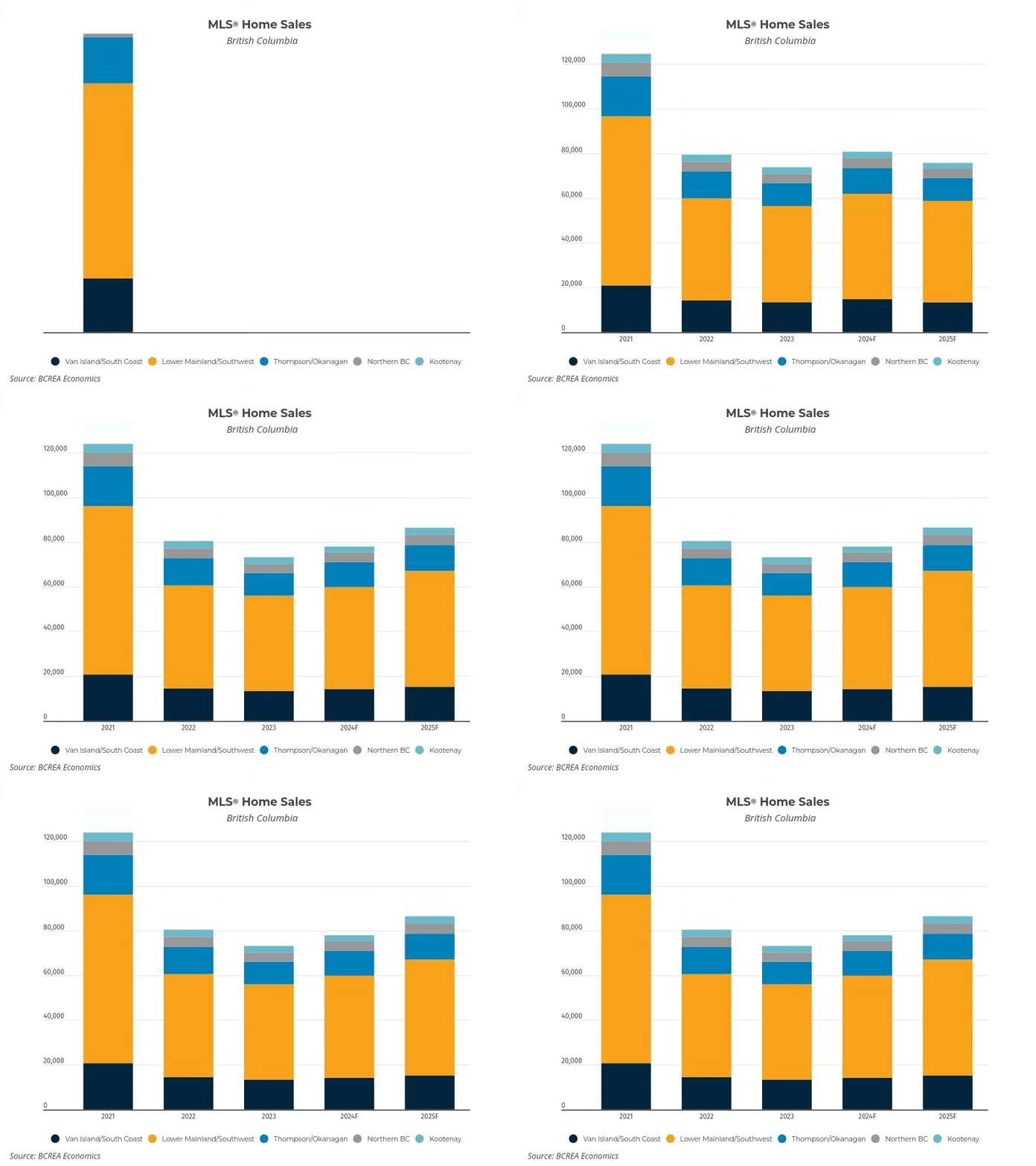
Multiple Listing Service® (MLS®) residential sales in BC are forecast to increase 7.8 per cent to 78,130 units this year. In 2025, MLS® residential sales are forecasted to strengthen further, rising to 86,480 units.
"After a slow start for the housing market in 2024, all eyes are on the Bank of Canada. Although fixed mortgages are down significantly, it appears that buyer confidence is hinging on seeing the Bank lower its policy rate," said Brendon Ogmundson, Chief Economist. ”Given weak economic growth, a slowing labour market, and a downward trend in inflation, we expect that the Bank will begin to loosen monetary policy this summer, which should spur some pent-up demand off the sidelines."
With prices starting to trend up in recent months, it will be crucial for the supply of new listings to keep pace with sales to contain price growth at a time when affordability has never been more challenging. We are confident that listings activity will rebound from a near-record low in 2023, which will help keep average price growth in a 1 to 2 per cent range this year.
-30-
For the complete news release, including detailed statistics, click here.
Brendon Ogmundson Chief Economist
Copyright British Columbia Real Estate Association. Reprinted with permission."
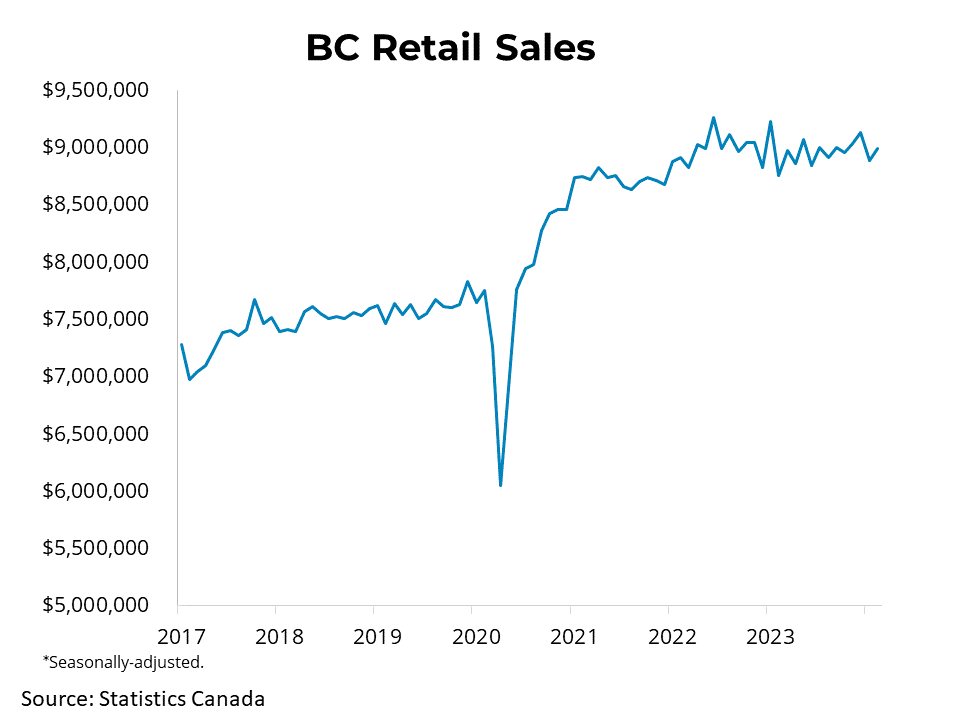
Canadian retail sales fell 0.1 per cent to $66.7 billion in February. Excluding volatile items, sales were flat on a month-over-month basis. In volume terms, adjusted for rising prices, retail sales fell 0.3 per cent in February.
After falling more than 2 per cent in January, retail sales in BC were up 1.2 per cent in February and were up 2.6 per cent from the same time last year. In the CMA of Vancouver, retail sales were down 0.2 per cent from the prior month and were up 4.2 from February 2023.
Buying your first home is a huge milestone. Congratulations! There are so many decisions to make along the way – everything from determining what you can comfortably afford to spend to maintaining your home over the years.
In recognition of these important decisions you’ll have to make throughout your time as a homeowner, we’ve created The Ultimate Homebuyer’s Checklist to walk you through every step, ensuring you’re well-prepared and confident in your homebuying decisions.
The Ultimate Homebuyer’s Checklist includes the following 10 key steps to helping ensure a smooth transition into homeownership and throughout your homeownership journey:
Step 1 – Assess Your Financial Situation
Calculate your budget, including down payment, closing costs and ongoing monthly expenses
Check your credit score and work on improving it as needed
Get pre-approved for a mortgage with your mortgage broker or lender to determine what you can comfortably afford to spend
Step 2 – Define Your Home Preferences
List your must-haves, such as the number of bedrooms, location and desired features
Differentiate between your needs and wants to prioritize effectively
Research neighbourhoods and communities to find the perfect match for your lifestyle
Step 3 – Find a Real Estate Agent
Ask for recommendations from trusted friends, family and colleagues, and conduct interviews to select a reputable agent with whom you feel comfortable working
Ensure your agent has expertise in your preferred location/neighbourhoods
Communicate your goals and preferences clearly
Step 4 – Start House Hunting
Attend open houses and schedule viewings with your agent
Take notes and photos to compare different properties
Consider the potential for future growth and resale value of each property
Step 5 – Make an Offer
Work with your agent to craft a competitive offer
Negotiate terms, including the price, contingencies and closing date
Be prepared for counteroffers and stay flexible, but also be cognizant of your maximum purchase price
Step 6 – Inspect the Property
Hire a professional home inspector to evaluate the property’s condition
Review the inspection report carefully and address any concerns
Negotiate repairs or credits as necessary
Step 7 – Secure Financing
Review loan terms and with your mortgage broker or lender to ensure you understand the details
You’ll be required to get mortgage insurance if your down payment is less than 20% of the purchase price
Finalize your mortgage application with your mortgage broker or lender
Step 8 – Close the Deal
Review the closing documents with your lawyer/notary and agent
Conduct a final walkthrough to ensure the property’s condition
Sign the paperwork and receive the keys to your new home
Step 9 – Move and Settle In
Plan your move and hire movers if needed
Change your address, set up utilities and forward your mail
Personalize your new house so it feels like home
Step 10 – Maintain Your Investment
Create a maintenance schedule for your new home
Budget for repairs and improvements over time
Stay connected with your real estate agent and home inspector for future needs
Get The Home Buyer’s Checklist Before Your Buy!
To make your homebuying journey even more manageable, we’ve prepared a downloadable PDF version of The Ultimate Homebuyer’s Checklist. Print it out and keep it handy as you embark on this exciting adventure. With this checklist by your side, you’ll be well-prepared to find your dream home and make it your own.
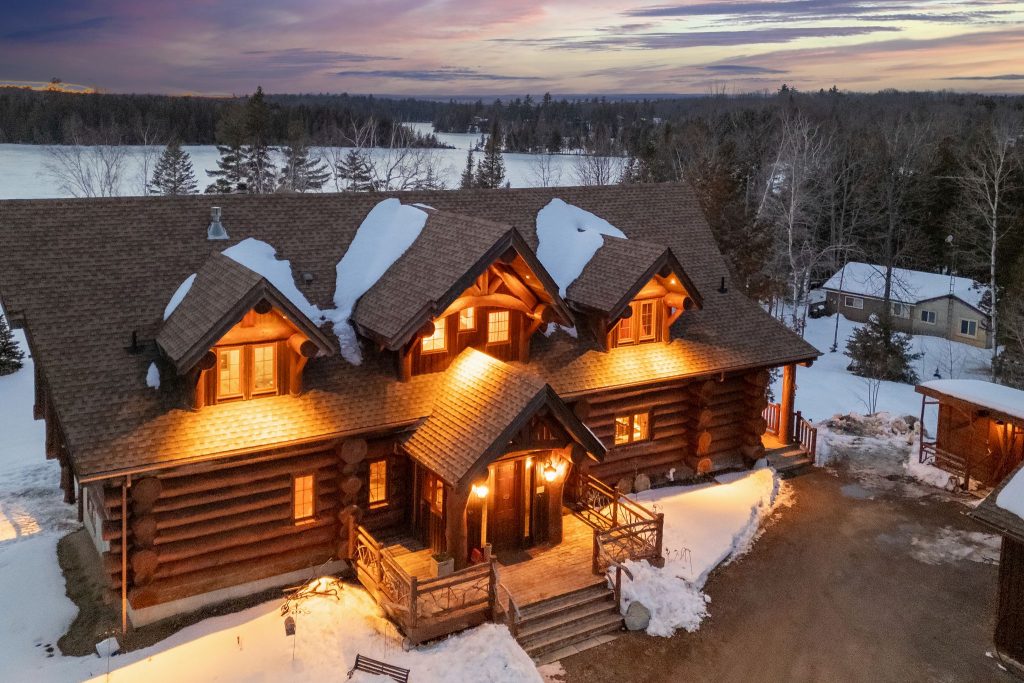
With the weather beginning to warm and the days getting longer, the taste of summer is in the air. Many Canadians are looking forward to that first annual trip to the cottage. Perhaps this will be the year you and your family invest in a recreational property all your own…
According to the Royal LePage® 2024 Spring Recreational Property Report, the median price of a single-family home in Canada’s recreational regions is forecast to increase 5.0% in 2024 to $678,930, compared to 2023, as a boost in consumer confidence brings sidelined buyers back to the market. All of Canada’s provincial recreational markets are forecast to see an increase in single-family home prices in 2024. Ontario is expected to record the greatest price appreciation, at 8.0%.
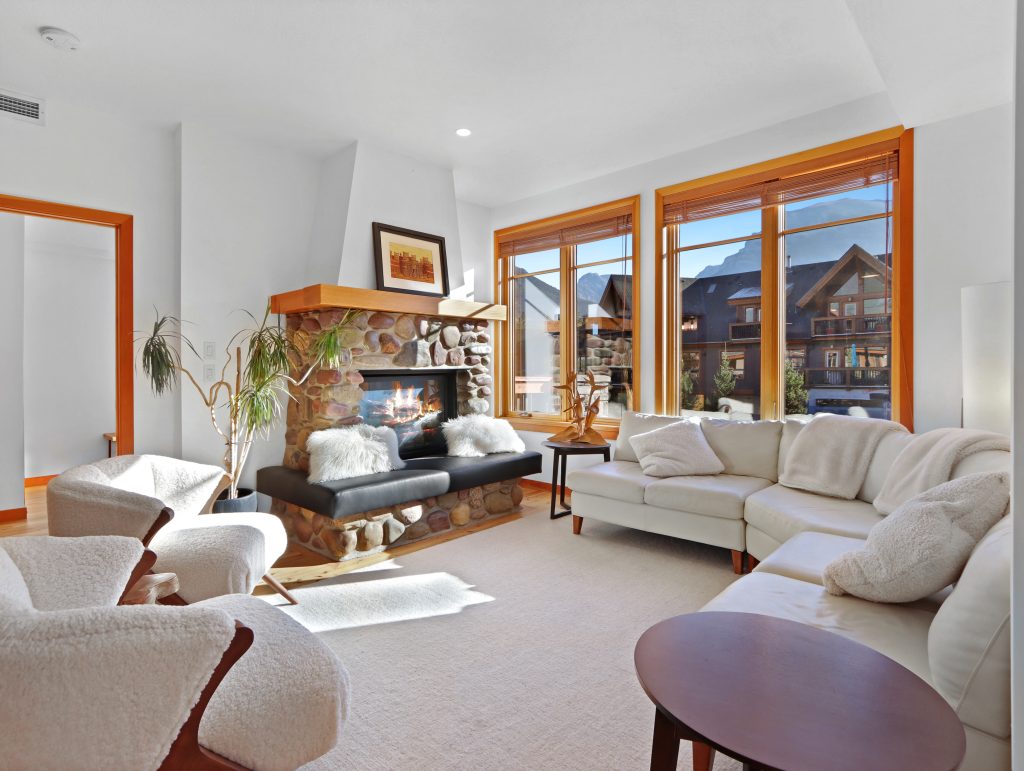
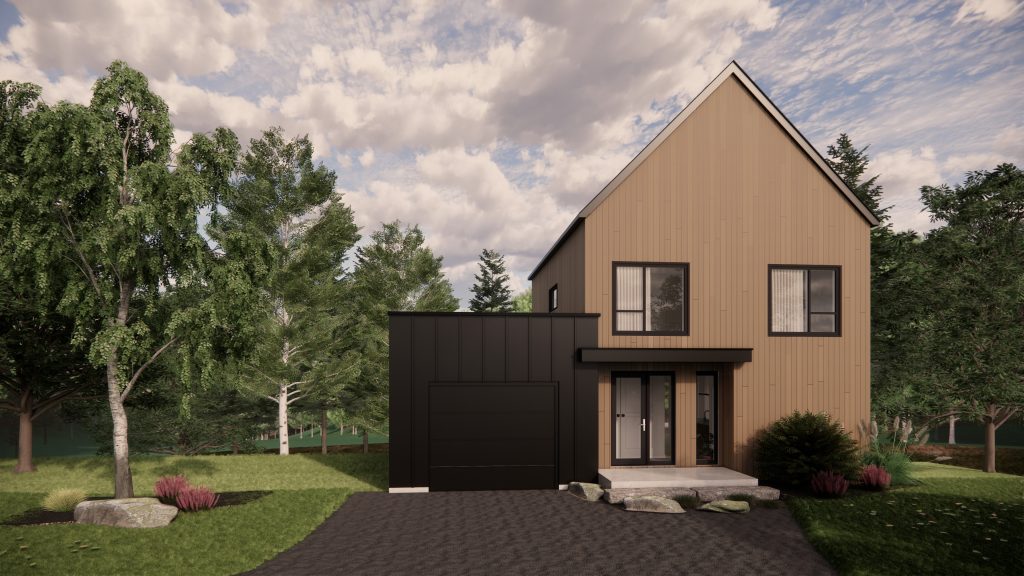
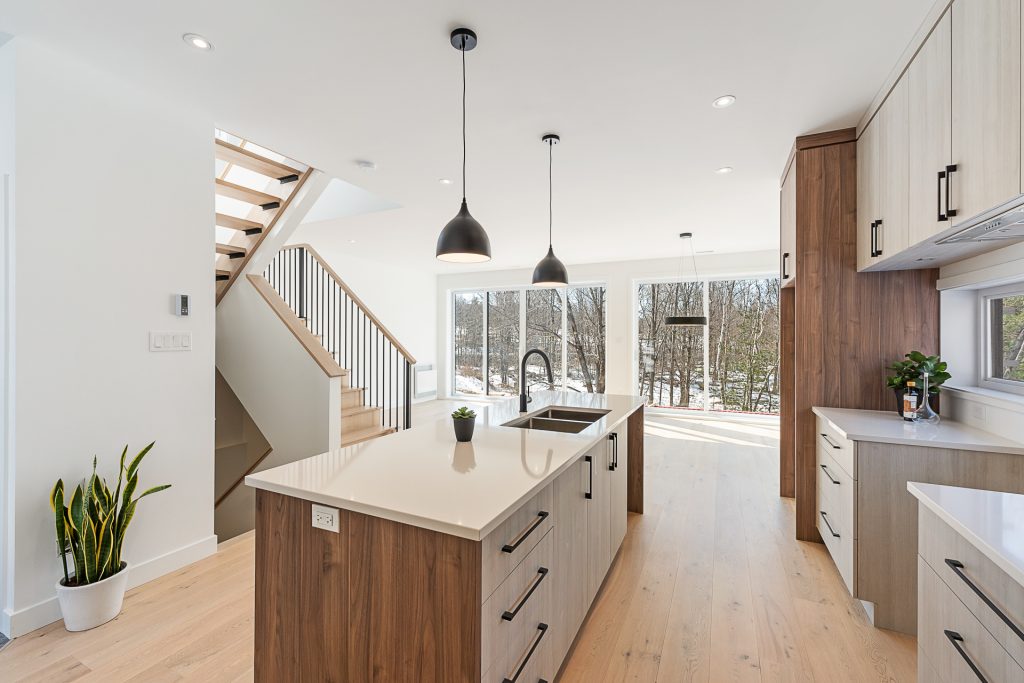
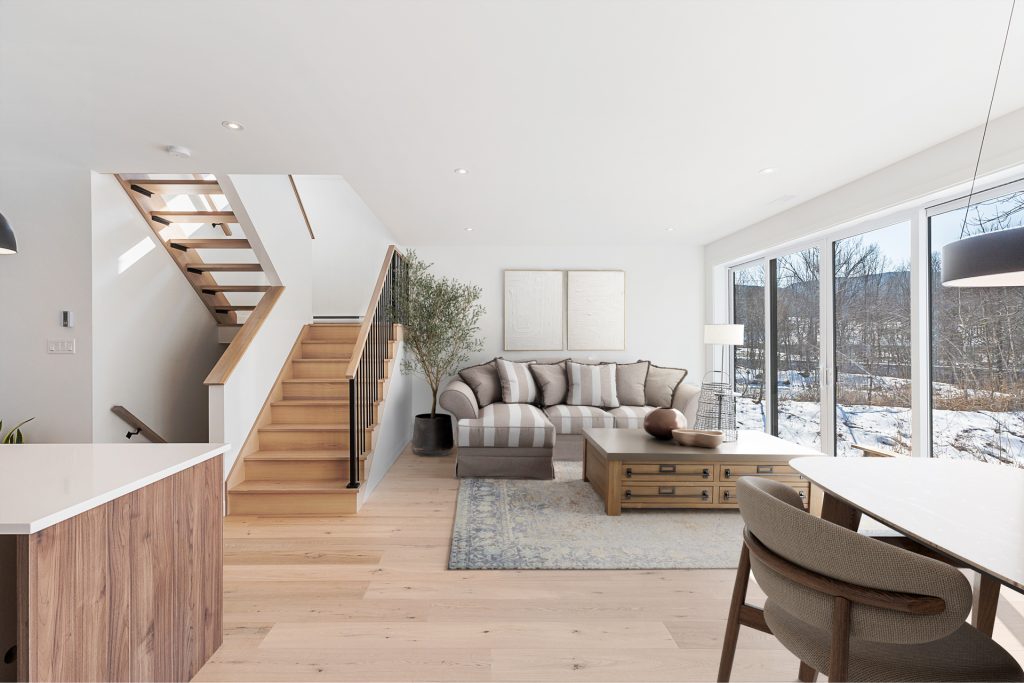
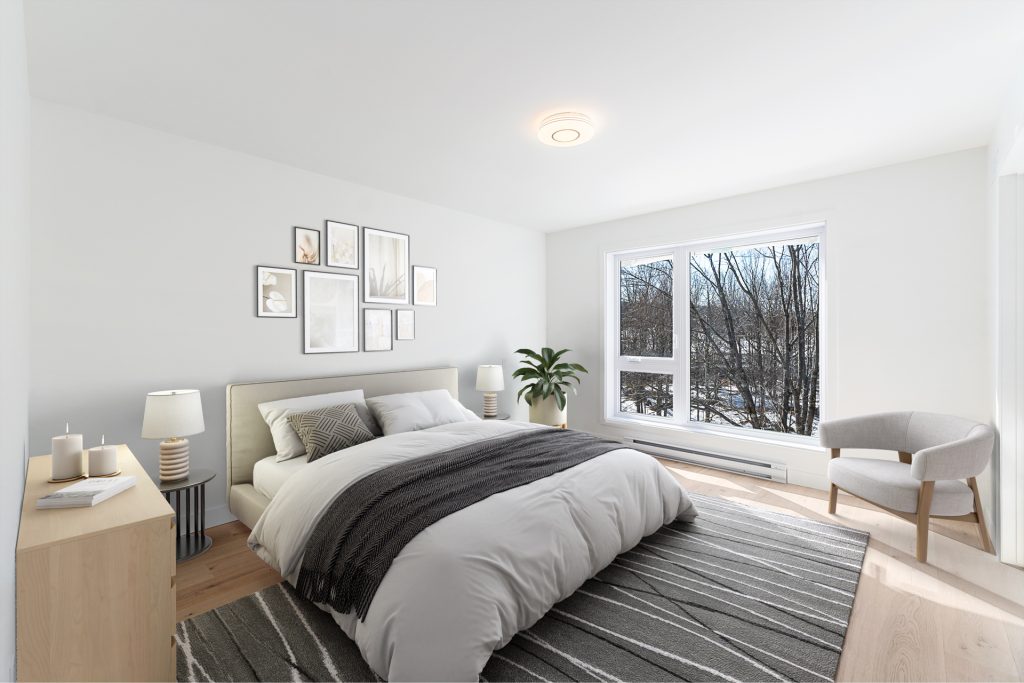
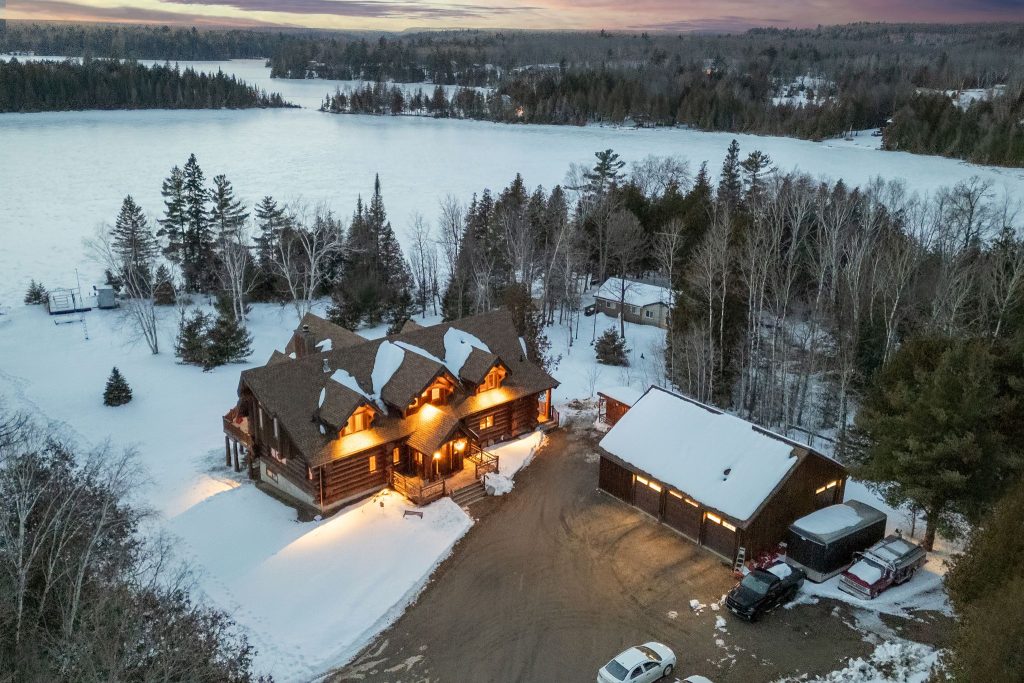
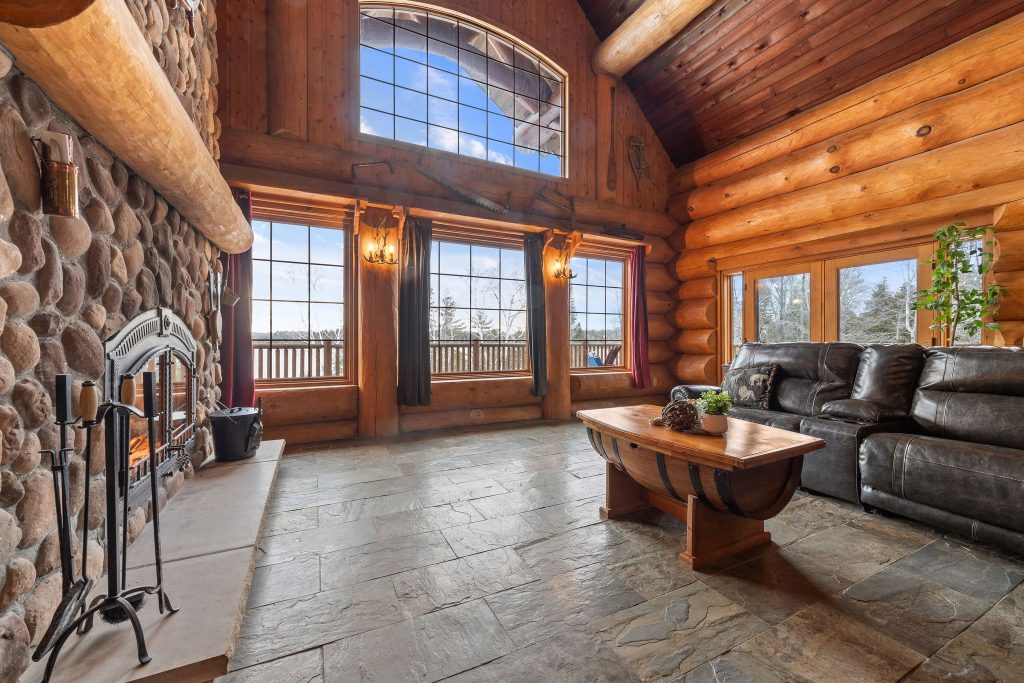
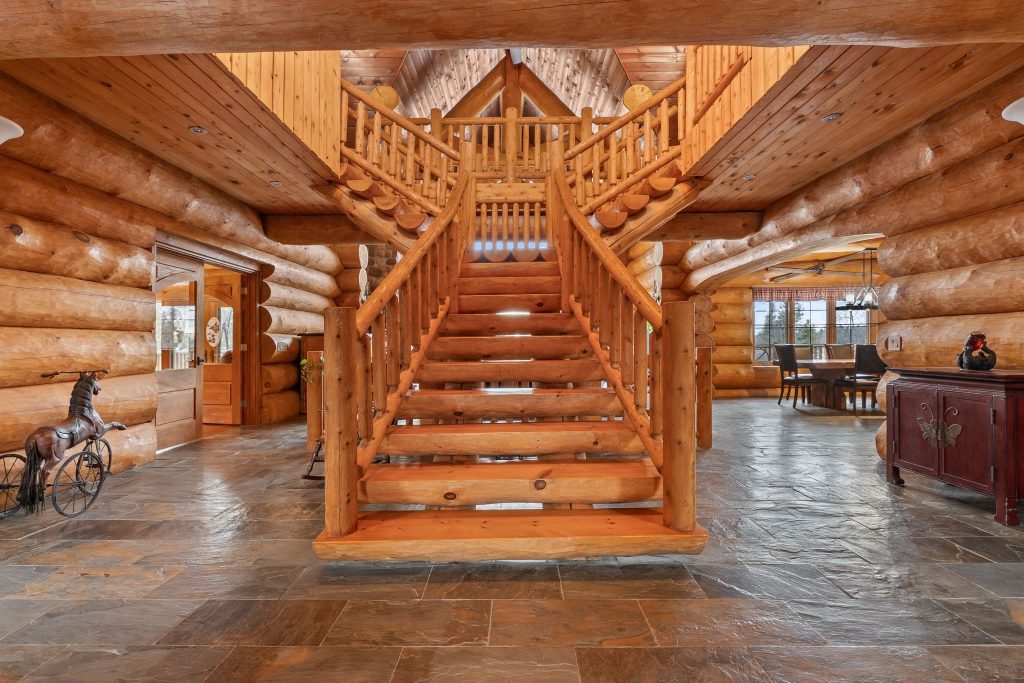
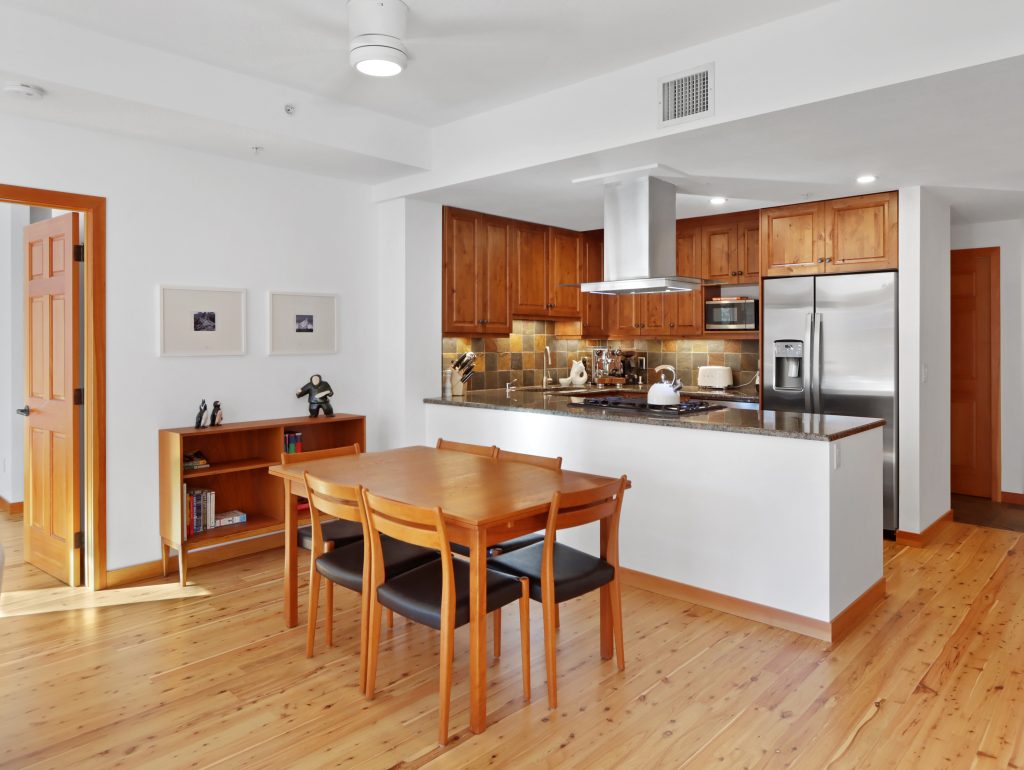
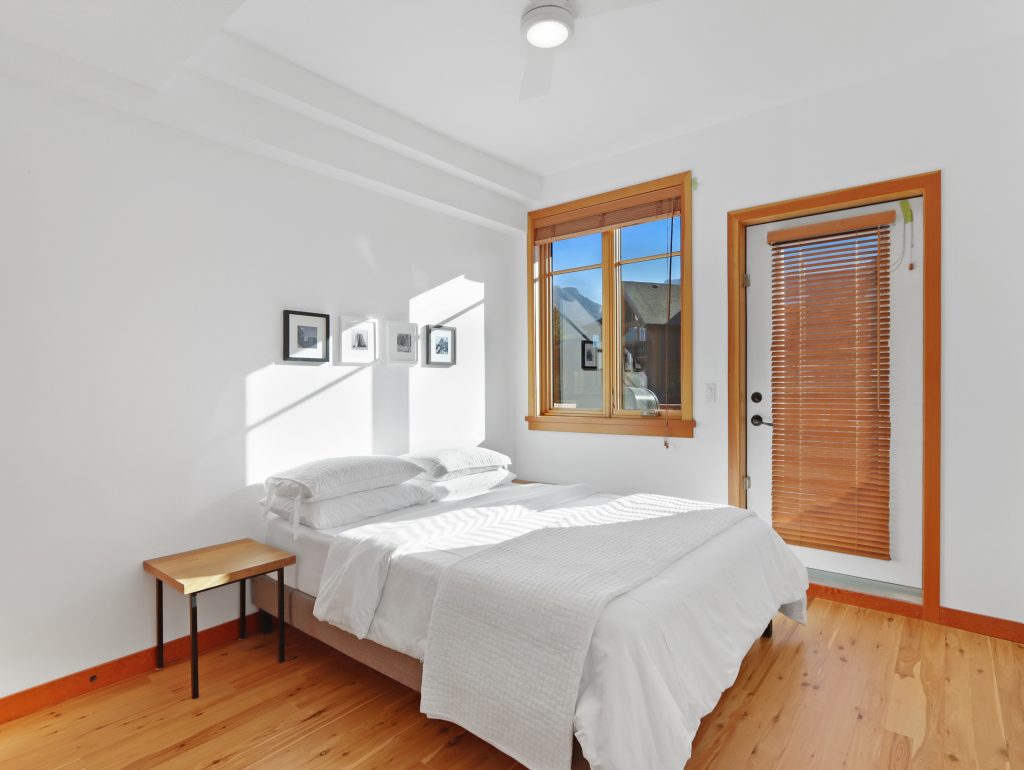
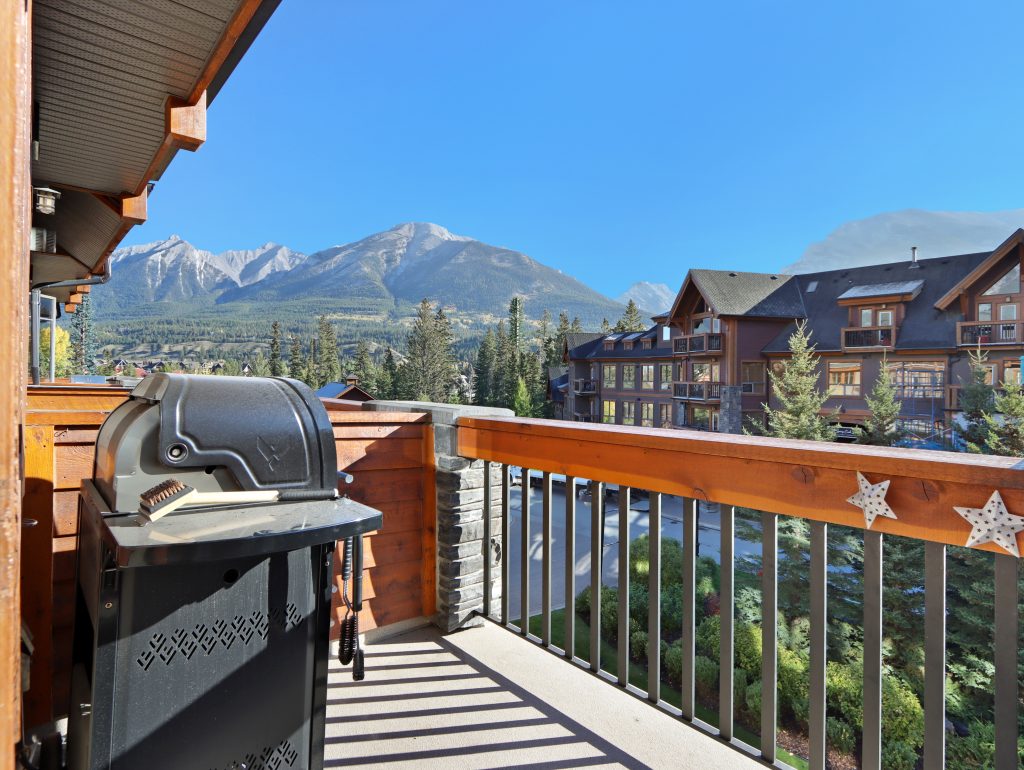
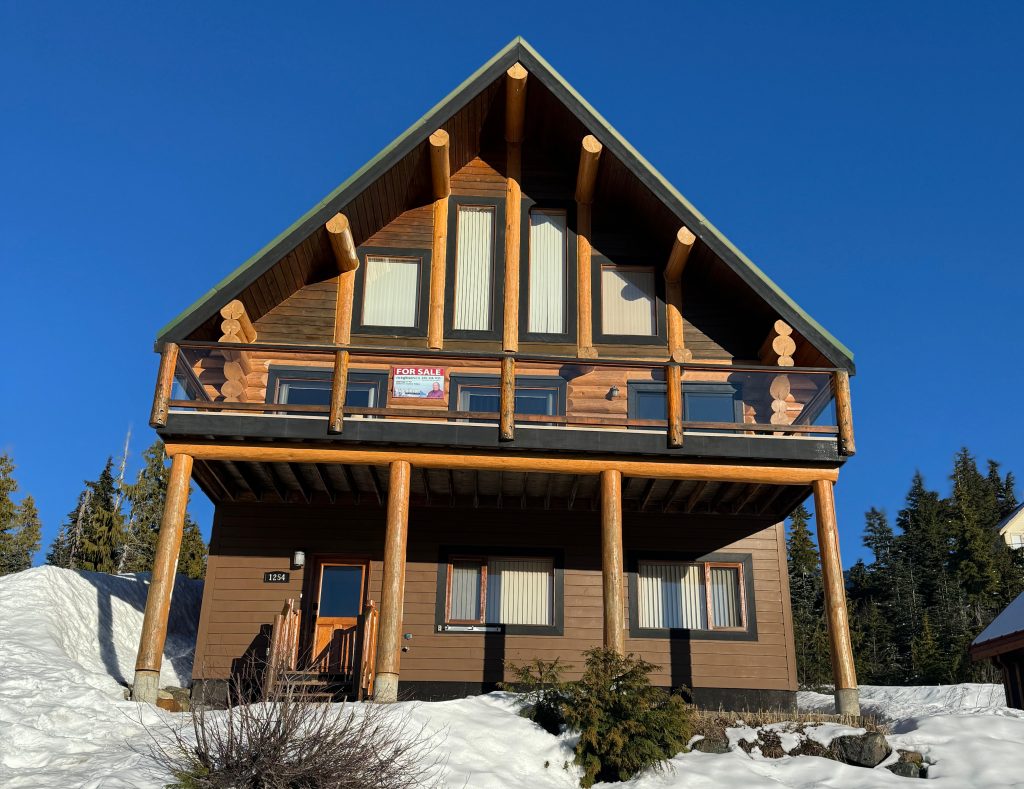
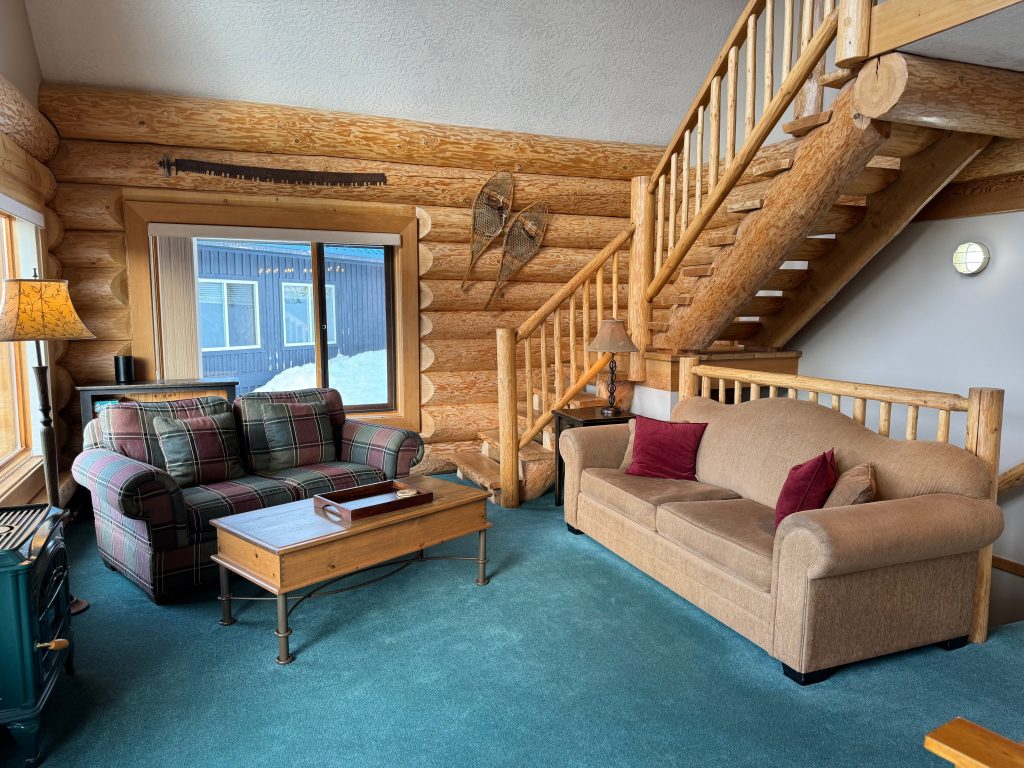
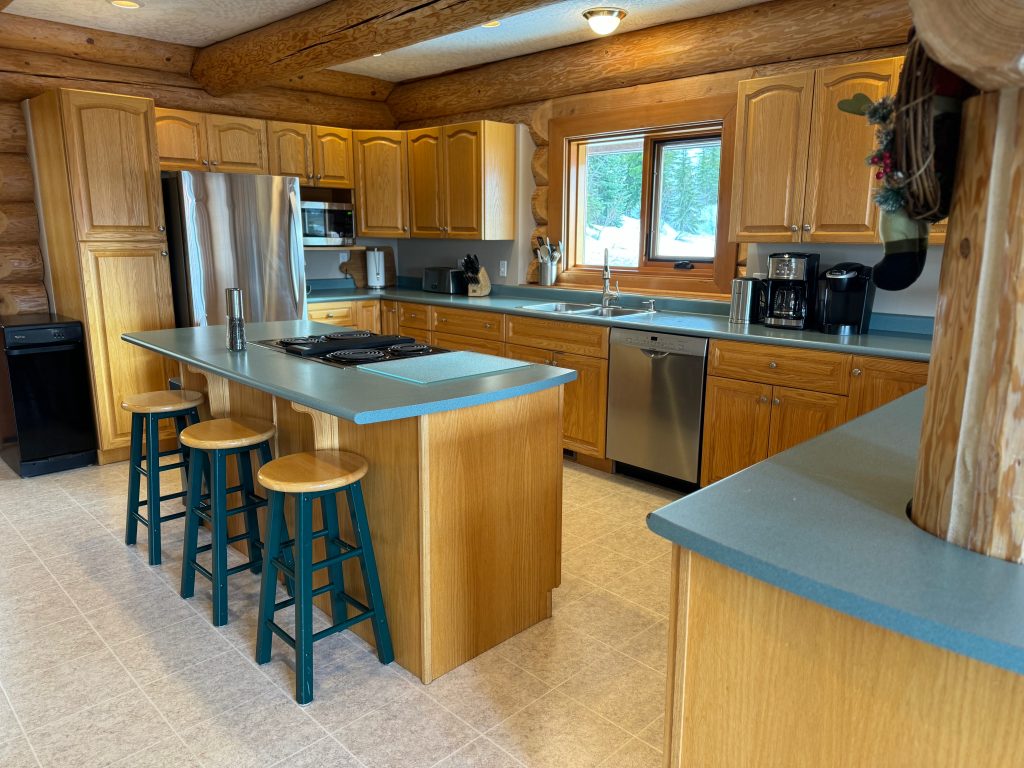
Looking to buy a cottage or cabin this year? Here are four homes you can purchase in Canada’s recreational property markets today:
On Tuesday, April 16th, the Canadian federal government unveiled the 2024 budget. The annual fiscal announcement detailed dozens of new and ongoing initiatives aimed at creating new housing, along with policies targeted at making renting and home ownership more affordable for Canadians.
Here are eight standout housing policies announced in this year’s budget:
Canadian Renters’ Bill of Rights
More Canadians are renting for longer periods of time before they transition into home ownership. The 2024 budget announced several measures intended to more effectively protect tenants and strengthen their path to buying real estate.
Budget 2024 announced the creation of the Canadian Renters’ Bill of Rights, which proposes a nationwide standard lease agreement, and would require landlords to disclose rental price history on properties. Through the Canadian Mortgage Charter, the Budget also calls on banks and lenders to allow tenants to report their rental payment history to credit bureaus in order to better their credit scores, thereby strengthening their future mortgage applications.
Additionally, $15 million over five years has been allocated to a Tenant Protection Fund, which will provide legal support to tenants.
Funding for the construction of new homes
The federal government is promising billions of dollars in spending towards the construction of new housing.
The 2024 budget unveiled the Canada Builds initiative, which will enable the country’s Apartment Construction Loan Program to partner with provincial governments in order to build more rental accommodation. Starting next year, the program will receive $15 billion in additional funding for the creation of 30,000 new homes, topping up the program’s current funding allocation to over $55 billion for a total of 131,000 units, set to be built by 2031.
The Canadian Housing and Mortgage Corporation’s (CMHC) Housing Accelerator Fund will also receive $400 million in financial support to build 12,000 new housing units.
Infrastructure Canada will receive $6 billion over the next decade towards the Canada Housing Infrastructure Fund, which will support the creation of water and waste infrastructure needed for new communities. $100 million over two years will also be dedicated to Employment and Social Development Canada to support apprenticeship and skilled-trade programs that address the workforce shortage needed to build housing.
30-year mortgage amortizations for first-time buyers of new homes
Through the Canadian Mortgage Charter, the 2024 budget announced that starting on August 1st, first-time buyers purchasing a newly-constructed home can access 30-year mortgage amortizations, a product that has previously only been available to those with a down payment of at least 20%.
In practice, a longer amortization period would allow borrowers to pay off their mortgage over an extended timeline, thereby reducing their monthly payments.
Amendments to the Home Buyers’ Plan
Saving for a down payment is one of the largest hurdles new homebuyers face. To make it easier to access funds for a home purchase, Budget 2024 unveiled an amendment to the withdrawal limit on the Home Buyers’ Plan, which has been increased from $35,000 to $60,000 as of April 16th.
Support for single-family home suites
To encourage the creation of secondary housing units, the 2024 budget announced $409.6 million over four years towards a Canada Secondary Suite Loan Program, run by the CMHC. This will enable homeowners to borrow up to $40,000 in low-interest loans towards the cost of adding a secondary suite to their homes, which can be used for multi-generational living purposes or as a source of rental income.
Increase to the inclusion rate on capital gains above $250,000
Effective June 25th, Budget 2024 proposes an increase to the inclusion rate on capital gains realized annually above $250,000 by individuals, corporations and trusts from one-half to two-thirds, by amending the Income Tax Act. This would include the sale of secondary residences and investment properties.
Currently, only 50% of capital gains are taxable. The 2024 budget would increase the inclusion rate to 66% on capital gains above $250,000. The sale of principal residences will continue to be exempt from capital gains tax.
New funds for post-war housing catalog
In December 2023, the federal government announced that it would be modernizing its post-war home design catalog, providing standardized home blueprints that would accelerate the creation of much-needed housing. The 2024 budget unveiled $11.6 million towards the development of 50 home designs, which includes plans for row homes, fourplexes, sixplexes, accessory units and modular homes.
Conversion of public lands into housing
Land scarcity is one of the main barriers to the creation of new housing. The federal government intends to utilize public lands in order to free up space where new housing can be built, with a goal of building 250,000 new homes by 2031 under the Public Lands for Homes Plan. In Budget 2024, the government announced plans to lease public land to builders in order to lower capital costs, and review the federal lands portfolio to identify more usable lands for housing. The budget also outlines plans to reduce the footprint of federal office buildings, and convert these spaces into housing.
Over the next three years, $5 million will be allocated to the Canada Lands Company to support initiatives to build properties on public lands.
Want to know more about the 2024 federal budget? You can read the full budget announcement here.
CONTRIBUTOR
Michelle McNally
Communications manager, Royal LePage
Michelle is a member of Royal LePage’s Communications and Public Relations team, and works to deliver unique and insightful Canadian real estate content to media and consumers. Prior to joining Royal LePage, Michelle was an online reporter specializing in Canadian real estate and pre-construction development. She is a graduate of Toronto Metropolitan University’s esteemed journalism program.
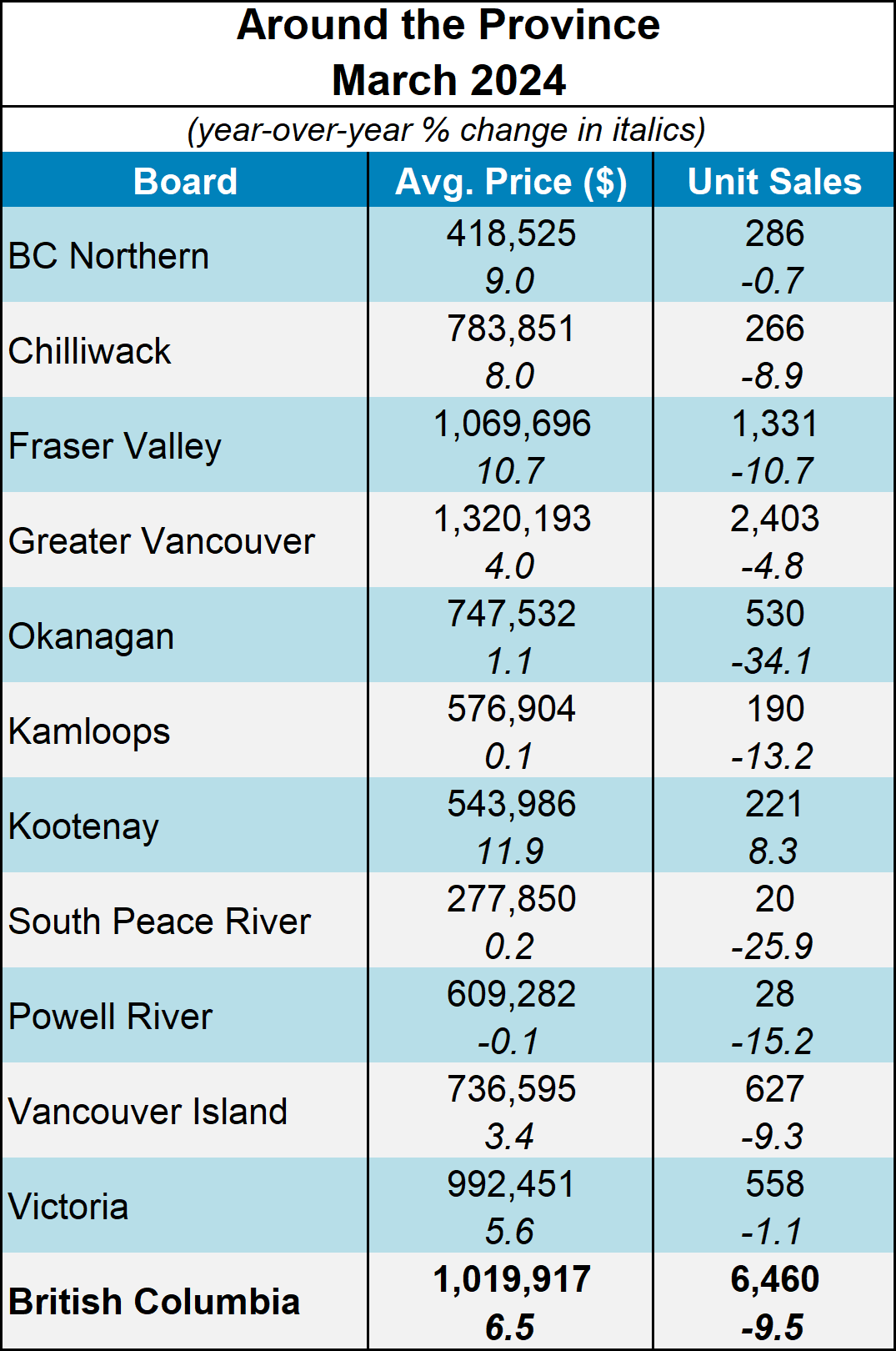
Vancouver, BC – April 15, 2024. The British Columbia Real Estate Association (BCREA) reports that a total of 6,460 residential unit sales were recorded in Multiple Listing Service® (MLS®) systems in March 2024, a decline of 9.5 per cent from March 2023. The average MLS® residential price in BC in March 2024 was up 6.5 per cent at $1.02 million, compared to an average price of $958,051 in March 2023. The total sales dollar volume was $6.6 billion, a decrease of 3.6 per cent from the same time the previous year.
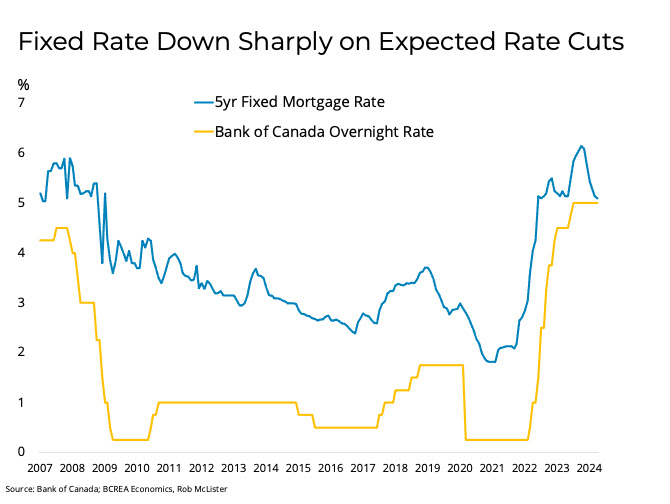
"March capped off a slow start to the first quarter of 2024," said BCREA Chief Economist, Brendon Ogmundson. "Despite a steep decline in fixed mortgage rates, buyers appear to be waiting on the Bank of Canada to lower its policy rate before jumping back into the market."
Year-to-date, BC residential sales dollar volume was up 13 per cent to $15.8 billion, compared with the same period in 2023. Residential unit sales were up 6.4 per cent to 15,938 units, while the average MLS® residential price was up 6.5 per cent to $995,149.
Royal LePage upgrades national year-end home price forecast as Canadian real estate market hits 'critical tipping point': In 2024, Greater Toronto and Montreal home price appreciation expected to outpace former frontrunner, Calgary Royal LePage is forecasting that the aggregate price of a home in Canada will increase 9.0 per cent in the fourth quarter of 2024, compared to the same period last year. Based on stronger-than-expected first quarter results, the previous forecast has been upgraded nationally and ... more
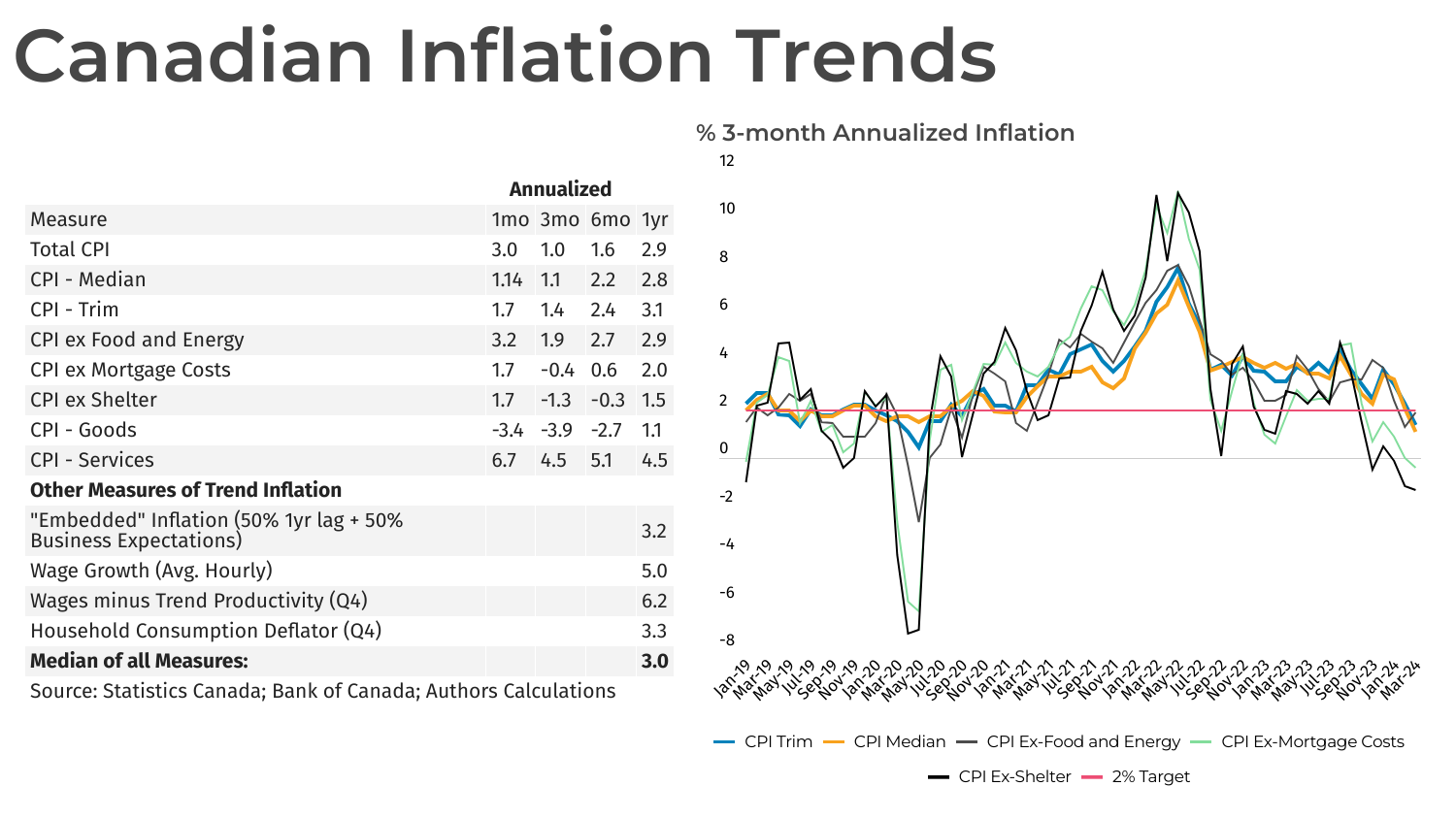
Canadian prices, as measured by the Consumer Price Index (CPI), rose 2.9 per cent on a year-over-year basis in March, up from a 2.8% increase in February. Month-over-month, on a seasonally adjusted basis, CPI rose by 0.3 per cent in March. The slight uptick in headline CPI was largely due to rising gasoline prices. Excluding energy costs, CPI rose 2.8 per cent year-over-year in March, down from 2.9 per cent in February. Shelter costs remain the major driver of inflation with mortgage interest costs up 25.4 per cent and rent up 8.5 per cent from the same time last year in March. Excluding shelter, consumer prices rose just 1.5 per cent, year over year.In BC, consumer prices rose 2.7 per cent year-over-year, up from 2.6 per cent in February. The Bank of Canada's preferred measures of core inflation, which strip out volatile components, fell to between 2.8 and 3.1 per cent per cent year-over-year in March.
Inflation ticked slightly higher as expected in March due to rising gasoline prices, however the big surprise in this morning's data was the continued fall in the Bank of Canada's preferred measures of core inflation. Both CPI median and CPI trim were not only down an a 12-month basis but fell to well under 2 per cent when measured on a 3-month basis and to just over 2 per cent on a 6-month basis. Not only is core inflation falling, but it has become more and more clear that inflation in Canada is almost entirely a shelter driven phenomenon. Excluding the rising costs of rents and mortgages, not only is inflation falling, its negative when measured at a 3 and 6-month horizon. If the Bank of Canada is looking for a case to lower its policy rate in June, this report provides ample evidence in support of that move.
Economics Now is produced by the British Columbia Real Estate Association. Real estate boards, real estate associations and REALTORS® may reprint this content, provided that credit is given to BCREA by including the following statement: "Copyright British Columbia Real Estate Association. Reprinted with permission." BCREA makes no guarantees as to the accuracy or completeness of this information.
The federal government made several announcements claiming it will improve access to the housing market for first-time buyers.
The announcements include:
Increasing the maximum amortization period to 30 years from 25 for first-time buyers purchasing a new-build property with a down payment of less than 20%, otherwise known as a default-insured mortgage. This change will take effect August 1 of this year, although the government hasn’t specified if this applies to the date of the mortgage application or the funding date.
Increasing the Home Buyers’ Plan limit to $60,000 from $35,000. This federal program allows first-time homebuyers to withdraw funds from their Registered Retirement Savings Plan (RRSP) tax-free as long as they are used towards the purchase of their first home and are repaid within the subsequent 15 years. This change will take effect April 16, 2024, the day of the federal budget.
First-time homebuyers who withdraw from their Home Buyers’ Plan between January 1, 2022 and December 31, 2025 will see their repayment grace period extended by three years. These buyers will now have a grace period of up to five years before they are required to start making repayments. Under the current rules of the Home Buyers' Plan, first-time homebuyers are required to start repaying the withdrawn amount back into their RRSPs within two years after the end of the year in which they withdrew the funds. However, the proposed change extends this repayment grace period by an additional three years.
Changes to the Canadian Mortgage Charter that allow for permanent amortization relief for qualifying existing homeowners. While there are few details about this change, the government says this relief will be made available to “at-risk” existing homeowners who meet specific eligibility criteria. You can read the full release from the federal government here.
While there are some concerns about the increased amortization limit being restricted to new builds, this change will help those first-time buyers qualify for a mortgage. Having the option of a longer amortization period means they can benefit from lower monthly mortgage payments, in turn resulting in greater flexibility and reduced financial strain.
These measures are part of the federal government's just-released strategy to help address the country's housing affordability crisis. Its plan, Solving the housing crisis: Canada's Housing Plan, will be tabled in this week's budget and includes a list of new promises and measures, including a plan to unlock 3.87 million new homes by 2031.
I understand that keeping up with the ever-changing landscape of mortgage rules and regulations can feel daunting. However, I'm here to simplify the process for you.
If you're considering taking advantage of these opportunities or have any questions about how any of these changes may affect you, please don't hesitate to reach out.
Tracey Ridout Call for more information 604-760-6917
The number of Metro Vancouver1 homes listed for sale on the MLS® rose nearly 23 per cent year-over-year, providing more opportunity for buyers looking for a home this spring.
Sales
The Greater Vancouver REALTORS® (GVR)2 reports that residential sales3 in the region totalled 2,415 in March 2024, a 4.7 per cent decrease from the 2,535 sales recorded in March 2023. This was 31.2 per cent below the 10-year seasonal average (3,512).
"If you’re finding the weather a little chillier than last spring, you may find some comfort in knowing that the market isn’t quite as hot as it was last spring either, particularly if you’re a buyer. Despite the welcome increase in inventory, the overall market balance continues inching deeper into sellers’ market territory, which suggests demand remains strong for well-priced and well-located properties."
Andrew Lis, REBGV director of economics and data analytics
Listings
There were 5,002 detached, attached and apartment properties newly listed for sale on the Multiple Listing Service® (MLS®) in Metro Vancouver in March 2024. This represents a 15.9 per cent increase compared to the 4,317 properties listed in March 2023. This was 9.5 per cent below the 10-year seasonal average (5,524).
The total number of properties currently listed for sale on the MLS® system in Metro Vancouver is 10,552, a 22.5 per cent increase compared to March 2023 (8,617). This is 6.3 per cent above the 10-year seasonal average (9,923).
Sales-to-active listings ratio
Across all detached, attached and apartment property types, the sales-to-active listings ratio for March 2024 is 23.8 per cent. By property type, the ratio is 18.2 per cent for detached homes, 31.3 per cent for attached, and 25.8 per cent for apartments.
Analysis of the historical data suggests downward pressure on home prices occurs when the ratio dips below 12 per cent for a sustained period, while home prices often experience upward pressure when it surpasses 20 per cent over several months.
“Even though the market isn’t quite as hot as it was last year, we’re still seeing modest month-over-month price gains of one to two per cent happening at the aggregate level, which is an interesting dynamic given that borrowing costs remain elevated,” Lis said.
“With the latest inflation numbers trending in the right direction, it remains likely that we’ll see at least one or two modest cuts to the Bank of Canada’s policy rate in 2024, but even if these cuts come, they may not provide the boost to affordability many had been hoping for. As a result, we expect constrained borrowing power to remain a challenging headwind as we move into the summer months.”
By property type
The MLS® Home Price Index composite benchmark price for all residential properties in Metro Vancouver is currently $1,196,800. This represents a 4.5 per cent increase over March 2023 and a 1.1 per cent increase compared to February 2024.
Sales of detached homes in March 2024 reached 694, a 5.4 per cent decrease from the 734 detached sales recorded in March 2023. The benchmark price for a detached home is $2,007,900. This represents a 7.4 per cent increase from March 2023 and a 1.8 per cent increase compared to February 2024.
Sales of apartment homes reached 1,207 in March 2024, a 7.9 per cent decrease compared to the 1,311 sales in March 2023. The benchmark price of an apartment home is $777,500. This represents a 5.7 per cent increase from March 2023 and a 0.9 per cent increase compared to February 2024.
Attached home sales in March 2024 totalled 495, a 6.2 per cent increase compared to the 466 sales in March 2023. The benchmark price of a townhouse is $1,112,800. This represents a 5 per cent increase from March 2023 and a 1.7 per cent increase compared to February 2024.
1 Areas covered by Greater Vancouver REALTORS® include: Bowen Island, Burnaby, Coquitlam, Maple Ridge, New Westminster, North Vancouver, Pitt Meadows, Port Coquitlam, Port Moody, Richmond, South Delta, Squamish, Sunshine Coast, Vancouver, West Vancouver, and Whistler.
Vancouver, BC – April 15, 2024. The British Columbia Real Estate Association (BCREA) reports that a total of 6,460 residential unit sales were recorded in Multiple Listing Service® (MLS®) systems in March 2024, a decline of 9.5 per cent from March 2023. The average MLS® residential price in BC in March 2024 was up 6.5 per cent at $1.02 million, compared to an average price of $958,051 in March 2023. The total sales dollar volume was $6.6 billion, a decrease of 3.6 per cent from the same time the previous year.
"March capped off a slow start to the first quarter of 2024," said BCREA Chief Economist, Brendon Ogmundson. "Despite a steep decline in fixed mortgage rates, buyers appear to be waiting on the Bank of Canada to lower its policy rate before jumping back into the market."
Year-to-date, BC residential sales dollar volume was up 13 per cent to $15.8 billion, compared with the same period in 2023. Residential unit sales were up 6.4 per cent to 15,938 units, while the average MLS® residential price was up 6.5 per cent to $995,149.
In its third interest rate announcement for 2024, the Bank of Canada chose to hold its overnight lending rate at its current level of 5%. This marks the sixth consecutive hold to the rate since July of 2023.
In its scheduled interest rate announcement for April 10th, Canada’s central bank stated that it would hold the policy rate at 5% in an effort to “continue to normalize the Bank’s balance sheet.”
The Central Bank noted that while the consumer price index and core inflation have eased in recent months, overall inflation and economic risks remain. The Bank said that it will be looking out for evidence that the downward trend in inflation is sustained before moving to make a cut.
Tiff Macklem, Governor of the Bank of Canada, stated in a press conference following the announcement that the Bank does not wish to leave monetary policy this restrictive for longer than its needs to, but cautioned that lowering the policy rate prematurely could jeopardize the progress made to bringing inflation down.
“Based on our forecast and the risks, Governing Council decided it was appropriate to maintain the policy rate at 5%,” said Macklem. “We also concluded that, overall, the data since January have increased our confidence that inflation will continue to come down gradually even as economic activity strengthens. Our key indicators of inflation have all moved in the right direction and recent data point to a pickup in economic growth.”
Is an interest rate cut in sight?
Economists expect that the first chop to rates could come in June. As many as 100 basis points could be cut from the key lending rate this year, experts predict.
Macklem noted that while the Bank is seeing economic factors trend in the right direction for a rate cut, more time is needed to ensure inflation is truly coming under control.
“I realize that what most Canadians want to know is when we will lower our policy interest rate. What do we need to see to be convinced it’s time to cut? The short answer is we are seeing what we need to see, but we need to see it for longer to be confident that progress toward price stability will be sustained,” said Macklam. “The further decline we’ve seen in core inflation is very recent. We need to be assured this is not just a temporary dip.”
The Bank of Canada will make its next announcement on Wednesday, June 5th, 2024.
Buyers reboot purchase plans in Q1 to get ahead of rising home prices, anticipated interest rate cuts
Nationally, home prices increased 2.9% on a quarterly basis in Q1 as more buyers moved off the sidelines
Spring is normally the most active period for Canada’s real estate market – the arrival of warmer weather triggers an increase in buying and selling activity across the country. In 2024, the traditionally-busy spring market kicked off early and is facing additional pressure, as homebuyer hopefuls who have been sitting on the sidelines jump back into the market ahead of anticipated interest rate cuts, and the tight competition and higher home prices that will inevitably follow.
Royal LePage® is forecasting that the aggregate1 price of a home in Canada will increase 9.0% in the fourth quarter of 2024, compared to the same period last year. Based on stronger-than-expected first quarter results, the previous forecast has been upgraded nationally and in most major markets.
“Consistent with our previous forecast, the market did reach a critical tipping point in the first quarter of 2024, when home prices bottomed out and began to appreciate again. Clearly, more and more buyers are motivated by the need to get ahead of rising home prices, rather than adopting the strategy of waiting for mortgage rates to fall,” said Phil Soper, president and CEO, Royal LePage.
How did home prices perform in Q1?
According to the Royal LePage House Price Survey, the aggregate price of a home in Canada increased 4.3% year over year to $812,100 in the first quarter of 2024. On a quarter-over-quarter basis, the national aggregate home price increased 2.9%, an indication that sidelined buyers are rebooting their real estate purchase plans ahead of expected interest rate cuts, as predicted in January.
When broken out by housing type, the national median price of a single-family detached home increased 4.5% year over year to $845,300, while the median price of a condominium increased 3.5% year over year to $591,900.
Toronto and Montreal home price appreciation to outpace Calgary
The aggregate price of a home in the greater regions of Toronto and Montreal are forecast to increase 10.0% and 8.5% year over year, respectively, in the fourth quarter of 2024, outpacing price gains in the city of Calgary, which was previously expected to see the greatest increase in home values this year.
“Last year, while property values dipped in most markets across the country, the Calgary real estate market bucked the trend and continued to record home price gains. While activity levels remain strong and prices continue to rise in Alberta, our research indicates that buyer demand, relative to available inventory, is strongest in the two largest urban centres in the country. We now expect Toronto and Montreal to log the highest home price appreciation this year,” added Soper.
This sustained price appreciation is expected to close the gap between the country’s two most expensive real estate markets, Toronto and Vancouver. While Vancouver remains the nation’s most expensive market today, Royal LePage predicts that the aggregate price of a home in the GTA will surpass Greater Vancouver in the second half of 2024.
Busy spring, busier fall, on the cards for 2024
Within the first months of the new year, the Canadian housing market has already recorded solid price appreciation and higher sales activity. Starting in July of 2023, the Bank of Canada has held rates steady through six review periods. This has prompted many homebuyers to come off of the sidelines in advance of what they expect will be a more competitive spring market that will drive home prices higher.
“Given the strong start to 2024, the cadence of the market for the balance of the year points to a normally busy spring market that will lead into an uncomfortably busy fall. It is clear we are rapidly transitioning away from a buyers’ market and back to an environment where the seller has the upper hand,” noted Soper.
Read Royal LePage’s first quarter release for national and regional insights.
First quarter press release highlights:
Among major regions, Calgary recorded highest year-over-year aggregate price appreciation (9.7%) for the second consecutive quarter; increased 1.9% on a quarterly basis
89% of regions in the report recorded quarterly price appreciation in the first three months of the year, ahead of the traditionally busy spring market period
Royal LePage expects home prices in the Greater Toronto Area will surpass those in Greater Vancouver in 2024
The five per cent Goods and Services Tax (GST) applies to the purchase price of new residential homes in BC, including:
a newly built home;
a substantially renovated home;
a presale condominium or townhome;
an assignment of the contract for a new home;
a new mobile or floating home; and
vacant land.
If your client buys a new home, they'll pay the five per cent GST at completion, as per the contract of purchase and sale. The home can be fee simple or on leased land.
First Nations may charge their own GST. For example, the Tsawwassen First Nations levies a First Nations GST.
Property that has already been used for residential purposes is GST exempt. The GST should've been paid when the property was new.
If your client buys a newly built residential property, the builder must collect and remit the GST on the sale. The buyer then applies for a GST rebate. The buyer should keep all paperwork that proves the GST has been paid in case there's a question later.
Your client may be eligible for a GST rebate under these circumstances:
They buy, as their primary residence, a new home priced up to $450,000. The rebate is equal to 36 per cent of the five per cent GST paid on the first $350,000 of the price of a new home. The GST rebate is phased out for homes priced between $350,000 and $450,000. New homes priced at $450,000 and above receive no GST rebate.
They buy a substantially renovated home in which all or, substantially all, of the existing building has been removed or replaced.
They build or substantially renovate their own primary residence and the fair market value of the home (not what it cost to build) is no more than $450,000.
If your client buys a home and tears it down or substantially renovates and rebuilds it, they must pay the GST because the home is considered to be a new home for GST purposes. The owner is considered a “builder” who has repurchased the new home at its fair-market value. The owner must self-assess the GST and remit it to the CRA when construction is completed. The owner may be eligible for a GST rebate.
The five per cent GST is due when ownership and possession take place.
Under a presale agreement, the GST on the deposit amount isn’t payable when the deposit is made. Instead, the buyer pays the full amount of GST owing when the deal completes and they take ownership and possession.
However, under a presale agreement, if the buyer makes partial payments following the deposit, but before ownership and possession occur, the buyer must pay GST on each partial payment to the builder. When the deal completes and they take ownership and possession, the buyer pays the remaining amount of the GST.
GST on assignment sales
GST is applicable on all assignment sales of new or substantially renovated homes. Previously, an assignor may not have paid the GST on the assignment amount if they intended to reside in the property as their principal residence. However, under new rules, the GST is now payable by the assignor on any assignment amount.
The assignor is required to pay GST on the assignment amount, commonly called the lift.
GST isn't payable by the assignor on the total purchase price as the developer received the GST on the original purchase price portion and will be required to remit that.
GST is also not payable on the return of the deposit amount as this amount isn't income.
Example
For an example, let’s look at a residential pre-sale with an original purchase price of $800,000 and an assignment purchase price of $900,000, between a developer (who's a GST registrant) and an assignor and buyer who aren't GST registrants.
The buyer/assignee would pay:
Original purchase price: $800,000
GST on purchase price: $40,000
Assignment amount: $100,000
The assignor would receive:
Assignment amount: $100,000
Brokerage commission, as applicable
GST on Assignment amount
Income tax on assignment amount
The assignor, following receipt of the assignment amount (which will include both the GST and Income Tax portions payable), will need to engage an accounting firm to make this payment to Canada Revenue Agency (CRA) within 30 days of the completion date of the transaction.
The five per cent GST is applied to the sale of vacant land if:
the land is purchased from a developer;
the land was used for business purposes at any time in the past, even if the land was purchased from an individual;
the land was subdivided into more than two lots (three or more), even if the land was purchased from an individual; or the land is capital property used primarily in a business.
GST and new manufactured buildings and floating homes
There are three types of manufactured buildings:
manufactured portable buildings– includes floating homes and commercial use buildings, for example, construction site office;
manufactured mobile homes– a house trailer parked in one place, used as a permanent living accommodation; and
manufactured modular homes– a prefabricated home that consists of multiple sections or modules that are joined together on-site on a foundation to make a single building.
If your client buys a newly constructed or substantially renovated mobile home or floating home, they'll pay the five per cent GST and can claim applicable rebates.
When leasing a new manufactured building, the GST applies only to the lease of a new manufactured portable building used for commercial use.
GST and used manufactured buildings
If your client buys or leases a used manufactured building for residential use, the GST doesn't apply to the sale.
However, if your client purchases or leases a used manufactured building for commercial use, then the GST does apply.
Shares in a co-op
If your client bought shares in a co-operative housing complex for use as a primary residence, your client may qualify for a GST rebate.
Vacation property is property bought by an individual for personal use, short-term rental use (less than one month), or a combination of these two.
Vacation property includes detached and semi-detached houses, rowhouses and townhouses, and condominiums.
Generally, if your client buys a new vacation property, they’ll be required to pay the GST if the property is not used primarily (more than 50 per cent) as the vendor's primary residence and all or substantially all (90 per cent or more) of the rentals of the property are for periods of less than 60 days.
If your client plans to buy a vacation property and rent it as a short-term rental, they must register for the GST and get professional tax advice.
Residential property exempt from the GST includes:
the sale of an owner-occupied home if the home is bought and used primarily (more than 50 per cent) for personal use;
used residential rental property for rent for periods of more than 30 days;
the sale of a builder’s personal residence; or
a residential property converted to an office – for example, an entire house converted to a dentist’s office.
Removal of GST on new rental construction
The removal of GST will apply to new purpose-built rental housing, such as apartment buildings, student housing, and senior residences built specifically for long-term rental accommodation.
The GST Rental Rebate increases to 100 per cent from 36 per cent and removes the existing GST Rental Rebate phase-out thresholds for purpose-built rental housing projects. The enhanced GST Rental Rebate applies to projects that began construction on or after September 14, 2023, and on or before December 31, 2030, and complete construction by December 31, 2035.
The GST is applied to REALTOR® commissions and fees.
The standard multiple listing contract advises that the commission or fee is payable on the earlierof the following:
the completion date under the Contract of Purchase and Sale; or
the actual date that the sale completes.
If you have questions, contact the GST office at 1-800-959-5525.
PST
The seven per cent Provincial Sales Tax (PST) doesn’t apply to sales of real property. The PST applies to construction inputs are used to construct or improve real property.
The PST doesn’t apply to Realtor commissions and fees. PST does apply to legal and notary fees.
BC NDP government introduced home flipping tax legislation in line with their February 2024 budget promise.
Bill 15 2024 imposes a tax on profits from the sale of residential properties owned for less than 730 days, effective January 1, 2025.
Tax rates range from 20 per cent for sales within a year to no penalty after two years, with exemptions for certain life circumstances and real estate development activities.
The BC NDP government has followed through on a February 2024 budget promise and introduced legislation to tax home flipping, beginning in 2025.
the right to acquire properties, such as the assignment of a purchase contract for a pre-build condo building.
Presale contracts
If your client enters into a presale contract to buy a property under development, and buys the property – they close on the property once it is complete, for the purposes of the two-year window of the tax – they’ll be considered to have acquired it on the date they entered into the presale contract.
If your client is assigned a pre-sale contract and then closes on the built property, the acquisition date is the date they were assigned the contract.
When your client assigns a presale contract to another person within two years of entering into the presale contract, they’ll pay tax on any income received from the assignment.
Tax amount
The tax applies to:
individuals or companies selling property; and
net taxable income from the sale of taxable property that was owned for less than 730 days.
The tax is:
20 per cent tax on profits of homes sold within a year of purchase.
10 per cent if sold after 18 months.
Not applied if your client sells after two years.
Key dates
The tax is effective on January 1, 2025. Residential property bought before this date may be subject to the tax if sold on or after January 1, 2025 and owned for less than 730 days unless an exemption applies.
For example:
If your client purchased a property on May 1, 2023, and sold the property on January 31, 2025, income earned from the sale of the property would be taxable.
If your client decided not to sell the property until June 1, 2025, then income earned from the sale would not be subject to the tax since your client owned the property for more than 729 days.
The property seller may be a BC resident or a resident anywhere else in the world.
Exemptions
There are exemptions for:
life circumstances including separation or divorce, death, disability or illness, relocation for work, involuntary job loss, a change in household membership, personal safety, or insolvency; and
those adding to the supply of housing or engaging in real estate development and construction.
The tax doesn’t apply to Indigenous Nations, charities, governments and government-owned corporations, and non-profits.
Primary residence deduction
If your client sells their primary residence and they owned the property for less than 730 days, they may qualify for a deduction of up to $20,000 from their taxable income if:
they owned the property for at least 365 consecutive days before they sold it; or
the property includes a housing unit that they lived in as their primary residence while they owned it.
If your client sells a portion of their interest in the property, their primary residence deduction amount will be proportionate to that interest.
More information available
The Ministry of Finance has provided more details on their website, including how the tax is calculated and additional examples related to pre-sales.
Not every homeowner is willing or able to dedicate backyard space to a big garden, but the size of your garden shouldn’t deter you from looking into options for a very rewarding hobby.
Whether through simply growing a few herbs or flowers in containers, or by tilling a plot for bountiful harvests, gardening is known to improve physical activity and help reduce stress. Furthermore, tending to plants can help us develop personal resilience and learn to embrace acceptance on a psychological level. If you are a beginner, do not dismay – you will be surprised at the advice you can easily gather just by researching online or at a garden-centre.
Start with a plan based on the time you want to invest and the results you want to achieve, such as abundant foliage or luscious fruits and vegetables. Although each type requires specific care, indigenous plants tend to be hardiest. After determining growing schedules and sunlight requirements, you need to decide when and where to plant. Make sure taller species do not overshadow neighbouring sunlight-seekers, but also avoid over-exposing those needing shade. Before planting seeds or transplanting slips, condition the soil with recommended nutrients, and ensure water is readily accessible.
The data relating to real estate on this website comes in part from the MLS® Reciprocity program of either the Greater Vancouver REALTORS® (GVR), the Fraser Valley Real Estate Board (FVREB) or the Chilliwack and District Real Estate Board (CADREB). Real estate listings held by participating real estate firms are marked with the MLS® logo and detailed information about the listing includes the name of the listing agent. This representation is based in whole or part on data generated by either the GVR, the FVREB or the CADREB which assumes no responsibility for its accuracy. The materials contained on this page may not be reproduced without the express written consent of either the GVR, the FVREB or the CADREB.
 Subscribe with RSS Reader












 The data relating to real estate on this website comes in part from the MLS® Reciprocity program of either the Greater Vancouver REALTORS® (GVR), the Fraser Valley Real Estate Board (FVREB) or the Chilliwack and District Real Estate Board (CADREB). Real estate listings held by participating real estate firms are marked with the MLS® logo and detailed information about the listing includes the name of the listing agent. This representation is based in whole or part on data generated by either the GVR, the FVREB or the CADREB which assumes no responsibility for its accuracy. The materials contained on this page may not be reproduced without the express written consent of either the GVR, the FVREB or the CADREB.