Posted on
February 22, 2024
by
Marie Taverna
From Something's Gotta Give to The Holiday, Nancy Meyers is a source of inspiration for cozy interior design.
Whether or not you're a fan of rom-coms, you can't deny that Nancy Meyers is one of the most prominent filmmakers of the genre. From witty banter to the swoon-worthy meet-cutes, each one of her movies is that a warm hug for the romantic inside us.
But there's one more thing that we absolutely love about her movies (apart from Jude Law's charming British accent): it's her commitment to creating the coziest, dreamiest homes for her characters.
READ ALSO :
Get Inspired By Filmmaker Nancy Meyers, A Pillar For Cozy Maximalism
Her aesthetic is all about soft, neutral tones, plush fabrics and an inviting fireplace you can cozy up to with your loved ones, often described as "coastal grandmother." She showcases her characters' personalities through decor. For instance, Cameron Diaz's California mansion in The Holiday is bright, clean and technology-enhanced, showcasing her type-A nature and love of control. On the other hand, Kate Winslet's frazzled cottage in the English countryside is cozy but messy, evocative of the disarray in her own life.
How can you achieve this perfect balance of quiet luxury and welcoming coziness? Don't be afraid to showcase your favourite things and envelop your home in layers. Show off the art and trinkets you've collected over the years. Bookshelves are also essential to recreating Nancy's aesthetic, so fill yours up with everything that brings you joy.
Another key element is embracing a more rustic, traditional decor. Raffia, wicker, linens, plush carpets, wood accents and well-loved furniture are all part of the Meyers look, so you have plenty of options.
Remember, however, that a true Nancy Meyers-inspired home is all about comfort and homeliness, so lean into whatever aesthetic makes you happiest. The (interior design) world is your oyster!
Grab these items for a cozy maximalist look from your favourite movies.
Posted on
February 22, 2024
by
Marie Taverna
Check out how this price segment varies regionally from coast to coast
When comparing the real estate markets of various cities, regions and provinces across Canada, a home with a price tag of $1 million can differ greatly. As the nation’s supply deficit persists and buyers struggle with affordability, there remains a vast variation of the definition of a $1-million home across major markets.
In examining what a budget of approximately $1 million – give or take $50,000 – can buy in Canada’s major housing markets, Royal LePage® determined in a new report that the average home in Canada valued between $950,000 and $1,050,000 in December of 2023 had 3.2 bedrooms, 2.1 bathrooms and 1,760 square feet of living space, inclusive of all property types.
Nationally, what $1 million can buy in Canada’s real estate market remains largely unchanged year over year, as a result of a major slowdown in activity and only modest property price growth. By comparison, in December of 2022, a home worth approximately $1 million had on average 3.2 bedrooms, 2.6 bathrooms, and 1,763 square feet of space.
“Depending on the market that you are shopping in, a $1-million home can mean something very different. In Calgary, a budget of $1 million is considered the move-up price point for existing homeowners. In Vancouver, the same amount is often the starting point for entry-level buyers,” said Karen Yolevski, COO, Royal LePage Real Estate Services Ltd. “Years ago, a $1-million budget could buy a generous amount of square footage and access to sought-after neighbourhoods in almost any market. Over time, however, we have watched the purchasing power of $1 million vary more widely between cities. These days, this budget can buy a luxurious detached home in one location, or a two-bedroom condominium in another.”
There remains a stark discrepancy between how far a budget of $1 million will stretch in various regions across the country. Buyers located in some of Canada’s large urban centres often find themselves making more concessions on the type of home they can afford, even with a seven-figure budget, compared to those shopping in smaller, more affordable locations.
According to a recent Royal LePage survey conducted by Leger,1 two thirds of Canadians (64%) believe that $1 million in today’s real estate market is a reasonable budget to afford a home that meets their household’s needs. This includes 22% who say $1 million is ‘adequate’ and another 41% who say it is ‘more than enough’ to afford a home that meets their household’s needs in their current city or region. Meanwhile, 22% say it is ‘not enough’.
“Many buyers are expected to come off the sidelines this year as interest rates begin to come down. This increased activity will undoubtedly put upward pressure on property prices, perpetuating affordability challenges even as monthly carrying costs are reduced,” added Yolevski. “Without a significant increase in supply, especially in cities like Toronto and Vancouver, the standard for a $1-million property will continue to evolve away from large homes.”
Here are a few highlights from the Royal LePage 2024 Million-Dollar Properties Report:
- Edmonton boasts highest average square footage of all regions in the report (2,675 sq. ft.), while Vancouver records lowest (900 sq. ft.) in the $1-million category
- Cities and greater regions of Toronto and Vancouver rank below national average in square footage for $1-million properties, while the Greater Montreal Area boasts an average home size of 466 square feet larger than the national average
- Winnipeg and Halifax record largest average home size in $2-million category at almost 4,000 square feet
Unsurprisingly, for buyers shopping in the $2-million range, a larger budget buys significantly more space. The average home in Canada valued between $1,950,000 and $2,050,000 in December of 2023 boasted 3.7 bedrooms, 2.6 bathrooms and 2,501 square feet of living space, inclusive of all property types.
Posted on
February 15, 2024
by
Marie Taverna
2024 is well under way and the markets are picking up at a fast pace. We are busy in the office with new Pre-Approvals and activating expired Pre-Approvals for home buyers that were waiting on the side lines.
This just in...Fixed Rates are on the move! There has been some discussion in the past 24 hours with some recent data being released in the US and employment report for Canada last Friday, we are seeing a slight uptick in the bond market which is resulting in an increase of fixed rates.
I can't stress enough to any and all potential home buyers or mortgage shoppers, ensure you have a rate held. Take the time to fill out the application, CLICK HERE it literally takes minutes and this will allow us to secure a rate for you to ensure you are protected with the best rate possible for your next mortgage.
We are fine tuning our systems and processes more than ever before to make it as easy as possible for our clients and business partners.
If you or anyone you know that is entering the housing market or renewing a mortgage in 2024, please send them my way. We are looking for new clients to help in 2024 and would be so grateful for your connection. |
|
|
As the market picks up and more people are applying for mortgages, here are a few common pitfalls that we are running into when people are trying to get the best rates and maximum mortgage amount:
- Changing jobs. Whether you are starting a new job or trying out being self employed, banks and lenders are looking for two years of consistent income and in the same line of work. If you are salaried, then the approval is much more seamless. If you are paid hourly or do not have guaranteed hours, then the banks want to see 2 years of consistent income.
- Buying a new vehicle (or any major purchase) that results in large monthly payments will negatively affect how much you qualify for.
- Co-signing a loan for anyone. That debt is treated like your own even if you are not making the payments.
- Credit shopping on your own. Many people worry about their credit score being affected when applying for a mortgage with a broker. This is not the case. It will only affect you if you shop from bank to bank on your own whether it's for a mortgage, a vehicle or any other major purchase that requires a loan.
- Making large deposits into your bank account. All large deposits need to be confirmed as part of the anti-money laundering policies in Canada. When in doubt how it will affect you, ask first before making deposits.
These are the most common items we see get in the way of people applying for their desired mortgage amount. It is never too early to start the application process to build a plan for your next mortgage. We will help you through all the steps with what you need to do to be prepared. Don't do it alone, call us for any and all questions.
|
|
|
Refinancing is an option for mortgage holders when they need to make a change to the current terms of their mortgage for one reason or another. When refinancing, you do need to ensure you leave at least 20% of your property value as equity in your home. Example, you can borrow up to 80% of your property value in a new mortgage amount. When refinancing, it is treated like the first time you took the mortgage, you do need to re-qualify at today's rates and provide current documentation. Don't be afraid of that process, you are an expert as you have done it before and we are here to guide you through the steps of what is needed.
Here are some of the top reasons to Refinance Your Mortgage:
- Roll in higher interest debt, consolidate
- Bundle all payments into one to increase your monthly cash flow
- Lower your interest rate from what it currently is to save thousands of dollars in interest
- Extend your amortization to lower payments overall
- Make changes to title and who is on the mortgage (such as co-signors that want to come off title)
- Take out equity for large purchase such as investments or renovations
- Take out equity to help children or family with a down payment to purchase a property of their own
|
|
Posted on
February 15, 2024
by
Marie Taverna
Canadian Housing Starts (January 2024) - February 15th, 2024
|
|
Canadian housing starts fell 10 per cent to 223,589 units in January at a seasonally adjusted annual rate (SAAR). Starts were up 7 per cent from the same month last year. Single-detached housing starts rose 4 per cent from last month to 54,248 units, while multi-family and others fell 14 per cent to 169,341 units (SAAR).
In British Columbia, starts fell 50 per cent from last month to 31,088 units SAAR in all areas of the province. In areas in the province with 10,000 or more residents, single-detached starts rose 3 per cent to 4,742 units while multi-family starts shrank 56 per cent to 24,206 units. Starts in the province were 39 per cent below the levels from January 2023. Starts fell from last month by 22.3k units in Vancouver, 5.5k in Victoria, and 2.8k in Kelowna while rising by 1.0k in Abbotsford. The 6-month moving average trend in BC fell by 5.8 per cent from last month to 46,902 SAAR.


Link: https://mailchi.mp/bcrea/canadian-housing-starts-january-2024 |
|
Posted on
February 15, 2024
by
Marie Taverna
In an attempt to address the ongoing housing supply and affordability crisis in Canada, the federal government announced earlier this month that the Prohibition on the Purchase of Residential Property by Non-Canadians Act – otherwise known as the foreign buyer ban – will be extended for an additional two years. The Act was previously set to expire on January 1st, 2025, and has been extended to January 1st, 2027.
The Liberals say the ban, which restricts foreign commercial enterprises and individuals who are not Canadian citizens or permanent residents from acquiring residential properties in Canada, is part of a broader strategy to cool the nation’s overheated housing market and make home ownership more attainable for Canadian citizens.
Given that housing affordability has not greatly improved since the Act’s implementation more than a year ago, Royal LePage believes that an extension to the foreign buyer ban will not make a material difference on bettering access to housing for Canadians.
“We do not foresee an extension to the foreign buyer ban resulting in a drastic improvement to housing affordability. Non-Canadian property ownership makes up a small percentage of the overall housing market, therefore a ban on such ownership is not likely to improve access to housing in a material way,” said Karen Yolevski, COO, Royal LePage Real Estate Services Ltd. “Given the imbalance between available inventory and buyer demand, the best way to solve Canada’s housing crisis is to significantly increase supply.”
The ban comes with specific exceptions, notably for individuals holding temporary work permits, refugee claimants, and international students who fulfill certain conditions. Those in violation of the ban could face penalties up to $10,000 and may be compelled to sell the implicated property.
More information is available on the government’s website.
Posted on
February 6, 2024
by
Marie Taverna
|
Have you ever seen a product at a store and thought, “Whoa. That price is outrageously high. It’s just not worth it!” Conversely, you might have also reacted to another product with, “That’s awfully cheap. The quality must not be good.”
Welcome to the psychology of pricing!
According to research, people tend to draw conclusions about a product based on its price. If it doesn’t reflect the perceived value of the item, people become hesitant to buy. This occurs whether the item is priced too high or too low.
What does this have to do with selling your property?
When you set the list price, you want it to help attract the right type of buyers... buyers who are looking for your kind of property, in your neighbourhood, and within that price range.
If you set your price too high, you risk having buyers see your listing as too expensive relative to comparable properties.
If you set the price too low, you might attract more buyers. In fact, in some circumstances, that can be a strategy for generating quick interest in your listing. But, you might also cut out otherwise qualified buyers who are searching within a higher price range.
So, when selling your home, consider the importance of pricing psychology.
|
Posted on
February 6, 2024
by
Marie Taverna
|
Have you ever had a formal photo shoot? Perhaps you’ve had one for work or arranged one for your family. If so, chances are you dressed up and made yourself look your best.
That’s the right mindset to be in when selling your home too. You want to make every room look as attractive as possible because, these days, many buyers will view pictures of your listing – usually online – before they actually come to see it.
So, how do you make your home look “picture perfect”?
An effective technique is to walk around your home with a camera. You don’t need to take any pictures, at least not yet. Just visit each room and view it through the camera lens. Look at the room from different angles – as though you were a Hollywood director planning a shot! Then, ask yourself the following questions:
- Will the room look cluttered in a picture?
- Does the room appear to be spacious and comfortable?
- Is there anything in the shot that stands out as distracting or negative?
- Will removing, adding or re-arranging furniture and other items make the room look better in a photo?
- Does the room look better at certain times of the day?
- Are there any other changes you can make to the room to make it look better in a photo?
After you’ve gone through this exercise, you’ll have a clear idea of what changes you need to make to ensure your listing looks its best in photos and video.
|
Posted on
February 6, 2024
by
Marie Taverna
Strong Momentum in Greater Vancouver
Real Estate Market Signals the Return of Consumer Confidence in 2024
The Greater Vancouver Real Estate market has demonstrated an impressive trajectory as it kicked off
the year with notable growth. Home values surged by $10,320 monthly and an impressive $84,637
year-over-year, resulting in an average home sale price of $1,252,392. The surge in yearly sale prices
coincided with a remarkable 37.5% increase in overall market activity, while inventory saw a 2.4%
uptick.
The real estate landscape in 2024 has started on a positive note, and industry experts predict a
further acceleration in market conditions in the latter half of the year. This creates a timely opportunity
for prospective homebuyers to make their move before the market potentially witnesses a resurgence
of multiple offers and frenzied activity.
As highlighted in a recent Globe and Mail article, attempting to time the mortgage rate cuts may not be the best path forward. “The truth is no one knows the future of interest rates – even Mr. Macklem is
uncertain about the possibility and timing of rate cuts. For first-time home buyers navigating the
uncertainty, it’s crucial to acknowledge that a crystal ball for mortgage rates doesn’t exist. And getting
caught up in the hype and uncertainty surrounding the future of rates is dangerous. When you buy
your first home, aim for a reasonable degree of certainty regarding the people in your life and your
housing needs; otherwise, you will end up having to sell sooner than you had planned and perhaps in
unfavourable market conditions, costing yourself tens or even hundreds of thousands of dollars.”
In January, each asset class experienced both monthly and yearly gains, instilling confidence in
homebuyers and sellers as market conditions stabilized. Leading the charge was the detached
market, boasting an average sales price of $2,104,523 – a monthly increase of $40,801 and a
significant yearly increase of $194,628 or 10.2%. The inventory for detached properties increased by
9.4%, with 3,310 active listings, resulting in a substantial 28.4% yearly gain in sales.
Condo prices also saw an upswing, reaching an average sales price of $816,427 – a robust yearly
increase of 7.5%. The strength of condo sales played a crucial role in this upward trajectory, with
January recording 749 sales, marking the 9th consecutive month of yearly gains. Sellers are
becoming more confident in achieving sales, reflected in the market with 11.3% more inventory in
January 2024 compared to the previous year.
Townhomes emerged as the highlight of the first month, experiencing a remarkable 83.3% yearly
increase in sales, totalling 220 finalized transactions. The average townhouse in Greater Vancouver
is now priced at $1,141,674, and despite a 6.8% yearly decline in inventory, the demand remains
strong.
The REBGV highlighted the unexpectedly robust performance of the housing market. "It’s hard to
believe that January sales figures came in so strong after such a quiet December, which saw many
buyers and sellers delaying major decisions,” commented Andrew Lis, REBGV’s director of
economics and data analytics. “If sellers don’t step off the sidelines soon, the competition among
buyers could tilt the market back into sellers’ territory as the available inventory struggles to keep
pace with demand. This follows a recent interview where Andrew expressed, “As we navigate through
2024, we expect a delicate balance between rising sales and normalizing inventories, which should
lead to a relatively quiet year for prices.”
A promising indicator of the market's potential for substantial gains is the re-entry of the Greater
Vancouver housing market into a golden cross scenario. This pattern, characterized by a short-term
moving average crossing above a long-term moving average, is considered a bullish breakout
pattern, suggesting positive momentum and potential future growth.
The anticipated strength and resilience projected for the latter half of the year seem to be gaining
traction earlier than expected. In light of this, both buyers and sellers should be prepared to make
informed decisions as the market continues to unfold.
Posted on
February 6, 2024
by
Marie Taverna
Posted on
February 5, 2024
by
Marie Taverna
GlucksteinHome
Most of us are bound to encounter a small bedroom at some point in our lives, whether it’s your principal bedroom, a child’s bedroom, or a guest room. And while designing a tight space may seem daunting at first, the process presents an opportunity to get creative and find ways to maximize every square inch available. After all, a small bedroom should never have to mean sacrificing on style. In need of advice when it comes to designing your small bedroom?
Here are some of our best space-saving tips:
1. FIND NARROW, AIRY NIGHTSTANDS
Not only do sleek, airy side tables look so modern and cool, they can be used as nightstands and are the perfect way to save on space. Slimmer nightstands may even allow you to fit one on either side of the bed for added comfort, if the room is being used by a couple. Be sure to look for a table height equal to or slightly higher than the top of the mattress since it’ll make it easier for you to reach over in bed. Floating nightstands might also be a great choice for your bedside – and you can place them at the exact height that works for you.
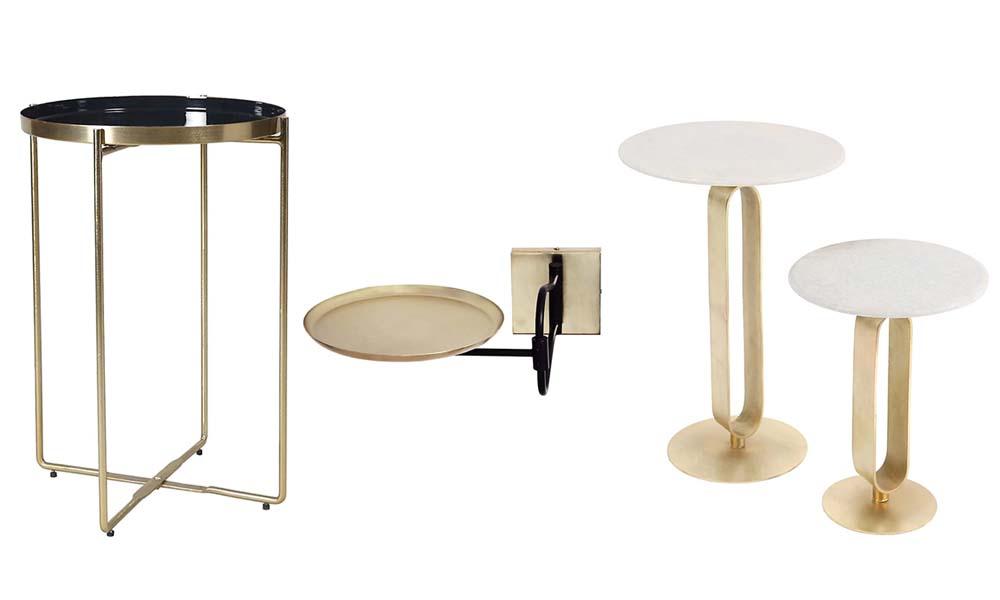 GlucksteinHome Aspen iron accent table, Lattice accent table, Monroe 2-piece table set
2. INVEST IN A LITTLE LUXURY
You don’t have a lot of space for furniture when designing your small bedroom, so look to bedding, wallcoverings, art, and accessories for some drama and a touch of luxury. Treat your room to that beautiful paint, finish, or piece of décor you’ve been eyeing but might not have wanted to invest in for a larger room.
3. USE SCONCES
With smaller nightstands, it’s likely you aren’t going to want to sacrifice that limited surface area with a table lamp. Free up room for books, an alarm clock, or your bedside beverages by using sconces or pendants on either side of the bed. As for how high to place your lighting fixtures, aim to have the bottom of the shade hit at or below eye level when sitting up to read in bed – that way you’ll be sure to avoid any irritating glares.
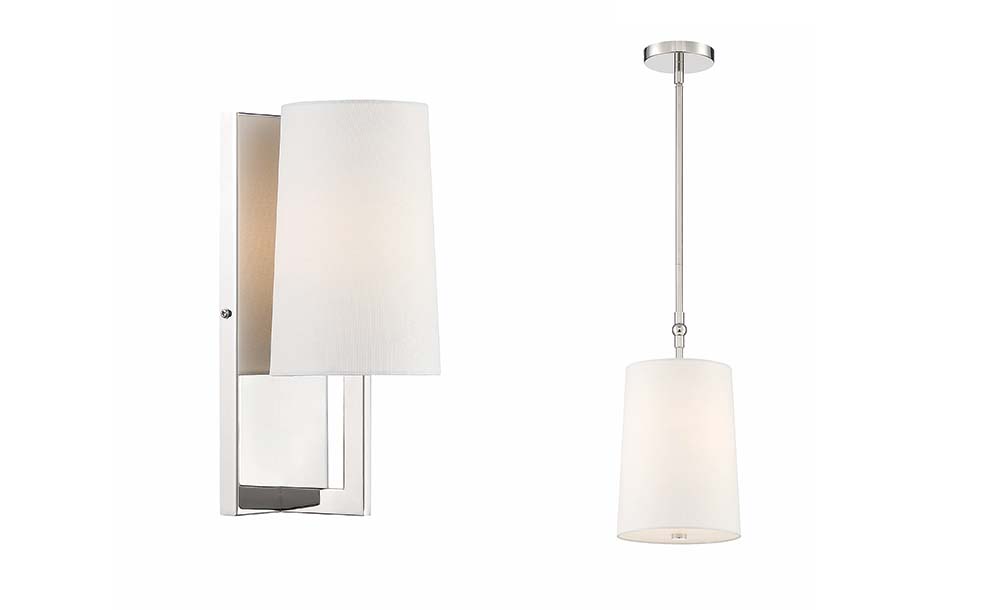 GlucksteinElements Dorset wall sconce and pendant
4. TRY A TALL HEADBOARD
When designing your small bedroom, a tall headboard will draw the eye up and make use of vertical space in the room. Not only that, but an upholstered headboard will also offer some soundproofing to the room for more restful nights and an overall cozier look and feel.
5. TAKE ADVANTAGE OF UNDER-BED STORAGE
A storage bed is the perfect companion to a small bedroom, especially if the space is a little too tight to include a dresser. Already have a bed that you aren’t looking to replace? There are plenty of rolling drawer options available you can purchase to use under a bed you already own.
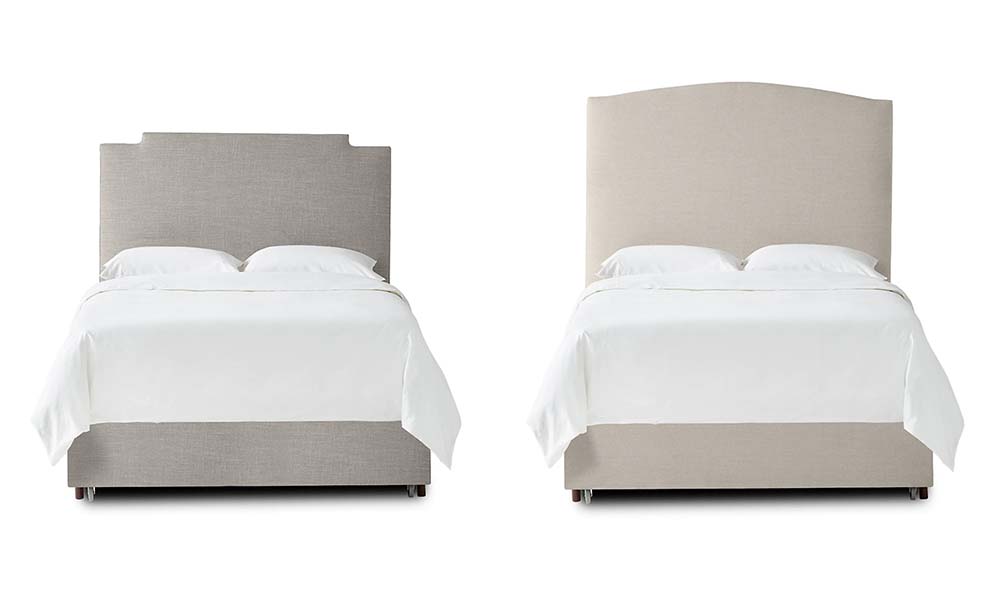 GlucksteinHome Crosby storage bed, Victoria storage bed
6. MAKE USE OF MIRRORS
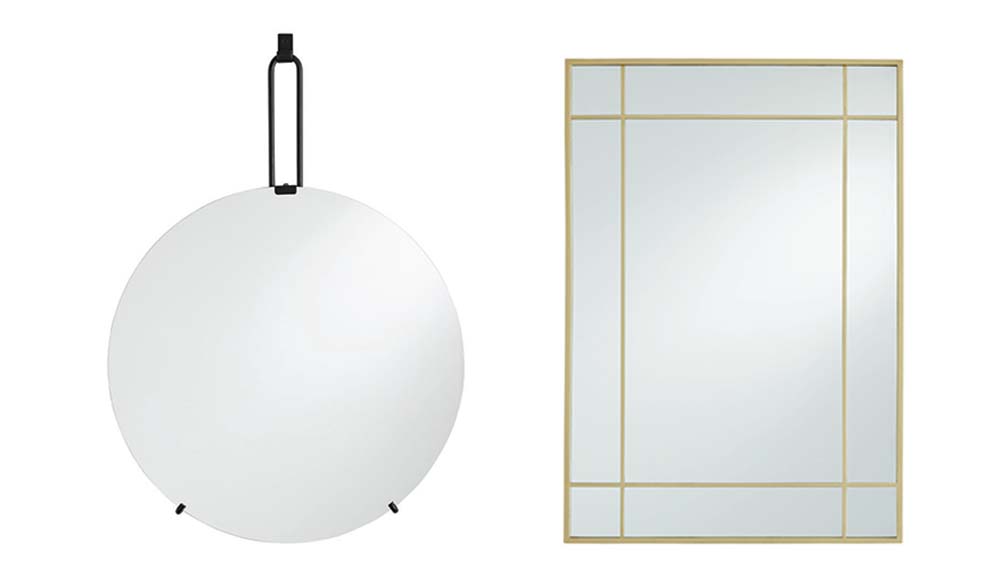
It may be common design knowledge at this point, but we’ll say it again; mirrors can go a long way to brighten a space and make it feel larger. Incorporate mirrors into your small bedroom by placing a stylish option above a dresser or vanity area.
Posted on
February 5, 2024
by
Marie Taverna
Looking to discover your design style? You’ve come to the right place.
We have to admit, there’s nothing quite like coming home – whether it’s been a day, a week, or just a couple hours running errands around town. Our homes welcome us in with the promise of rest, relaxation, and fun with family and friends. It’s a space to experiment with our creative side, whether you’re into cooking, DIY projects, or practicing dance routines. Even more special than that is a home that you can walk into and instantly recognize as your own by the story it tells through paint, pattern, furniture, and decor.
If you haven’t yet discovered your design style – that signature mix that best represents you – we’re sharing our top tips below to uncover yours. And do keep in mind that design styles can be constantly evolving, have no hard and fast rules, and can include blends of multiple styles for an eclectic look.
CREATE A MOODBOARD OF SPACES YOU LOVE
One of the best places to discover your design style, Pinterest is a home aficionados dream for its ability to inspire with fresh ideas to help decorate. If you aren’t sure of your design style or how you should go about decorating, try creating a Pinterest board and pinning interior images you love over the course of a few months, then take some time to notice similarities between the Pins. What sorts of interiors, colours, and details appear most often? Use that information to help you discover consistencies in your style.
THINK ABOUT THE WAY YOU DRESS
One of the first things interior designer Brian Gluckstein will take into consideration when working with a new client is the way they dress. Most often, the way someone dresses will offer cues to the way they’d like to experience their interior, too. For example, someone who loves vintage jewellery might also love glam, gilded furniture,. On the other hand, someone who dresses in streamlined cuts and limited colours might be more minimalist when it comes to their interior. What are the tried-and-true staples of your wardrobe? These might be helpful indicators for determining your personal decor style, too.
CONSIDER HOW YOU LIVE
When it comes to interiors – as much as with clothing – form isn’t the only important factor. Consider the function you need in your home, and what works for you and your household’s lifestyle. If you have pets or young kids, it may not make sense to have a ton of light, bright furniture pieces like in Scandinavian-inspired interiors. Hate clutter? Consider going minimalist to help you feel relaxed in your space and inspire you to continue living light. Like to feel like your interior isn’t too precious? Opt for an industrial look with lots of aged metals, rustic woods, and leathers that grow softer over time.
Here’s a recap of twelve of the most common design styles. And remember you can blend these looks and put your own spin on things for a look that suits you:
- Modern – Clean lines and sleek finishes, with occasional pops of colour.
- Traditional – Classic shapes, functional pieces, and a more formal aesthetic.
- Transitional – A blend between modern and traditional.
- Scandinavian – Minimal yet inviting, with lots of light woods and light neutrals.
- Minimalist – Pared back and focused on the essentials.
- Boho – Natural materials like cane and rattan mixed with playful colour and pattern.
- Eclectic – Aspects of many different design styles paired together.
- Modern Farmhouse – Rustic yet refined, with a lighter base and lots of black accents.
- Glam – Glimmering finishes with rich colours and textures.
- Industrial – Factory-inspired materials with a masculine edge.
- Coastal – Beachy, with lots of white-washed woods and blue accents.
- Mid-Century Modern – An aesthetic born from the 50s, with warm woods and sleek profiles.
Posted on
February 5, 2024
by
Marie Taverna
SURREY, BC – The Fraser Valley real estate market showed signs of recovery in January as home sales rose after six consecutive months of decline, and new listings more than doubled.
The Fraser Valley Real Estate Board recorded 938 transactions on its Multiple Listing Service® (MLS®) in January, a 12 per cent increase over December and below the 10-year average for sales in the region.
At 2,368, new listings increased 151 per cent in January, rebounding strongly from the seasonal lull seen in December. This is the largest month-over-month percentage increase in new listings in five years.
“With January sales on the rise, we are seeing hopeful signs that optimism is returning to the market,” said Narinder Bains, Chair of the Fraser Valley Real Estate Board. “Anticipating that we may be at the end of the Bank of Canada rate hike cycle, it appears that more buyers are considering re-entering the market as we are starting to see more traffic at open houses.”
Active listings in January were 4,877, up by 4 per cent over last month and up by 18 per cent over January 2023. The sales-to-active listings ratio was 19 per cent, representing balanced conditions in the overall market. Detached houses are in balanced market territory at 19 per cent, while both townhomes and apartments remain in seller’s market territory at 34 and 27 per cent respectively. The market is considered balanced when the ratio is between 12 per cent and 20 per cent.
“Current balanced market conditions present opportunities for both buyers and sellers,” said FVREB CEO, Baldev Gill. “In today’s market, buyers and sellers have time to get preapprovals, put together offers and take the time needed to work through the purchase or sale of a home with the help of a knowledgeable and professional REALTOR®.”
The average number of days homes are spending on the market has been increasing since October, with single family detached homes spending 44 days on the market, apartments spending 41 days on the market and townhomes moving more quickly at 33 days.
Overall Benchmark prices continued to edge downward for the sixth month in a row, losing less than half a per cent from December, and down six per cent from the 12-month peak in July.
MLS® HPI Benchmark Price Activity
• Single Family Detached: At $1,466,100, the Benchmark price for an FVREB single-family detached home decreased 0.4 per cent compared to December 2023 and increased 8.6 per cent compared to January 2023.
• Townhomes: At $825,600, the Benchmark price for an FVREB townhome decreased 0.1 per cent compared to December 2023 and increased 6.9 per cent compared to January 2023.
• Apartments: At $539,700, the Benchmark price for an FVREB apartment/condo increased 0.4 per cent compared to December 2023 and increased 6.5 per cent compared to January 2023.
The Fraser Valley Real Estate Board is an association of 5,147 real estate professionals who live and work in the BC communities of Abbotsford, Langley, Mission, North Delta, Surrey, and White Rock.
Posted on
February 5, 2024
by
Marie Taverna
While the Metro Vancouver market ended 2023 in balanced market territory, conditions in January began shifting back in favour of sellers as the pace of newly listed properties did not keep up with the jump in home sales.
The Real Estate Board of Greater Vancouver (REBGV) reports that residential sales in the region totalled 1,427 in January 2024, a 38.5 per cent increase from the 1,030 sales recorded in January 2023. This was 20.2 per cent below the 10-year seasonal average (1,788).
“It’s hard to believe that January sales figures came in so strong after such a quiet December, which saw many buyers and sellers delaying major decisions,” Andrew Lis, REBGV’s director of economics and data analytics said. “If sellers don’t step off the sidelines soon, the competition among buyers could tilt the market back into sellers’ territory as the available inventory struggles to keep pace with demand.”
There were 3,788 detached, attached and apartment properties newly listed for sale on the Multiple Listing Service® (MLS®) in Metro Vancouver in January 2024. This represents a 14.5 per cent increase compared to the 3,308 properties listed in January 2023. This was 9.1 per cent below the 10-year seasonal average (4,166).
The total number of properties currently listed for sale on the MLS® system in Metro Vancouver is 8,633, a 9.8 per cent increase compared to January 2023 (7,862). This is 0.3 per cent below the 10-year seasonal average (8,657).
Across all detached, attached and apartment property types, the sales-to-active listings ratio for January 2024 is 17.2 per cent. By property type, the ratio is 11.9 per cent for detached homes, 22.9 per cent for attached, and 19.9 per cent for apartments.
Analysis of the historical data suggests downward pressure on home prices occurs when the ratio dips below 12 per cent for a sustained period, while home prices often experience upward pressure when it surpasses 20 per cent over several months.
“Our 2024 forecast is calling for a two to three per cent increase in prices by the end of the year, which is largely the result of demand, once again, butting up against too little inventory,” Lis said. “If the January figures are indicative of what the spring market has in store, our forecast may already be off to an overly conservative start. Markets can shift quickly, however, and we’ll watch the February numbers to see if these early signs of strength continue, or whether they’re a blip in the data.”
The MLS® Home Price Index composite benchmark price for all residential properties in Metro Vancouver is currently $1,161,300. This represents a 4.2 per cent increase over January 2023 and a 0.6 per cent decrease compared to December 2023.
Sales of detached homes in January 2024 reached 379, a 28 per cent increase from the 296 detached sales recorded in January 2023. The benchmark price for a detached home is $1,942,400. This represents a 7.3 per cent increase from January 2023 and a 1.1 per cent decrease compared to December 2023.
Sales of apartment homes reached 746 in January 2024, a 30.6 per cent increase compared to the 571 sales in January 2023. The benchmark price of an apartment home is $751,900. This represents a 4.4 per cent increase from January 2023 and a 0.1 per cent increase compared to December 2023.
Attached home sales in January 2024 totalled 285, a 82.7 per cent increase compared to the 156 sales in January 2023. The benchmark price of a townhouse is $1,066,700. This represents a 4.3 per cent increase from January 2023 and a 0.6 per cent decrease compared to December 2023.
Download the January 2024 stats package.
Posted on
February 5, 2024
by
Marie Taverna
With a new year now underway, Canadians can expect to see a variety of changes coming to federal, provincial and local government housing legislation in 2024.
From updated taxes to revised urban planning regulations, new housing laws and policies will roll out across the country in the coming months. Several of these policies promise to boost much-needed housing supply, which remains at a critical shortage in both the resale and rental segments.
Here are the new housing policies that you should know about in 2024.
Federal Policies
Short-term Rental Restrictions
In November, 2023, the Government of Canada unveiled its 2023 Fall Economic Statement, which details new tax, spending and inventory-boosting measures. This includes new efforts to incentivise short-term rental operators to return properties to the long-term housing market. Going forward, income tax deductions will be denied in cases where short-term rental owners are not compliant with provincial or municipal licensing, permitting or registration requirements. This applies to all expenses incurred on or after January 1st, 2024.
You can read more details from the 2023 Fall Economic Statement here.
Pre-approved Home Design Catalogue
To boost construction of new home supply, the federal government intends to revive a post-Second World War housing policy of standardized, pre-approved home designs, making it easier and faster for developers to build new properties. The modern version of the catalogue will focus on creating blueprints for a variety of low-rise housing, and potentially higher-density homes and different forms of building construction, such as modular and prefabricated homes.
Consultations for the home catalogue are expected to start in January, 2024.
British Columbia
New Short-term Rental Housing By-laws
In late 2023, the provincial government introduced the Short-Term Rental Accommodations Act which imposes stricter regulations and enforcement on short-term rental housing. As of May 1st, 2024, the Act will require short-term rental hosts to display a valid business licence number on their listing in regions where a licence is required by the local government. Short-term rentals will be limited to the host’s principal residence, plus one secondary suite or accessory dwelling unit, in select communities.
Additionally, protections for ‘non-conforming use of property’ will no longer apply to short-term rentals. Later in the year, the British Columbia government will implement a short-term rental registry, and require rental platforms to share data with the Province.
Expanded Speculation and Vacancy Tax
The province has expanded its existing speculation and vacancy tax laws to 13 new communities, including Penticton, Courtenay and Kamloops. Homeowners in applicable regions will be required to declare how they used their property in 2024 for the first time in January, 2025.
Introduced in 2018, the speculation and vacancy tax is 2% for individuals who don’t pay the majority of their taxes in Canada, or 0.5% for Canadian citizens or permanent residents who pay the majority of their taxes in the country.
Updated Zoning Rules
New zoning laws are under consideration to deliver more small-scale, multi-unit housing across British Columbia. Under the proposed legislation, one secondary suite or one laneway home will be permitted in all communities throughout the province. In most areas within municipalities of more than 5,000 people, by-laws will also be adapted to allow three to four units on lots currently zoned exclusively for single-family or duplex residential, and permit six units on larger lots close to transit stops with frequent service.
Additionally, the new zoning rules would require municipalities to update community plans and zoning by-laws on a regular basis to ensure that there is enough housing for current and future residents. Changes to zoning by-laws will roll out across 2024.
Alberta
Interest on Security Deposits
Alberta landlords will be required to pay annual interest on security deposits they receive from their tenants. Effective January 1st, 2024, the interest rate payable on security deposits will be set at 1.6% under the Residential Tenancies Act and Mobile Home Sites Tenancies Act. Previously, security deposits did not incur interest.
Toronto
New Luxury Home Tax
Effective January 1st, 2024, the City of Toronto will enforce graduated Municipal Land Transfer Tax thresholds for high value residential properties. Previously, homes valued at $2 million or more would be subject to a MLTT rate, which is currently set at 2.5%. Going forward, additional thresholds have been established for homes priced between $3 million and $20 million, with the new rates set incrementally higher based on the value of the home.
Legalization of Rooming Houses
Otherwise known as multi-tenant homes, rooming houses will become legal in the City of Toronto starting March 31st, 2024, along with new regulations. Previously, rooming houses were not legal in some areas of the city. Under the new framework, Toronto rooming houses will be limited to a maximum number of rooms and parking, licensing requirements, and will be required to follow a compliance program. A multi-tenant house is defined as a building with four or more rooms that may have a shared washroom and kitchen.
Increase in Vacant Home Tax Rates
In 2023, Toronto introduced its first ever Vacant Home Tax (VHT), which requires homeowners to declare the occupancy status of their residence to the municipality each year. The VHT was implemented to increase housing supply in Toronto by encouraging the conversion of empty properties into occupied homes.
The VHT has been increased from 1% to 3% for the 2024 taxation year, which will become payable in 2025.
Posted on
January 17, 2024
by
Marie Taverna
With a new year comes a new wave of home design trends. From furniture to colour schemes, the arrival of a new year is the perfect time to think about updating your home interiors to incorporate current styles. Refreshing your living spaces doesn’t require a major overhaul — swapping out your cabinetry hardware or revamping your linens can make a noticeable difference in any room.
Here are six interior design trends for 2024 you can try in your home:
Bold colours and patterns
If you’ve got a love for dramatic interiors, then 2024 is the year for you. This year is all about “go big, or go home,” with punchy colours, patterns and textures taking centre stage. Begone with all neutral interiors and playing it safe — 2024 is the year to experiment with zesty kitchen backsplashes, maximalist accessories and artwork, and over-the-top lighting fixtures.
Handmade and artisan goods
Our craving for natural elements in home interiors continues in 2024 as handmade accessories rise in popularity. Bespoke pieces made from wood, clay, wicker and glass will be a sought-after statement piece in interiors this year, as earthy inspiration remains a dominant design theme. If you’re looking to incorporate unique pieces into your living space, seek out ceramics, wood carvings and glass work at local markets and galleries to add to your walls and tables. Bonus points for adding pieces you’ve collected on your travels around the globe!
Shades of brown and blue
Earth-like colours will be a standout component of 2024 home interiors.
Several paint companies have named a shade of blue as their 2024 Colour of the Year, such as Benjamin Moore’s Blue Nova, or Sherwin Williams’ Upward. Interior designers are also forecasting that varieties of brown will be a big hit this year as a rich neutral accent colour, over the cooler gray tones we’ve seen in recent years. You can bring browns and blues into your home in 2024 through paint, tile and wallpaper choices, or by incorporating natural elements like wood furnishings, curtains and accessories.
Begone basic bouclé
We’re all familiar with creme-coloured bouclé — the nubbly fabric that has dominated everything from living room chairs to sweaters for the past couple of years. With 2024 seeing bolder and brighter patterns, the sheep-like bouclé we know and love is being phased out. Instead, bouclé with fluffier texture and more vibrant colours is coming into style. Don’t feel the need to go full-on, wall-to-wall bouclé to capture this trend. Instead, opt for a rug, cushion cover or accent furniture that can easily be swapped out as interior styles evolve.
Continuation of curves
Round shapes were a staple in 2023 interiors, and the trend is continuing into this year. Parting from straight, perfect lines, curves embrace the imperfections and organic shapes we find in the natural world. If you’re looking to take a page from the book of biophilic design, bring curves into your interiors with round furniture, such as bar stools, sectional “conversation,” sofas and coffee tables, or curved accessories like mirrors and rugs.
Mixing metallics
Mixing metals was once considered a fashion faux pas, but not this year. Taking a break from matte black fixtures, 2024 will see the rise of mixed metal finishes and hardware, combining varieties of nickel, bronze, gold and brass. You can experiment with metals beyond just door handles and drawer knobs — introduce a mix of metals with contrasting accent lighting fixtures, faucets, appliance finishes and decor accents.
Curious to know what interior design trends defined 2023? Take a look at our list from last year here.
Subscribe to get the latest updates
Posted on
January 17, 2024
by
Marie Taverna
A resurgence of activity in Canada’s housing market is expected this spring, with sidelined buyers banking on a drop in interest rates
Nationally, home prices ended 2023 up 4.3% over prior year despite market slowdown
High interest rates have caused many homebuyers and sellers to push pause on their real estate plans over the last six months, significantly curtailing overall activity in housing markets across the country. However, as Canadians continue to adjust to higher borrowing costs, and the first anticipated rate cut by the Bank of Canada nears, a brisk spring market is on the horizon.
“I believe the narrative suggesting that the housing market will rebound only when the Bank of Canada lowers rates misses the mark,” said Phil Soper, president and CEO of Royal LePage. “The recovery will begin when consumers have confidence the home they buy today will not be worth less tomorrow. We see that tipping point occurring in the first quarter, before the highly anticipated easing of the Bank of Canada’s key lending rate.”
According to the Royal LePage House Price Survey released today, the aggregate1 price of a home in Canada increased 4.3% year over year to $789,500 in the fourth quarter of 2023. On a quarter-over-quarter basis, however, the national aggregate home price decreased slightly by 1.7%, highlighting that elevated borrowing costs continue to affect market activity, as Canadians adapt to the higher interest rate environment.
Royal LePage recently issued its 2024 Market Survey Forecast, projecting that the aggregate price of a home in Canada will increase 5.5% in the fourth quarter of 2024, compared to the same quarter in 2023.
In December, the Bank of Canada once again held its key lending rate steady at 5.0%, and indicated that it has likely concluded its interest rate increase campaign and could begin making modest cuts later this year.
“The Bank of Canada governing council will soon face the difficult task of trying to balance the lowering of interest rates without simultaneously stimulating spending, which would cause inflation to rise again,” said Soper.
In November, the Consumer Price Index (CPI) rose 3.1% per cent on a year-over-year basis, matching the increase in October.2 If mortgage interest costs are taken out of the CPI calculation, inflation sits at 2.2%, close to the Bank of Canada’s target rate.3
“Similar to what we witnessed last spring, when the Bank of Canada paused rates for the first time in a year causing sales activity and prices to increase almost immediately, the first sign of rate cuts – even if only by 25 basis points – could create a flurry of activity in the real estate market, releasing pent-up demand. Those who have been holding off listing their homes will follow close behind,” added Soper.
Read Royal LePage’s fourth quarter release for national and regional insights.
Fourth quarter press release highlights:
- Aggregate home price in greater regions of Toronto, Montreal and Vancouver posted gains of 5.1%, 4.1% and 2.7% year over year, respectively, in final quarter of 2023
- Among report’s major regions, Calgary recorded highest year over year price appreciation (10.7%); only major region to post quarterly price gains in Q4 2023 (1.5% over Q3)
- 81% of regional markets posted a quarter-over-quarter decline
- Approximately 2.2 million mortgages in Canada will be renewing over the next two years, most at a much higher interest rate
Posted on
January 10, 2024
by
Marie Taverna
  Elevate your living space with the hottest interior design trends of 2024! Whether you're redesigning your kitchen, bathroom, or exploring new colour palettes, we've got you covered. Here's a curated list to inspire your home transformation:
 Multi-functional Spaces: Adapt to the times with clever, multifunctional rooms that maximize smaller spaces, reflecting a shift towards valuing experiences over larger homes.
Mid Toned Wood Floor: Choose oak and white washedfloors to stay on-trend, steering clear of grey, orange, or brassy undertones.
The Revival of Burgundy and Plum: Bid farewell to black and green as burgundy, plum, and French country blues take center stage in 2024.
Zellige Tiles: Add an organic touch to your space with these imperfectly cut beige tiles in kitchens, bathrooms, and laundry rooms.
Blues as Top Color Trend: Create a timeless atmosphere with soft and fresh tones of blue, perfect when paired with classic white and black.
Taupe and Beige Cabinets: Infuse a touch of elegance by incorporating gold accents for a current kitchen vibe.
Ready to transform your home? Let us know what you think of these trends in the comments below!
Posted on
January 10, 2024
by
Marie Taverna
Posted on
January 4, 2024
by
Marie Taverna
Metro Vancouver housing market shows resilience in 2023, ending the year in balanced territory
Metro Vancouver’s housing market closed out 2023 with balanced market conditions, but the year-end totals mask a story of surprising resilience in the face of the highest borrowing costs seen in over a decade.
The Real Estate Board of Greater Vancouver (REBGV) reports that residential sales in the region totalled 26,249 in 2023, a 10.3 per cent decrease from the 29,261 sales recorded in 2022, and a 41.5 per cent decrease from the 44,884 sales in 2021.
Last year’s sales total was 23.4 per cent below the 10-year annual sales average (34,272).
“You could miss it by just looking at the year-end totals, but 2023 was a strong year for the Metro Vancouver housing market considering that mortgage rates were the highest they’ve been in over a decade,” Andrew Lis, REBGV’s director of economics and data analytics said. “In our 2023 forecast, we called for modest price increases throughout the year while most other forecasters were predicting price declines. The fact that we ended the year with five-per-cent-plus gains in home prices across all market segments demonstrates that Metro Vancouver remains an attractive and desirable destination, and elevated borrowing costs alone aren’t enough to dissuade buyers determined to get into this market.”
Properties listed on the Multiple Listing Service® (MLS®) in Metro Vancouver totalled 50,893 in 2023. This represents a 7.5 per cent decrease compared to the 55,047 properties listed in 2022. This was 20.2 per cent below the 63,761 properties listed in 2021.
The total number of properties listed last year was 10.5 per cent below the region’s 10-year total annual average of (56,868).
Currently, the total number of homes listed for sale on the MLS® system in Metro Vancouver is 8,802, a 13 per cent increase compared to December 2022 (7,791). This is 0.3 per cent above the 10-year seasonal average (8,772).
The MLS® Home Price Index composite benchmark price for all residential properties in Metro Vancouver is currently $1,168,700. This represents a five per cent increase over December 2022 and a 1.4 per cent decrease compared to November 2023.
“Ultimately, the story of 2023 is one of too few homes available relative to the pool of willing and qualified buyers,” Lis said. “Sellers were reluctant to list their properties early in the year, which led to fewer sales than usual coming out of the gate. But this also led to near record-low inventory levels in the spring, which put upward pressure on prices as buyers competed for the scarce few homes available.”
“Looking back on the year, it’s hard not to wonder how we’d be closing out 2023 if mortgage rates had been a few per cent lower than they were. And it looks like we might get some insight into that question in 2024, as bond markets and professional forecasters are projecting lower borrowing costs are likely to come, with modest rate cuts expected in the first half of the New Year.”
December 2023 summary
Residential sales in the region totalled 1,345 in December 2023, a 3.2 per cent increase from the 1,303 sales recorded in December 2022. This was 36.4 per cent below the 10-year seasonal average (2,114).
There were 1,327 detached, attached and apartment properties newly listed for sale on the Multiple Listing Service® (MLS®) in Metro Vancouver in December 2023. This represents a 9.9 per cent increase compared to the 1,208 properties listed in December 2022. This was 22.7 per cent below the 10-year seasonal average (1,716).
Across all detached, attached and apartment property types, the sales-to-active listings ratio for December 2023 is 16 per cent. By property type, the ratio is 11.1 per cent for detached homes, 18.7 per cent for attached, and 19.6 per cent for apartments.
Analysis of the historical data suggests downward pressure on home prices occurs when the ratio dips below 12 per cent for a sustained period, while home prices often experience upward pressure when it surpasses 20 per cent over several months.
Sales of detached homes in December 2023 reached 376, a 1.3 per cent increase from the 371 detached sales recorded in December 2022. The benchmark price for a detached home is $1,964,400. This represents a 7.7 per cent increase from December 2022 and a 0.9 per cent decrease compared to November 2023.
Sales of apartment homes reached 719 in December 2023, a 2.4 per cent increase compared to the 702 sales in December 2022. The benchmark price of an apartment home is $751,300. This represents a 5.6 per cent increase from December 2022 and a 1.5 per cent decrease compared to November 2023.
Attached home sales in December 2023 totalled 238, a 7.2 per cent increase compared to the 222 sales in December 2022. The benchmark price of a townhouse is $1,072,700. This represents a 6.4 per cent increase from December 2022 and a 1.8 per cent decrease compared to November 2023.
Download the December 2023 stats package.
#marietaverna #royallepagecanada #royallepagewestrealestateservices #marketstats #realestate #realestatemarketupdate #coquitlamrealestate #portcoquitlamrealestate #portmoodyrealestate #coquitlambc #portcoquitlambc #portmoodybc #realestate #homes #townhome #condos #360hometours
Posted on
January 4, 2024
by
Marie Taverna
Metro Vancouver housing market shows resilience in 2023, ending the year in balanced territory
Metro Vancouver’s housing market closed out 2023 with balanced market conditions, but the year-end totals mask a story of surprising resilience in the face of the highest borrowing costs seen in over a decade.
The Real Estate Board of Greater Vancouver (REBGV) reports that residential sales in the region totalled 26,249 in 2023, a 10.3 per cent decrease from the 29,261 sales recorded in 2022, and a 41.5 per cent decrease from the 44,884 sales in 2021.
Last year’s sales total was 23.4 per cent below the 10-year annual sales average (34,272).
“You could miss it by just looking at the year-end totals, but 2023 was a strong year for the Metro Vancouver housing market considering that mortgage rates were the highest they’ve been in over a decade,” Andrew Lis, REBGV’s director of economics and data analytics said. “In our 2023 forecast, we called for modest price increases throughout the year while most other forecasters were predicting price declines. The fact that we ended the year with five-per-cent-plus gains in home prices across all market segments demonstrates that Metro Vancouver remains an attractive and desirable destination, and elevated borrowing costs alone aren’t enough to dissuade buyers determined to get into this market.”
Properties listed on the Multiple Listing Service® (MLS®) in Metro Vancouver totalled 50,893 in 2023. This represents a 7.5 per cent decrease compared to the 55,047 properties listed in 2022. This was 20.2 per cent below the 63,761 properties listed in 2021.
The total number of properties listed last year was 10.5 per cent below the region’s 10-year total annual average of (56,868).
Currently, the total number of homes listed for sale on the MLS® system in Metro Vancouver is 8,802, a 13 per cent increase compared to December 2022 (7,791). This is 0.3 per cent above the 10-year seasonal average (8,772).
The MLS® Home Price Index composite benchmark price for all residential properties in Metro Vancouver is currently $1,168,700. This represents a five per cent increase over December 2022 and a 1.4 per cent decrease compared to November 2023.
“Ultimately, the story of 2023 is one of too few homes available relative to the pool of willing and qualified buyers,” Lis said. “Sellers were reluctant to list their properties early in the year, which led to fewer sales than usual coming out of the gate. But this also led to near record-low inventory levels in the spring, which put upward pressure on prices as buyers competed for the scarce few homes available.”
“Looking back on the year, it’s hard not to wonder how we’d be closing out 2023 if mortgage rates had been a few per cent lower than they were. And it looks like we might get some insight into that question in 2024, as bond markets and professional forecasters are projecting lower borrowing costs are likely to come, with modest rate cuts expected in the first half of the New Year.”
December 2023 summary
Residential sales in the region totalled 1,345 in December 2023, a 3.2 per cent increase from the 1,303 sales recorded in December 2022. This was 36.4 per cent below the 10-year seasonal average (2,114).
There were 1,327 detached, attached and apartment properties newly listed for sale on the Multiple Listing Service® (MLS®) in Metro Vancouver in December 2023. This represents a 9.9 per cent increase compared to the 1,208 properties listed in December 2022. This was 22.7 per cent below the 10-year seasonal average (1,716).
Across all detached, attached and apartment property types, the sales-to-active listings ratio for December 2023 is 16 per cent. By property type, the ratio is 11.1 per cent for detached homes, 18.7 per cent for attached, and 19.6 per cent for apartments.
Analysis of the historical data suggests downward pressure on home prices occurs when the ratio dips below 12 per cent for a sustained period, while home prices often experience upward pressure when it surpasses 20 per cent over several months.
Sales of detached homes in December 2023 reached 376, a 1.3 per cent increase from the 371 detached sales recorded in December 2022. The benchmark price for a detached home is $1,964,400. This represents a 7.7 per cent increase from December 2022 and a 0.9 per cent decrease compared to November 2023.
Sales of apartment homes reached 719 in December 2023, a 2.4 per cent increase compared to the 702 sales in December 2022. The benchmark price of an apartment home is $751,300. This represents a 5.6 per cent increase from December 2022 and a 1.5 per cent decrease compared to November 2023.
Attached home sales in December 2023 totalled 238, a 7.2 per cent increase compared to the 222 sales in December 2022. The benchmark price of a townhouse is $1,072,700. This represents a 6.4 per cent increase from December 2022 and a 1.8 per cent decrease compared to November 2023.
Download the December 2023 stats package.
|
 Subscribe with RSS Reader






 The data relating to real estate on this website comes in part from the MLS® Reciprocity program of either the Greater Vancouver REALTORS® (GVR), the Fraser Valley Real Estate Board (FVREB) or the Chilliwack and District Real Estate Board (CADREB). Real estate listings held by participating real estate firms are marked with the MLS® logo and detailed information about the listing includes the name of the listing agent. This representation is based in whole or part on data generated by either the GVR, the FVREB or the CADREB which assumes no responsibility for its accuracy. The materials contained on this page may not be reproduced without the express written consent of either the GVR, the FVREB or the CADREB.