Posted on
June 2, 2023
by
Marie Taverna
Warmer weather and sunnier skies are upon us. With the Victoria Day long weekend (aka the unofficial start to summer) on the horizon, thousands of Canadians are preparing to reopen the cottages for the season once again. Of course, you can’t just jump straight into enjoying a weekend away at the cabin without a little maintenance work first. Unwinterized properties that have been vacant for the last several months will need some love and attention to get them up and running again post-winter.
If you’re thinking of re-opening your cottage this weekend or sometime soon, here are a few tips to make the process smooth and simple:
Start the reopening process before you arrive
Before you make the long drive to the cottage, begin the reopening process a couple of weeks before you plan to access the property.
Start by calling your utility providers to turn on the power, internet, gas and any other services you may have paused during the off season. While you’re at it, it doesn’t hurt to schedule a chimney inspection and a cleaning of your septic tank or outhouse to ensure your cottage’s major systems are up to par. Check in with your insurance provider to make sure that the policy for your property, boats, ATVs and trailers are up to date. Don’t forget to pack your reopening essentials too, like batteries, tools, keys and cleaning supplies.
Take a walk around the property
Upon arrival, do a thorough walk about your lot to look for signs of weather damage. Inspect the roof for missing shingles, blocked gutters, leaks or any branches that may have fallen during the winter. On the ground, keep an eye out for signs of rot on your deck or siding, broken windows or wildlife that may have made their way indoors during the winter.
Once inside, inspect your cottage for dampness, pests or unpleasant odours. Get some fresh air running through your cottage and flush out any stale smells by opening all of the windows and doors. This is also a good opportunity to look for any mould or mildew that may be lurking around window sills and entryways. If there is any serious damage to the property, be sure to alert your insurance provider immediately.
Restore the utilities
Once your property looks safe inside and outside, it’s time to boot up the electricity and water again.
When closing your cottage, you likely drained the pipes and shut off the water supply. Before you turn on the taps, inspect your pipes for leaks or cracks that may have occurred from freezing — a burst pipe is not a fun way to start out the cottage season! If pipes were disconnected, be sure to reconnect them before starting your water pump, filling your water heater and replacing the filter. Once you turn your main valve on, allow water to run through one faucet for a few minutes to flush the water lines. Water systems vary by property – some draw from a well while others draw water from a lake – so enlist the help of a professional if necessary.
When it comes to turning your cottage’s electricity back on, inspect your metre and power lines before flipping on the main switch. Go room by room to ensure major appliances, lights and outlets are working as they should.
Restock the essentials
Before you officially break out the Muskoka chairs and settle in, remember to check those smaller to-do items off your list. Ensure that your smoke alarms and carbon monoxide detectors have fresh batteries and replace the filter in your central air system if you have one. Don’t forget to refill fire extinguishers and top up the first aid kit with new supplies before you kick back and relax.
Looking for insights into Canada’s most popular cottage country markets? Check out the latest findings in the Royal LePage 2023 Spring Recreational Property Report.
Posted on
June 2, 2023
by
Marie Taverna
Many Canadians are keen to get a foot on the investment property ladder. For some, that means prioritizing an income property ahead of their own home.
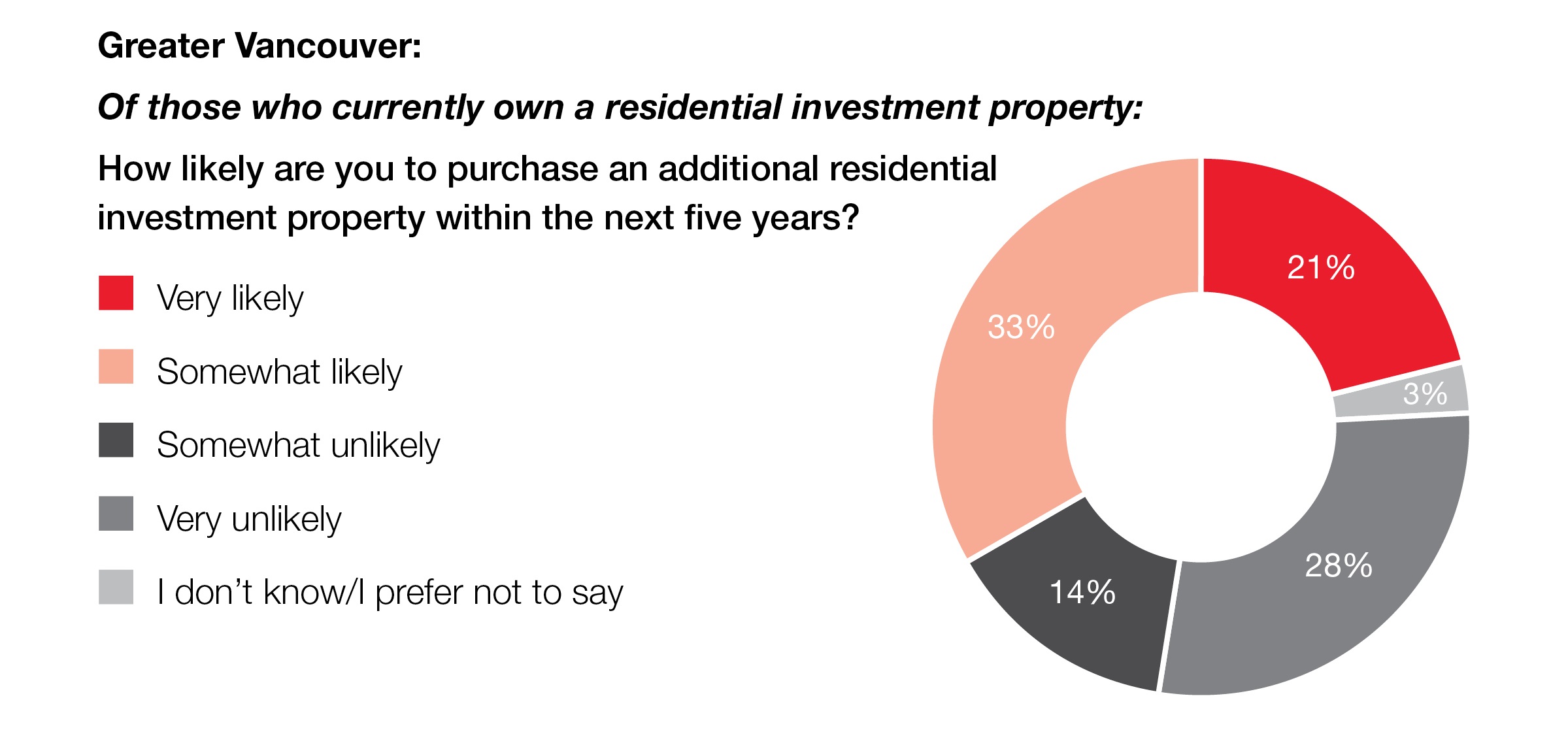
According to a recent Royal LePage survey conducted by Leger,1 21% of investors in the Greater Vancouver region do not own their primary residence (a combination of those who rent and live rent-free) – notably higher than the national average of 15% (14% in the GTA and 15% in the GMA). 54% of investors in the region say that they are likely to purchase an additional residential investment property within the next five years. This is higher than the national figure (51%), and those in the greater regions of Toronto (47%) and Montreal (52%).
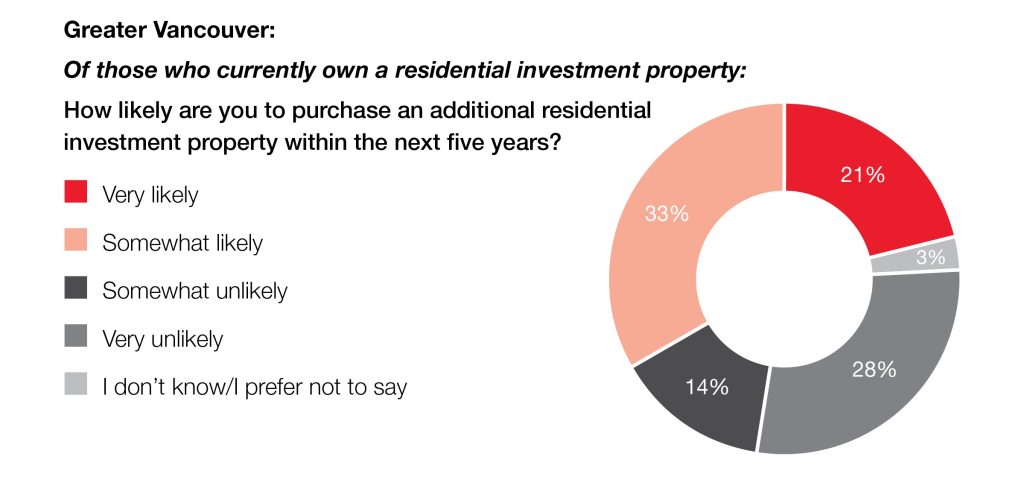
The appetite for real estate investment is strong in the Greater Vancouver area. Unlike stocks or other investment types, real estate investing offers the convenience of dual utility – you can live in your home or rent it out as a source of income. There is a positive association between home ownership and the creation of personal wealth in Vancouver. Buying an investment property is an important financial decision for many investors who are looking to take advantage of anticipated long-term price growth in the region. As trusted advisors to our clients, we often guide prospective investors to not just buy the market, but to focus on buying the opportunity, especially during slower seasonal periods and market corrections
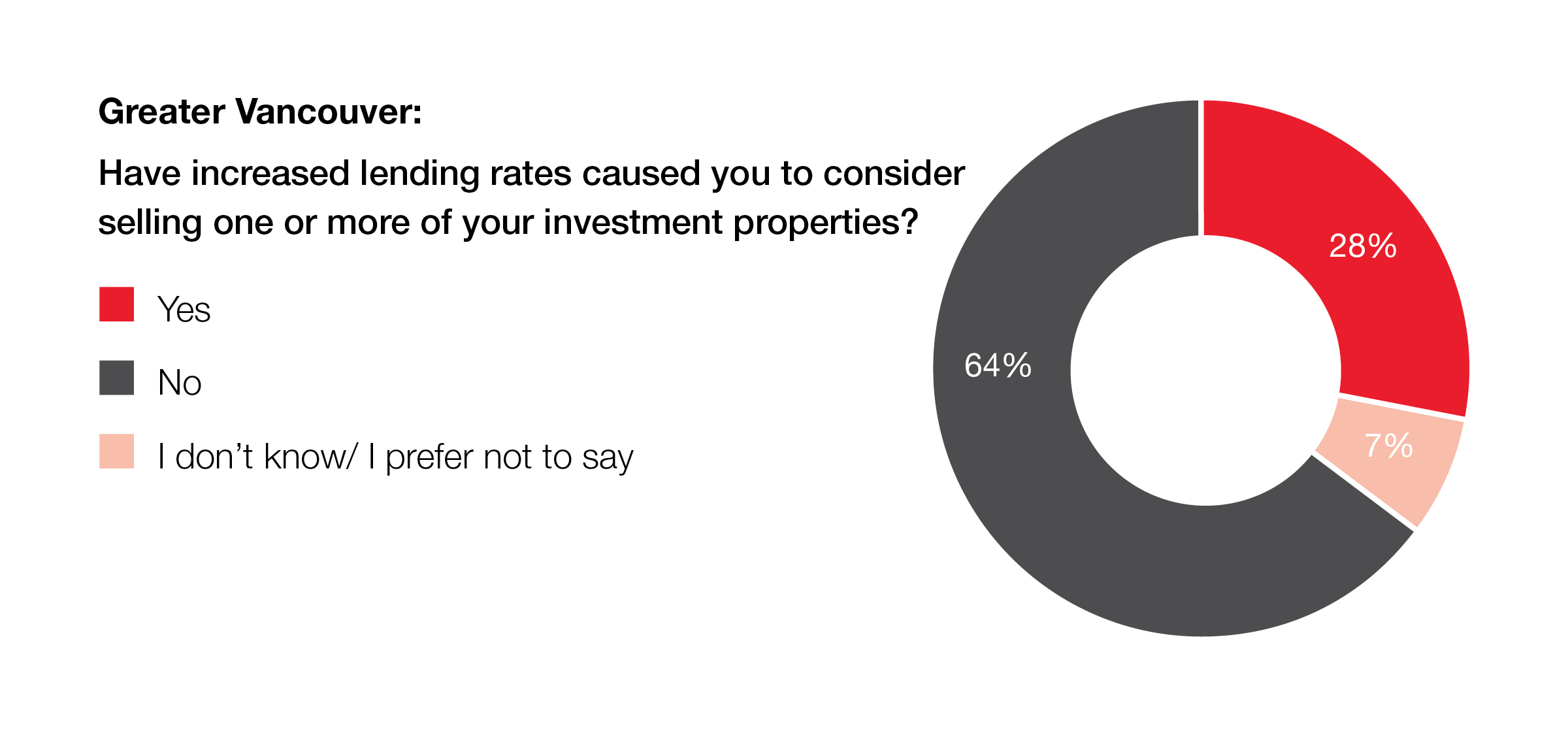
According to the survey, 28% of investors in Greater Vancouver say that increased lending rates have caused them to consider selling one or more of their investment properties. When asked about their plans for the future, 28% of investors in the region say they are likely to sell one or more of their investment properties within the next two years.
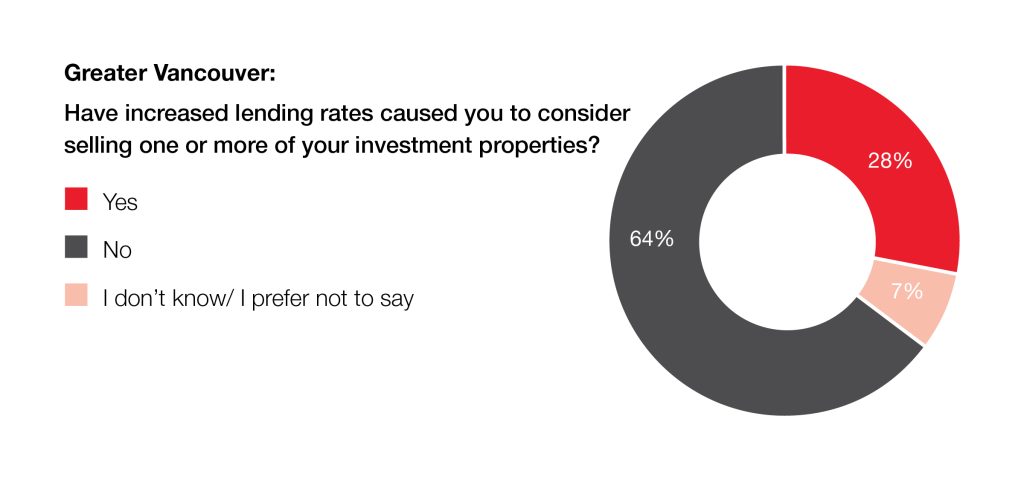
When the pandemic took hold, many in the industry, including myself, thought there would be a slowdown in investor appetite as buyers moved away from condos and opted for more space in the suburbs. However, those changes never fully materialized – investor confidence has held firm. In fact, it came back stronger than ever with the help of record low interest rates. In today’s post-pandemic era, despite higher borrowing costs, I expect more people will enter the investor segment as rates hold and eventually ease. Buyers will be looking for opportunities in the market.
Continue reading for more insights into the national real estate investor market.
1 An online survey of 1003 Canadians 18+, who own one or more residential investment properties, was completed between March 2, 2023, and March 17, 2023, using Leger’s online panel. No margin of error can be associated with a non-probability sample (i.e., a web panel in this case). For comparative purposes, though, a probability sample of 1003 respondents would have a margin of error of ±3%, 19 times out of 20. N.B
Posted on
June 2, 2023
by
Marie Taverna
Despite higher lending rates and lower levels of inventory, the desire to own a home in Canada remains strong, especially among those who see ownership as a way to support their financial future. Canadians continue to look to the housing market as a means of building generational wealth and an additional source of income, and many are planning to try their hand in real estate investing within the coming years.
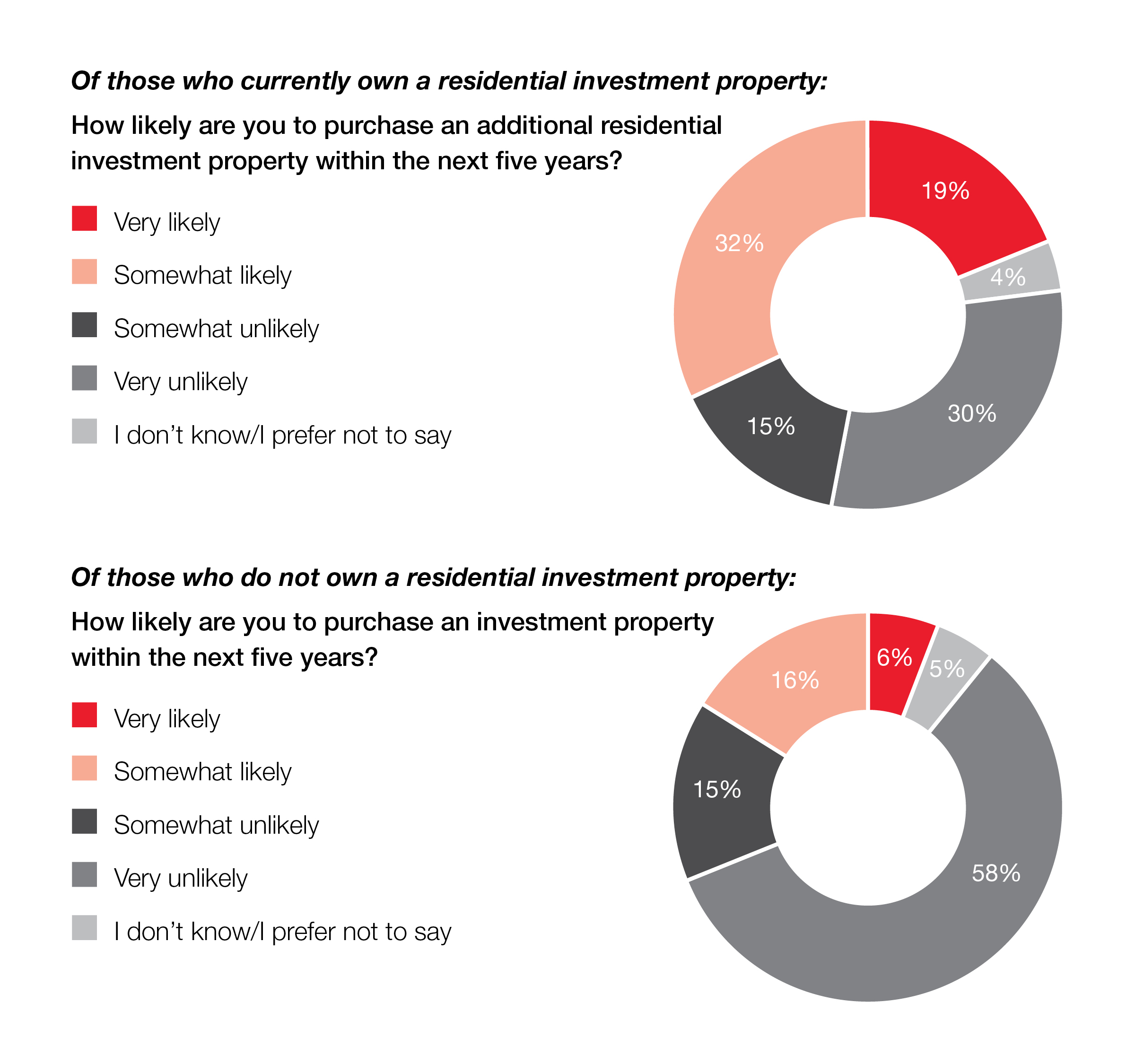
According to a recent Royal LePage survey conducted by Leger,1 23% of Canadians who do not own a residential investment property say that they are likely to purchase one in the next five years, and more than half (51%) of current investors say that they are likely to purchase an additional residential investment property within the same time period. Overall, 26% of all Canadians, current investors or otherwise, plan to buy an investment property before 2028.
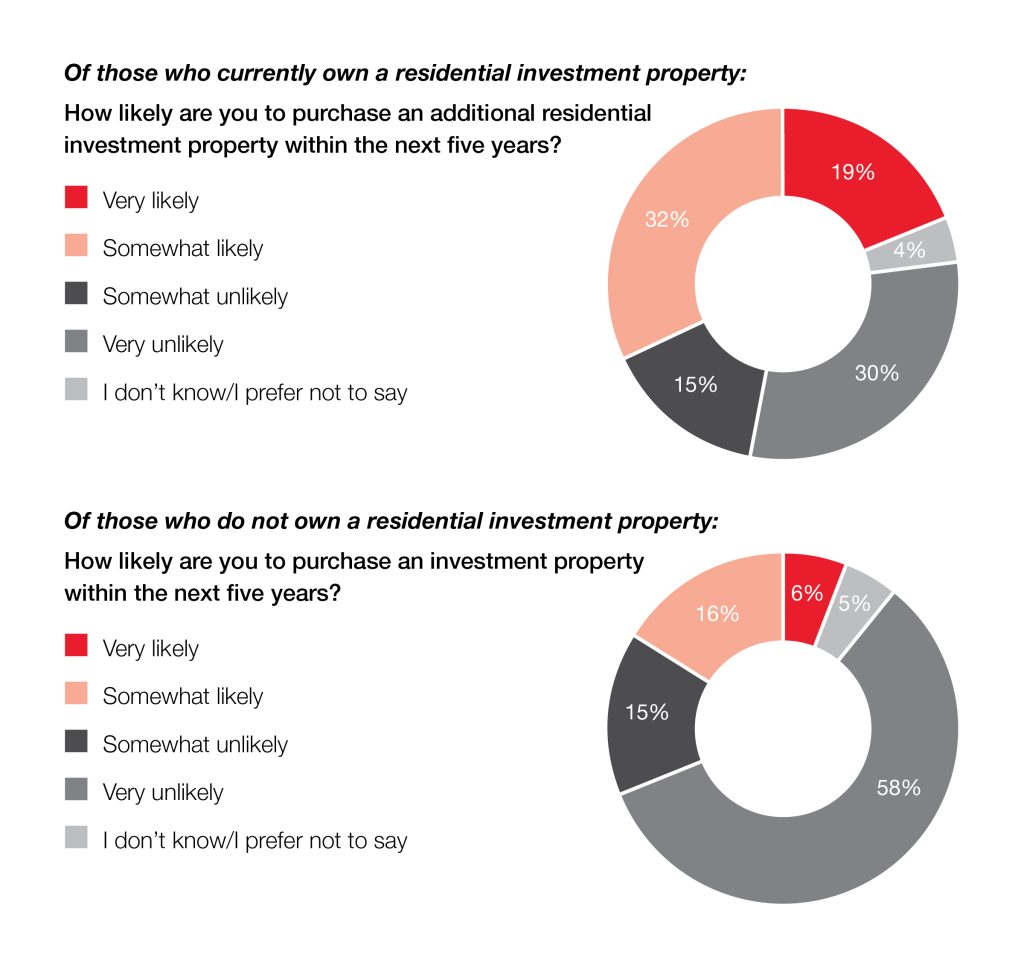
“We know that the value of home ownership is strong among Canadians – it is clear that possessing real estate remains a desirable means for building wealth over time. Many choose to invest in real estate not only as a way of generating income and reaping the benefits of value appreciation, but to provide an opening into the market for future generations of their family, ” said Phil Soper, president and CEO, Royal LePage. “Despite the hurdles of low home supply and increased lending rates, young people are more inclined than ever to make real estate investing a part of their financial planning for the future. In fact, survey results tell us that many of them are actually prioritizing an investment property over owning their primary residence.”
15% of Canadian residential investors do not own their primary residence (12% rent and 3% live for free with family or friends); the majority of whom are aged 18-34.
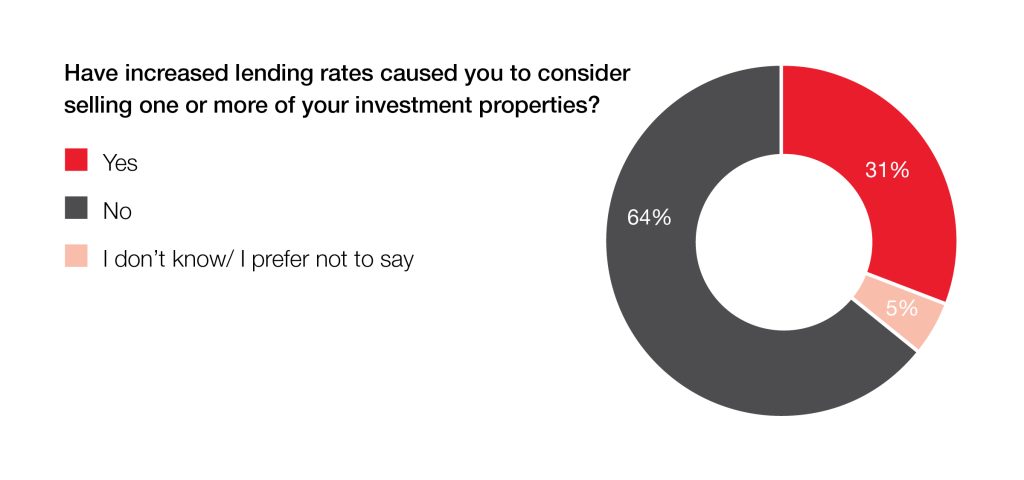
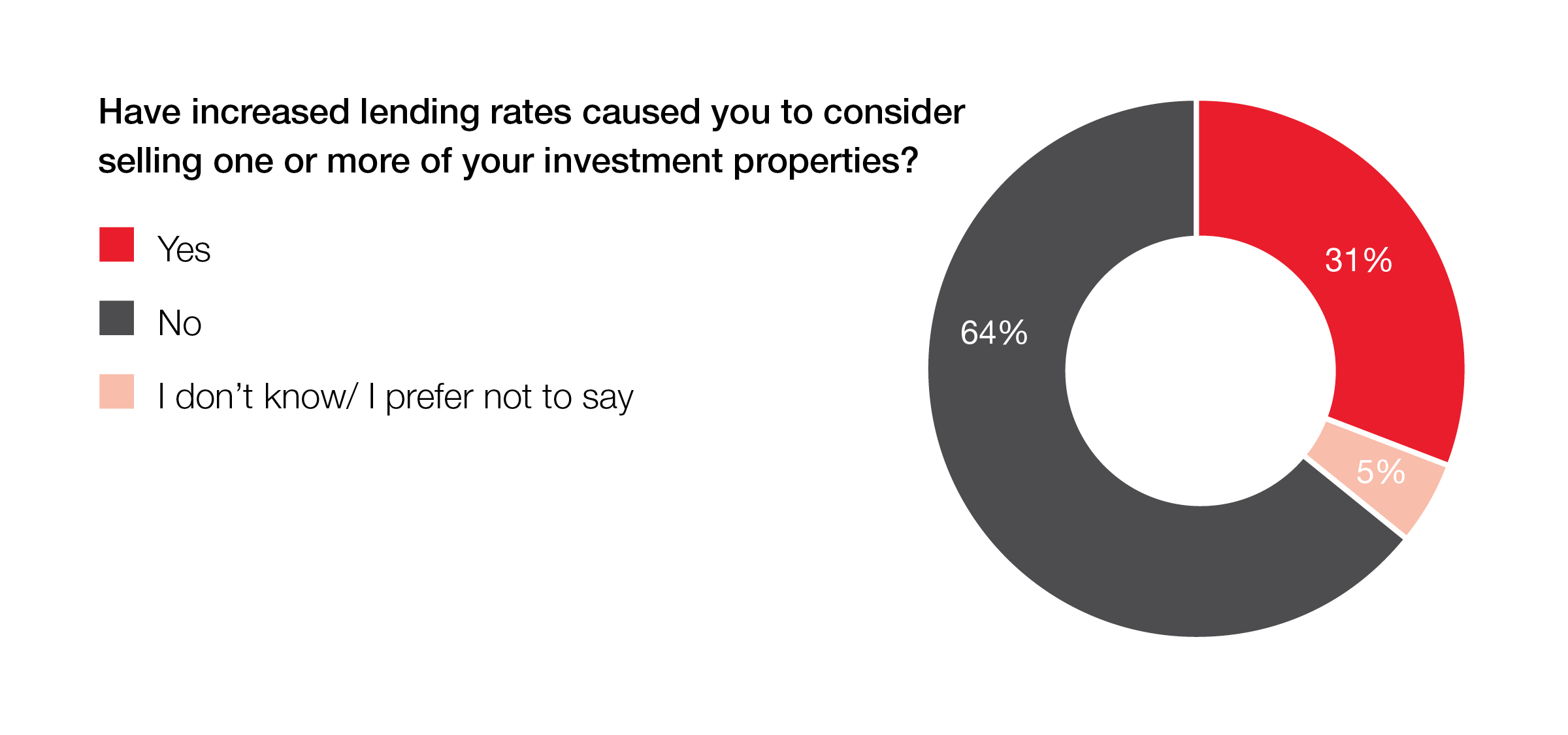
The increased cost of borrowing has had a significant impact on variable-rate mortgage holders in Canada over the past year, and those with investment properties have also been feeling the effects. Increased lending rates have caused nearly one third of investors (31%) to consider selling one or more of their properties. Investors aged 18 to 34 are the most likely to weigh the decision of selling at least one of their investment properties (54%).
“Much higher mortgage rates and the increased cost of home maintenance and utilities have prompted some over-leveraged investors to consider selling,” said Soper. “That said, there was speculation that the investor segment would experience a serious downturn during the pandemic, as pre-construction projects were postponed and condos in downtown neighbourhoods emptied out, driving landlords to cut rental rates to keep tenants. Given widespread housing shortages across Canada, residents quickly returned to urban centres as the health scare was contained. Rents not only rebounded, they rose sharply and it became obvious that the sector’s downturn was temporary.”
Here are a few highlights from the Royal LePage 2023 Real Estate Investors Report:
- 11% of Canadians – approximately 4.4 million people – currently own an investment property
- Nearly one third of investors in Canada (31%) have considered selling one or more of their investment properties due to higher lending rates
- 20% of investors in the Greater Montreal Area say they are likely to sell one or more of their investment properties within the next two years; this percentage rises to 24% and 28% in the greater regions of Toronto and Vancouver
Continue reading for regional insights into the investor markets in the Greater Toronto Area, Greater Montreal Area and Greater Vancouver.
Posted on
June 2, 2023
by
Marie Taverna
From graduates moving back home after finishing post-secondary school, to elderly parents living with their adult children, more Canadians are choosing to cohabitate with family members.
Although the tradition of generations residing together under one roof is not a new concept, the trend has become more common in North America in recent years. In an effort to communally raise young children and care for elderly family members, as well as share housing costs in an increasingly competitive market, many Canadians are choosing to share their living space with relatives.
Though there are many financial and emotional benefits to living with family, the arrangement can feel chaotic at times if your home isn’t set up to function with multiple families. If you’re weighing the decision to cohabitate, here are a few tips on how to convert your home into a space that supports multi-generational living.
Include separation of space
Everyone needs their own downtime when living together, so it’s important to create a sense of privacy and separation when cohabitating with multiple families.
If space and budget permits, building a secondary unit on the property can offer the ultimate in-law suite or apartment for adult children. Converting your basement into a separate apartment with its own kitchenette, bathroom and living space is also a convenient way to provide separate living quarters within the same household.
If a major renovation isn’t on the cards, try adding some extra privacy through the use of interior soundproofing, room dividers and separate entrances. By building more than one entryway into the home, you can streamline the flow of foot traffic through multiple doors, while giving occupants a greater sense of autonomy.
Before undertaking any major renovation or construction project, contact your municipality’s building department to ensure you have obtained the correct permits and are informed of any additional requirements regarding separate entrances, addresses, utilities, etc.
Mindfully consider your layout
Living with multiple generations under one roof may require some creativity.
Multi-generational households may choose to include one or two bedrooms on the main level of the home in addition to the bedrooms upstairs. This is not only beneficial for elderly occupants who will find it easier to navigate one level, but can also provide some additional privacy by separating the bedrooms over two floors. If you live in a single-floor property, consider converting rooms on opposite sides of the home into bedrooms, if possible.
It’s also important to strike a balance between separation and togetherness. Open concept layouts in shared dining, living and kitchen areas offer a place for families to gather. Larger communal areas can not only accommodate more people, but also lend enough breathing room for wheelchairs, walkers and space for getting around furniture.
When living with many people, it’s important to maximize every square foot for multi-tasking too. Consider converting some of the underutilized spaces of your home – such as the attic, garage or den – into flexible spaces that can be adapted into areas for hobbies, a home office, a kids’ playroom, or extra storage.
Keep accessibility in mind
If your multi-generational household includes older family members, it’s crucial to think about their accessibility needs – today and in the future.
Layouts that include wider doorways and hallways, removing doors where possible and adding ramps or stairlifts, can be beneficial for those with mobility constraints. Consider the amount of space needed for mobility devices to comfortably turn circles in each room. Slip-resistant flooring like carpet, good lighting, grab handles and railings are also important to factor in when retrofitting your home for elderly occupants.
The Canada Mortgage and Housing Corporation (CMHC) offers online guides for designing accessible spaces in the home.
Take advantage of tax credits
If you’re renovating your home for the purposes of multi-generational living, then you may be entitled to a tax break.
As of 2023, the federal Multigenerational Home Renovation Tax Credit is available as a refundable credit towards the creation of a secondary unit that a ‘qualifying individual’ will live in, such as a parent, grandparent, sibling or spouse. The credit is applicable on the renovation of, or addition to, an eligible dwelling that a qualifying individual will reside in. Applicants can claim up to $50,000 in rebates during the taxation year in which the renovation period ends.
Posted on
June 2, 2023
by
Marie Taverna
Spring has officially sprung, and with the arrival of warmer weather, now is an opportune time to give your home a post-winter deep clean. A thorough spring cleaning goes beyond everyday surfaces and tackles the nooks and crannies of your living space. It’s a great time to start fresh by purging old and underused items in your garage, closets and cabinets. It’s also the perfect opportunity to perform a maintenance checkup on major household appliances, like your washing machine, stove and fridge.
Conducting a yearly maintenance checkup is not only beneficial in extending the lifespan of your appliances, but also ensures that they will be running optimally when you need them the most. Is there anything worse than your dryer breaking down before an important job interview, or the oven giving out just as your guests are set to arrive for a dinner party, or your air conditioner malfunctioning in the dead of summer?
Here’s a maintenance checklist to help ensure your large home appliances are in top shape this spring:
Fridge maintenance
- Coils: To clean your coils, locate where they are on your fridge – whether they’re at the bottom or at the back of the appliance – and remove the access panel. Gently remove any debris and dirt with a vacuum or brush before replacing the panel. Cleaning your fridge coils annually can actually help to reduce your electricity bill, as dirtier coils require more time and energy to chill food.
- Water filter: If your fridge has a water filter, clean or replace this every five to six months to avoid impurities and contaminants in the water.
- Door seals: If the door seals are leaking or don’t seem tight enough, replacing these will ensure your refrigerator is running in an energy efficient manner.
Oven and stove maintenance
- Stovetop: While it’s important to give your stovetop a regular clean, a deeper scrub down is vital for preventing overheating and potential fire hazards from baked-on food particles. For electric stovetops, wipe down the cooking surface with warm, soapy water before applying a layer of glass cooktop cleaner or baking soda paste and leaving to dry. Once fully hardened, remove the paste with a scrubber or non-abrasive tool to remove baked-on food and stains. If you have a coil stove top, carefully remove each coil by hand and wash down without fully submerging in water before reassembling. For gas cooktops, be sure to remove the grates and burner caps, and wash with hot water and soap. Carefully wipe down the surface of the stove without getting the igniters or electrical components wet.
- Range hood: Oven range hood filters must be cleaned or replaced to ensure proper functioning of the appliance. You can clean your filter by letting it soak in hot water and degreasing dish soap before scrubbing off the remaining debris. Allow the filters to dry completely before reinserting.
- Oven door seals: Similar to refrigerator door seals, these are required to ensure ovens can heat efficiently, and should be regularly cleaned with warm water and soap, and replaced if/when necessary.
- Oven drip pans and racks: Ensure oven drip pans and racks are routinely cleaned to avoid potential fire hazards. Soak greasy items in hot water with degreasing dish soap or cleaning vinegar to remove splatters, stains and food particles.
Dishwasher maintenance
- Rust removal: Remove any visible rust from your dishwasher by running an empty cycle with a calcium, lime and rust remover solution. A water and baking soda paste or a combination of water and vinegar can also be effective against rust.
- Spray/pump area: Clean around this area in the base of your dishwasher to promote seamless drainage.
- Filter: Hard water and leftover food can build up in your dishwasher. Cleaning the filter will extend the life of your appliance and ensure this build-up is not continually being released onto your dishes during the cleaning cycle. To clean, simply pull the cylindrical filter from the base of your dishwasher and gently wash it with a brush under warm running water.
Washing machine maintenance
- Hose lines: Prevent flooding in your home by ensuring no cracks or breakage are present in your washer’s hose lines. Perform a thorough check once per year, and replace them every five years.
- Washer drum: Prevent build up in the drum of your washing machine by regularly running a cleaning cycle with a dedicated cleaner or water and bleach every few months. Using a damp rag, thoroughly wipe the rubber liner and inside of the door.
Dryer maintenance
- Dryer vent: In addition to clearing out your dryer’s lint trap after each load, the dryer vent should be cleaned at least once per year to clear out lint build up and to prevent fire hazards. Disconnect the dryer before pulling it away from the wall and removing the dryer duct. Use your vacuum cleaner inside and around the vent to catch leftover lint. Remember to clean the exterior vent too by removing the cover and removing any debris.
- Dryer drum: Using a damp rag, clean the inside of your dryer drum, the rubber liner and the door. If necessary, soak and wash the lint trap, but ensure it is completely dry before replacing it.
Air Conditioner maintenance (outdoor unit)
- Condenser unit: Spring is the best time to run maintenance on your HVAC A/C unit. The weather is warm enough to run a cooling test cycle, yet not cool enough to withstand a few days with no air conditioning if your unit requires major repairs. Begin by turning off the power and removing the winter cover from your outdoor unit. Remove the cage and pull out any leaves and debris that may have accumulated on the bottom.
- Fins and fan: Using a paint brush or other long bristled brush, carefully brush away any trapped dirt and debris that may be caught in the air conditioning unit’s fins and condenser fan. If necessary, vacuum the fins to pick up fine dust. It is safe to use a garden hose to wash the inside and outside of your unit, but avoid using a pressure washer as this can damage the fins. Reassemble the unit before turning the power back on.
- Filters and vents: Replace filters and clean out vents on a regular basis (every one to two months) to ensure clean air is circulating through your home.
Be sure to run through this appliance maintenance checklist every spring to keep your appliances operating safely and optimally, and save you money in the long run.
Posted on
June 2, 2023
by
Marie Taverna
The spring market is off to a healthy start. Buyer activity picked up earlier than was anticipated in the first quarter of 2023, pushing home prices up over the final quarter of last year. As a result, home prices in Canada are expected to continue climbing, albeit at a much slower rate than the last two years.
Royal LePage is forecasting that the aggregate price of a home in Canada will increase 4.5% in the fourth quarter of 2023, compared to the same quarter last year. The previous forecast was revised upward to reflect an earlier-than-expected boost in activity in Canada’s major housing markets.
Following activity levels in the first quarter of 2023 that surpassed the Company’s expectations – a vigorous return of buyer demand coupled with ultra-low housing supply conditions – Royal LePage has adjusted its quarterly forecast for the remainder of the year. On a quarter-over-quarter basis, the national aggregate home price is expected to continue rising modestly but steadily over the next nine months.
“Coming out of a correction, it is common to underestimate the speed at which the market will turn itself around. As market activity is rebounding quicker than anticipated, we are looking ahead with a sense of cautious optimism,” said Phil Soper, president and CEO of Royal LePage. “While we do not expect huge price gains this year, some sense of normalcy is returning to the market.”
According to the Royal LePage House Price Survey released today, the aggregate price of a home in Canada decreased 9.2% year-over-year to $778,300 in the first quarter of 2023. On a quarter-over-quarter basis, however, the aggregate price of a home in Canada rose 2.8%, as buyers began to come off the sidelines following the Bank of Canada’s decision last month to pause interest rate hikes for the first time in a year.
“There has been nothing ‘typical’ about Canada’s housing market since the start of the COVID-19 pandemic. Lockdowns brought the housing market to a grinding halt in early 2020 before the work-from-home revolution catapulted it into a two-year, all-season frenzy of record sales volumes and aggressive price growth,” said Soper. “As markets do, this market overshot, and the inevitable correction was triggered when the Bank of Canada began to rapidly raise interest rates. The downturn came swiftly, and the real estate industry remained depressed for twelve months, a longer correction than the aftermath of the financial crisis thirteen years ago. We have turned the corner and the housing economy is growing again; none too soon for many buyers, who have been waiting patiently for prices to bottom out.”
Read Royal LePage’s first quarter release for national and regional insights.
First quarter press release highlights:
- Single-digit price gains in first quarter driven by early return of sidelined buyer demand and continued shortage of inventory
- Greater regions of Toronto, Montreal and Vancouver post quarterly aggregate price gains of 4.8%, 1.3% and 1.3%, respectively in the first quarter
- Royal LePage urges OSFI to heed the economic dangers that would accompany new, aggressive mortgage restrictions
Posted on
June 2, 2023
by
Marie Taverna
Competition among buyers in Metro Vancouver’s housing market heats up as summer arrives
While the year started slower than usual, Metro Vancouver’s housing market is showing signs of heating up as summer arrives, with prices increasing for the sixth consecutive month.
The Real Estate Board of Greater Vancouver (REBGV) reports that residential home sales in the region totalled 3,411 in May 2023, which is a 15.7 per cent increase from the 2,947 sales recorded in May 2022, and a 1.4 per cent decline from the 10-year seasonal average (3,458).
“Back in January, few people would have predicted prices to be up as much as they are – ourselves included,” Andrew Lis, REBGV’s director of economics and data analytics said. “Our forecast projected prices to be up modestly in 2023 by about two per cent at year-end. Instead, Metro Vancouver home prices are already up about six per cent or more across all home types at the midway point of the year.”
There were 5,661 detached, attached and apartment properties newly listed for sale on the Multiple Listing Service® (MLS®) in Metro Vancouver in May 2023. This represents an 11.5 per cent decrease compared to the 6,397 homes listed in May 2022, and was 4.3 per cent below the 10-year seasonal average (5,917).
The total number of homes currently listed for sale on the MLS® system in Metro Vancouver is 9,293, a 10.5 per cent decrease compared to May 2022 (10,382), and 20.6 per cent below the 10-year seasonal average (11,705).
Across all detached, attached and apartment property types, the sales-to-active listings ratio for May 2023 is 38.4 per cent. By property type, the ratio is 28.5 per cent for detached homes, 45 per cent for townhomes, and 45.5 per cent for apartments.
Analysis of the historical data suggests downward pressure on home prices occurs when the ratio dips below 12 per cent for a sustained period, while home prices often experience upward pressure when it surpasses 20 per cent over several months.
“You don’t have to squint to see the reason prices continue to increase. The fundamental issue remains that there are more buyers relative to the number of willing sellers in the market. This is keeping the amount of resale homes available in short supply,” Lis said. “And in a surprising twist, MLS® sales in May snapped back closer to historical averages than we’ve seen in the recent past, despite mortgage rates being where they are now, and new listing activity having been slower than usual this spring. If mortgage rates weren’t holding back market activity so much right now, I think our market would look a lot like the heydays of 2021/22, or even 2016/17.”
The MLS® Home Price Index composite benchmark price for all residential properties in Metro Vancouver is currently $1,188,000. This represents a 5.6 per cent decrease over May 2022 and a 1.3 per cent increase compared to April 2023.
Sales of detached homes in May 2023 reached 1,043, a 30.7 per cent increase from the 798 detached sales recorded in May 2022. The benchmark price for a detached home is $1,953,600. This represents a 6.7 per cent decrease from May 2022 and a 1.8 per cent increase compared to April 2023.
Sales of apartment homes reached 1,730 in May 2023, a 7.9 per cent increase compared to the 1,604 sales in May 2022. The benchmark price of an apartment home is $760,800. This represents a two per cent decrease from May 2022 and a 1.1 per cent increase compared to April 2023.
Attached home sales in May 2023 totalled 608, a 16.7 per cent increase compared to the 521 sales in May 2022. The benchmark price of an attached home is $1,083,000. This represents a 4.7 per cent decrease from May 2022 and a 0.2 per cent increase compared to April 2023.
Download the May 2023 stats package.
Posted on
May 3, 2023
by
Marie Taverna
Presented by iA Auto and home insurance
Spring is synonymous with renewal, and now that the season is finally here, it’s the perfect time to try new things. Why not rearrange your living space and enhance your sense of wellbeing? One popular decor style is inspired by Feng Shui, a Chinese philosophy that has taken the west by storm and focuses on the free flow of energy, or Chi, from one room to the next.
With a few pointers from this Chinese art of living, you can create a harmonious atmosphere in your own home.
Declutter
The first step in creating a restful space is clearing away clutter. Put away all the things around your home that you don’t use or are just in the way. According to Feng Shui philosophy, when positive energy is unable to flow freely, the result can be blockages, frustration and stress. So sort through, throw away or donate the things you no longer use.
Choose suitable colours
Colour has a big impact on mood, which affects the quality of the energy flowing through a space. Cool, pastel colours, such as grey, blue and green, are known as Yin colours. They invite relaxation and are the colours of choice for your bedroom, bathroom and living room. Yang colours, like yellow, orange and red, are warm and vibrant. They energize a room and are commonly used in the kitchen, rec room and front hall.
Your home’s orientation and the amount of light in each room will also affect colour choices. A Feng Shui consultant can help you choose the best colours for your interior.
Rearrange your furniture
Try to arrange your furniture to facilitate conversation, relaxation and hospitality. If you have large pieces, like a substantial sofa or wardrobe, try to place them so they don’t block the flow of energy in your living space and are not too visually overpowering.
Include natural materials
The five elements—wood, water, earth, fire and metal—can have a positive impact on your wellbeing. Use natural decor such as plants, stones, candles and fountains to create a harmonious atmosphere and bring positive energy to your space. Plants, for example, are a great way to add vitality to a room, and they improve air quality too. According to some schools of thought, stones and crystals bring stability and serenity to a space, while candles create a warm, welcoming ambiance. Fountains can contribute a tranquil and rejuvenating energy and provide a soothing soundscape.
Avoid sharp angles
Opt for soft and curved shapes in your decor, such as round or oval tables, plush cushions and soft carpets, to enhance positive energy. If you have furniture or objects with sharp angles, you can soften their appearance by covering them with fabric or adding rounded cushions or accessories.
Create a meditation space
In Feng Shui philosophy, meditation and relaxation are essential practices for calming the mind and enhancing wellbeing. The best way to accomplish this is to create a space in your home used only for meditation and relaxation. The space could be an entire room or just a quiet corner in your living room or bedroom. The key is to choose a calm, peaceful area where you can relax without distractions.
You can add decorative elements to this space to enhance relaxation and meditation, such as comfortable cushions, soft rugs, scented candles, incense and plants. You can also add items specifically designed for meditation, like a meditation cushion or bench. What’s important is to create a space that promotes relaxation and is a reflection of you.
Whether you’ve just moved to your dream apartment or you’re simply rearranging your living space, the key is to feel zen and serene in your home. For even more peace of mind, don’t forget about home insurance. If you need to make a claim, your home will be covered and your sense of serenity will be complete. Apply for an insurance policy online with just a few clicks and spend more time enjoying your Feng Shui space.
Try the Feng Shui method now and rediscover your inner peace!
Posted on
May 3, 2023
by
Marie Taverna
Prices continue rising across Metro Vancouver as home buyer confidence returns
With listing activity remaining below historical norms, home sales in Metro Vancouver have mounted a surprising comeback, rising near levels seen last spring, before eight consecutive interest rate hikes eroded borrowing power and brought home sales activity down along with it.
The Real Estate Board of Greater Vancouver (REBGV) reports that residential home sales in the region totalled 2,741 in April 2023, a 16.5 per cent decrease from the 3,281 sales recorded in April 2022, and 15.6 per cent below the 10-year seasonal average (3,249).
“The fact we are seeing prices rising and sales rebounding this spring tells us home buyers are returning with confidence after a challenging year for our market, with mortgage rates roughly doubling,” Lis said. “The latest MLS HPI® data show home prices have increased about five per cent year-to-date, which already outpaces our forecast of one to two per cent by year-end. The year is far from over, however, and it remains to be seen if these price increases will be sustained into 2024.”
There were 4,307 detached, attached and apartment properties newly listed for sale on the Multiple Listing Service® (MLS®) in Metro Vancouver in April 2023. This represents a 29.7 per cent decrease compared to the 6,128 homes listed in April 2022, and was 22 per cent below the 10-year seasonal average (5,525).
The total number of homes currently listed for sale on the MLS® system in Metro Vancouver is 8,790, a 4.2 per cent decrease compared to April 2022 (9,176), and 20.9 per cent below the 10-year seasonal average (11,117).
Across all detached, attached and apartment property types, the sales-to-active listings ratio for April 2023 is 32.7 per cent. By property type, the ratio is 24.4 per cent for detached homes, 40.1 per cent for townhomes, and 37.4 per cent for apartments.
Analysis of the historical data suggests downward pressure on home prices occurs when the ratio dips below 12 per cent for a sustained period, while home prices often experience upward pressure when it surpasses 20 per cent over several months.
“When we released our market forecast in January, we were one of the only organizations taking the contrarian view that prices were likely to appreciate in 2023,” Lis said. “And what we’re seeing unfold so far this year is consistent with our prediction that near record-low inventory levels would create competitive conditions where almost any resurgence in demand would translate to price escalation, despite the elevated borrowing cost environment. At the crux of it, the issue remains a matter of far too little resale supply available relative to the pool of active buyers in our market.”
The MLS® Home Price Index composite benchmark price for all residential properties in Metro Vancouver is currently $1,170,700. This represents a 7.4 per cent decrease over April 2022 and a 2.4 per cent increase compared to March 2023.
Sales of detached homes in April 2023 reached 808, a 16.3 per cent decrease from the 965 detached sales recorded in April 2022. The benchmark price for detached properties is $1,915,800. This represents an 8.8 per cent decrease from April 2022 and a 2.9 per cent increase compared to March 2023.
Sales of apartment homes reached 1,413 in April 2023, a 16.5 per cent decrease compared to the 1,693 sales in April 2022. The benchmark price of an apartment property is $752,300. This represents a 3.1 per cent decrease from April 2022 and a two per cent increase compared to March 2023.
Attached home sales in April 2023 totalled 500, a 13.5 per cent decrease compared to the 578 sales in April 2022. The benchmark price of an attached unit is $1,078,400. This represents a 6.1 per cent decrease from April 2022 and a 2.1 per cent increase compared to March 2023.
Download the April 2023 stats package.
Posted on
May 1, 2023
by
Marie Taverna
25 Years of Making Home a Safe Place for Everyone
Royal LePage professionals understand that a house is only a home if the people who live there feel safe.
25 years ago, Royal LePagers unanimously agreed that helping women and children find safety from domestic abuse should be where they channeled their big hearts and charitable efforts. Since its founding on August 26, 1998, the Royal LePage Shelter Foundation has grown to become the largest public foundation in Canada dedicated exclusively to this important cause.
In order to fund this life-saving and life-changing work, many Royal LePagers have made generous donations from their commissions each time they've helped a client buy or sell. They have also hosted and attended local fundraising events of all shapes and sizes, hiked hundreds of kilometers as part of the ‘Challenge for Shelter’ series, purchased thousands of ‘Shelter Blooms’ tulip bulbs, and donated and bid on countless Shelter Auction items - including our very famous Faux Fur Coat!
As fundraising revenues and personal donations have grown over the past two and half decades, so too has our collective understanding of the complexities of domestic violence. Following closely the work of experts, educators, and front-line shelter workers, we now know that:
- Intimate partner violence doesn’t always show up as bruises or physical injuries. Psychological, emotional and financial abuse can be just as harmful.
- While violence and abuse can happen to any woman, some are at much greater risk and have less access to helpful services, including Indigenous women, Black and racialized women, 2SLGBTQIA people, young women, women with disabilities, and women living in rural or remote communities.
- There are complex reasons why people stay in abusive relationships, as well as significant barriers and risks of seeking help.
- Children cannot be shielded from violence in their homes – even that which takes place behind closed doors – and the impacts to their mental and physical health and development can be devastating.
- A safe and secure bed in a shelter is only the first of many important steps for a woman fleeing abuse. Job training, financial literacy, affordable transitional housing, legal services, and therapy are all essential, longer-term supports that help women thrive after experiencing domestic violence.
In the face of rising rates of violence over the COVID-19 pandemic and the increasing incidence of women killed each year by current or former partners, Royal LePage Shelter Foundation supporters look ahead with determination. We know that, together, we have made a difference in the lives of so many women and children. We know that with continued investment in today’s youth, the tide can be turned for many of their future dating and intimate relationships. We can envision a world where our Shelter Foundation is no longer needed because women and children are safe in their homes. And so, as we mark 25 years of progress, we look with purpose at the work that remains.
Posted on
May 1, 2023
by
Marie Taverna
What a year!
This spring season, I'm feeling so much pride in our collective accomplishments for 2022, and excitement for what’s ahead at the Royal LePage Shelter Foundation in 2023. Thanks to the generosity of donors like you, we were delighted to announce $3.25 million raised last year. Well into our milestone 25th year, we have now raised more than $41 million!
Looking ahead, we will soon be unveiling two new fundraising programs (stay tuned!) and we are eagerly anticipating our Ecuador Challenge for Shelter, which will see 120 adventurous Royal LePage professionals trek for 5 days towards one of the highest active volcanoes in the world. My heartfelt thanks go out to all those who have already helped our trekkers raise more than $340,000 for women's shelters across the country.
Then, there’s the context for why we do what we do, and that’s never been more important. We were sadly reminded of this as recently as March 31, 2023. On that day, the Mass Casualty Commission’s Final Report was released, arising from the devastating mass murders of April 2020 in Portapique, NS. The Commission declared gender-based violence to be an epidemic. In the words of Lise Martin, executive director of Women’s Shelters Canada (supported since inception by the Royal LePage Shelter Foundation), “The idea that domestic violence is a private matter is flawed and dangerous. We know that most mass casualty events are preceded by gender-based violence, and if we deal effectively with that issue, we can prevent violence both within and outside the home.”
Past, present and future, thank you for taking pride in the Royal LePage Shelter Foundation and making it the charity of choice for Royal LePage agents and their community of supporters who believe that home should be a safe place for everyone.
With gratitude,
Lisa Gibbs
Executive Director
Posted on
May 1, 2023
by
Marie Taverna
Jerry Aulenbach (front right) and guests prepare to cook a delicious Thai meal at ‘Cooking for a Cause’ in Langley, BC
Jerry Aulenbach with Royal LePage Noralta Real Estate in Edmonton, AB knows how to get creative in support of the Royal LePage Shelter Foundation. Over a decade ago, he organized a series of tweet-ups in support of Shelter. Then, he climbed British Columbia’s famed Grouse Grind in a bacon costume in exchange for donations. Next, he criss-crossed the country for five straight winters to host skating events in all weather conditions (including -40°C in Moose Jaw) that raised more than $42,000 for domestic violence prevention. Then, there was the underground pizza party at the Royal LePage National Sales conference in Winnipeg which helped contribute to record-breaking fundraising for the Shelter Foundation.
Emerging from the COVID-19 pandemic, Aulenbach wanted to find a way to rebuild the connections many were craving while living by his personal motto to “never eat alone”. And so, ‘Cooking for a Cause’ was born. In total, Aulenbach hosted five hands-on, interactive cooking classes, all led by professional local chefs. Guests in New Minas learned to cook an elegant salmon en papillote, and in Victoria, the meal centered around seafood and cider. Attendees in Langley learned the ins-and-outs of Thai cuisine, those in Whitby perfected Southern fried chicken, and it was a Korean feast for participants in Toronto.
At each event, attendees separated into groups and worked on one portion of the meal which was then shared at a communal table of old and new friends, all keen to show their support for the Royal LePage Shelter Foundation. In total, more than $2,000 was raised, which will fund programs that help teach teens how to build healthy relationships and avoid violence in their lives.
“For me, a great food experience cannot happen without the right group of people and all of my Cooking for a Cause events delivered,” said Aulenbach. “It was very rewarding to learn new skills alongside good friends, enjoy delicious dishes, and know that our gathering was also helping support the critical work of the Royal LePage Shelter Foundation.”
Aulenbach looks forward to hosting more ‘Cooking for a Cause’ events in 2023. Cities are expected to include Red Deer, Calgary, Edmonton and Winnipeg.
Posted on
May 1, 2023
by
Marie Taverna
A. Hyacinths
B. Primulas (Primrose)
C. Ranunculus (Buttercup)
Posted on
May 1, 2023
by
Marie Taverna
Moving into a new home should be an exciting time, but without proper planning and organization, the whole experience can quickly turn into an overwhelming ordeal.
To help ease the anxieties of moving day, here’s a handy to-do list to keep you organized and on-track:
1. Plan ahead
This may seem obvious, but many people find themselves rushing to hire movers and pack their belongings in the final frantic days leading up to their big move. To avoid the stress this can cause, and to ensure moving day flows smoothly, be sure to start packing at least one month in advance. Focus on one room or closet at a time, and use this as an opportunity to purge items you no longer need. Moving into a new place means starting fresh – donate, rehome or recycle those belongings that won’t serve a purpose in your new home. Remember, the first and last days of the month are popular moving days, so don’t put off booking your professional movers in advance.
2. Optimize your packing process
For safe travels and storage, pack your belongings in durable moving boxes, ideally new or ones that have little wear-and-tear. There’s also the option to rent reusable moving crates that can be returned once your move is complete. You can even hire professional packers to do it for you! To avoid sensitive items getting wet or damaged, use plastic, sealable bags and bins to protect clothing, books and important documents. And, be sure to bubble wrap glassware and fragile items to keep them from shattering in transit.
Bonus: Here are expert tips for packing your kitchen!
3. Label and organize your boxes
Label each moving box with the room it belongs in (ie. kitchen, bathroom, bedroom #1). Take it a step further by numbering each box and creating a tracking document to specify which boxes should go in each room. This not only makes it easier for your movers to know where to place your items, but it also helps you to keep track of all your boxes.
4. Make those small repairs before moving in
If time allows, paint the walls, deep clean the appliances, and complete any minor repairs before moving into your new place. Unsurprisingly, it is a lot better to have a fully-functioning home before you start to unpack and assemble furniture. If this is not an option for you, consider placing all your items in the garage or basement at first, or simply in the centre of a room, to allow you a few days to clean thoroughly and complete any small jobs necessary before settling into your new space.
5. Update your services and accounts
It can take time for some utilities to get up and running. Set a reminder to take your name off your current utility bills and set up accounts for services at your new place in advance of moving in. Remember to also change the mailing address on your subscriptions, delivery services, and most importantly government and banking documents.
6. Make a plan for your first night
Moving day can be a long and tiring process, so you’ll want to plan ahead for that first night. You may not have the time or energy to set up your bedroom right away, or perhaps you are having a new mattress delivered in the coming week. Book a hotel or arrange to stay with family or friends until you are ready to sleep comfortably in your new home.
Posted on
April 24, 2023
by
Marie Taverna
Let's face it: Unless you're a minimalist, moving is one of the biggest household tasks there is and it can be extremely overwhelming. But if you can get a head start and stay organized, you should make it through this mammoth process unscathed and ready to enjoy your new abode. Here are 21 tips to help you avoid moving day chaos.
1 GET ORGANIZED EARLY
Avoid leaving anything until the last minute. Unless you have to pack up and leave in a hurry, chances are you have between 30 and 60 days to make a plan and ensure that moving day runs smoothly. Create a countdown list and itemize everything you need to accomplish week by week.
READ ALSO :
Designer Lindsey Levy shifts the tone of a 52nd-floor condo from basic to beautiful
2 FIGURE OUT YOUR MOVE STRATEGY
How are you going to get from point A to point B on moving day? For shorter moves, you'll either need to assemble some very nice friends with trucks or consider renting a truck for the day. If you have a big family to move or you'll be moving a long distance, you'll want to price out moving companies.
3 KEEP YOUR MOVERS IN THE LOOP
Boxes are one thing, but when you get to the big, heavy stuff, it's important to let your movers know what to expect. "Communicate with your moving company and explain all the requirements and expectations prior to booking," advises Andrew Ludzeneks, founder and current president of iMove Canada Ltd. "Your mover has to be aware of all those minor details in order to estimate your total move time and cost, and have proper equipment available." That includes informing the company about any overweight items (i.e. a piano or fridge), access restrictions (small elevator, walk-up only, narrow driveway) and whether you’ll need help with disassembly or assembly of furniture.
4 PICK THE RIGHT TRANSPORTATION
If you're moving a short distance, you may be able to get away with making more than one trip. But if you don't have that luxury, you'll need to make sure you have the right size of truck to cart your belongings in one go. "Choosing the right size is particularly important when moving farther away, as making several trips could be a problem," says Andrew, who recommends using the following guidelines when determining the size of your truck:
• In general, the contents of bachelor and one-bedroom apartments will fit in a 16' cube truck available at your local rental company.
• Two to three fully furnished bedrooms will require a 24'-26' truck to ensure your move is completed in one load.
• The contents of most houses can be moved in the same 24' truck with one or two trips.
5 SEIZE THE OPPORTUNITY TO PURGE
Moving is a great chance to organize your belongings and get rid of items you no longer use. If the time of year permits, hold a yard sale. Or, take the time to sort and donate gently worn clothing to Goodwill, put furniture up for sale on a site like craigslist.org, recycle old magazines and catalogues and shred old documents.
6 PUT TOGETHER A PACKING KIT
If more than one person is packing, stay organized by establishing a system. Have blank inventory sheets prepared so one person can tackle each area or room. Arm each packer with a pen, black marker, and packing materials, like newspaper, a packing tape dispenser and boxes.
7 GREEN YOUR MOVE
Moving day can generate a great deal of waste like cardboard, bubble wrap and newspaper. For items you’ll be storing even once you’ve moved in, opt for the reusable plastic bins you can purchase at stores like Home Depot or Solutions. These can be labeled to go directly into closets until you’re ready to deal with the contents. You can avoid cardboard for the rest of your belongings, too, by renting plastic bins from a company like Blue Bins Unlimited. You might also consider using older linens to wrap breakables.
8 REUSE BOXES
You may still need a few cardboard boxes to round out your moving kit. A few weeks before you start packing, grab a few each time you visit the grocery store. Keep in mind that smaller boxes are easier to carry when facing stairs and narrow pathways, says Andrew.
9 TAKE INVENTORY
This is especially necessary if you’re hiring a moving company. Having a record of your household items is useful if something goes missing. Consider keeping a spreadsheet of the contents of each box. Then, assign each box a number and all you have to do is write that number on each side (maybe with the appropriate room listed, as well).
10 LABEL EVERYTHING!
Label all sides of the box (avoid the top). Whoever is carrying in your boxes might not make sure all labels are facing one way for your easy retrieval. Try labeling each side in marker so you can easily find what you need in a stack.
11 FIND OUT YOUR CONDO RULES
Moving into a condo isn’t as easy as pulling up to the front door and loading your boxes onto an elevator. Be sure to check the moving policy before scheduling your moving day. For example, some condos don’t allow move-ins on Sunday. According to Andrew, you may need to book a service elevator and a time frame for moving in. “On most occasions, your condo will ask for a security deposit in order to book a service elevator. That can range from $100 to $500 depending on your condo rules.”
12 PACK IN THINGS YOU NEED TO PACK
You need to take your luggage with you. Why not use it as a box? The same goes for dresser drawers. You may need to remove them for transport, but if you don’t have too far to go, they can be helpful for light items. “For delicate apparel that you don't want to fold, using a portable wardrobe box is the way to go,” recommends Andrew.
13 PREPARE A MOVING DAY KIT
Keep one box aside of “essentials” that you’ll need on moving day: cleaning supplies, light bulbs, toilet paper, garbage bags, a change of clothes, your toiletry bag, etc.
14 BE READY FOR YOUR MOVERS, WHETHER HIRED OR FRIENDS
Whether you have family or professional movers showing up at your door, be ready for them when they arrive. With a moving company, unless you hire packers, be ready and packed before the crew arrives, advises Andrew. “Scrambling for boxes will delay your move and increase your cost.”
15 PROTECT YOUR VALUABLES
Find a safe place to store your valuables on moving day. Insure anything that’s valuable or breakable if you’re using a moving company. And if you’re moving a computer, do a quick backup of important files just in case something happens in transit.
16 DELAY DELIVERIES
If you’ve made some new purchases, such as a couch or dining room suite, schedule the delivery after moving day. That will help you focus your attention on moving day itself and will avoid any congestion between delivery people and the movers.
17 DON’T MISTAKE BELONGINGS FOR TRASH
Try to avoid packing things in garbage bags. Well-meaning friends or family could accidentally throw them out on moving day.
18 HOOK UP ESSENTIAL SERVICES
Make sure you understand how utility bills (gas, water, electricity) will be transferred over to you from a previous owner. Also, arrange to have your phone line, cable and Internet working if necessary.
19 FIND A PET SITTER FOR THE DAY
If you have a pet that could be traumatized by a move, arrange to have them stay somewhere during moving day. If you’re hiring movers for a long-distance move, be sure to arrange your pet’s safe transport to your new home.
20 MAKE NICE WITH YOUR NEW NEIGHBOURS
Start off on the right foot by informing your immediate neighbours that you’ll be moving in and what kind of moving vehicles you’re using. If you’re moving on a weekday, make sure your truck isn’t blocking anyone’s exit. If it’s wintertime, clear your driveway of snow and ice, says Andrew. “Make sure there’s plenty of room to park the moving truck. That’s essential on busy streets otherwise you could slow down your move … increasing your total cost.”
21 TREAT YOUR MOVERS
Whether hired movers or friends and family, be sure to have food and drinks readily available for everyone. “On a hot summer day, your crew will appreciate a cold drink,” says Andrew.
Posted on
April 21, 2023
by
Marie Taverna
Spring has officially sprung, and with the arrival of warmer weather, now is an opportune time to give your home a post-winter deep clean. A thorough spring cleaning goes beyond everyday surfaces and tackles the nooks and crannies of your living space. It’s a great time to start fresh by purging old and underused items in your garage, closets and cabinets. It’s also the perfect opportunity to perform a maintenance checkup on major household appliances, like your washing machine, stove and fridge.
Conducting a yearly maintenance checkup is not only beneficial in extending the lifespan of your appliances, but also ensures that they will be running optimally when you need them the most. Is there anything worse than your dryer breaking down before an important job interview, or the oven giving out just as your guests are set to arrive for a dinner party, or your air conditioner malfunctioning in the dead of summer?
Here’s a maintenance checklist to help ensure your large home appliances are in top shape this spring:
Fridge maintenance
- Coils: To clean your coils, locate where they are on your fridge – whether they’re at the bottom or at the back of the appliance – and remove the access panel. Gently remove any debris and dirt with a vacuum or brush before replacing the panel. Cleaning your fridge coils annually can actually help to reduce your electricity bill, as dirtier coils require more time and energy to chill food.
- Water filter: If your fridge has a water filter, clean or replace this every five to six months to avoid impurities and contaminants in the water.
- Door seals: If the door seals are leaking or don’t seem tight enough, replacing these will ensure your refrigerator is running in an energy efficient manner.
Oven and stove maintenance
- Stovetop: While it’s important to give your stovetop a regular clean, a deeper scrub down is vital for preventing overheating and potential fire hazards from baked-on food particles. For electric stovetops, wipe down the cooking surface with warm, soapy water before applying a layer of glass cooktop cleaner or baking soda paste and leaving to dry. Once fully hardened, remove the paste with a scrubber or non-abrasive tool to remove baked-on food and stains. If you have a coil stove top, carefully remove each coil by hand and wash down without fully submerging in water before reassembling. For gas cooktops, be sure to remove the grates and burner caps, and wash with hot water and soap. Carefully wipe down the surface of the stove without getting the igniters or electrical components wet.
- Range hood: Oven range hood filters must be cleaned or replaced to ensure proper functioning of the appliance. You can clean your filter by letting it soak in hot water and degreasing dish soap before scrubbing off the remaining debris. Allow the filters to dry completely before reinserting.
- Oven door seals: Similar to refrigerator door seals, these are required to ensure ovens can heat efficiently, and should be regularly cleaned with warm water and soap, and replaced if/when necessary.
- Oven drip pans and racks: Ensure oven drip pans and racks are routinely cleaned to avoid potential fire hazards. Soak greasy items in hot water with degreasing dish soap or cleaning vinegar to remove splatters, stains and food particles.
Dishwasher maintenance
- Rust removal: Remove any visible rust from your dishwasher by running an empty cycle with a calcium, lime and rust remover solution. A water and baking soda paste or a combination of water and vinegar can also be effective against rust.
- Spray/pump area: Clean around this area in the base of your dishwasher to promote seamless drainage.
- Filter: Hard water and leftover food can build up in your dishwasher. Cleaning the filter will extend the life of your appliance and ensure this build-up is not continually being released onto your dishes during the cleaning cycle. To clean, simply pull the cylindrical filter from the base of your dishwasher and gently wash it with a brush under warm running water.
Washing machine maintenance
- Hose lines: Prevent flooding in your home by ensuring no cracks or breakage are present in your washer’s hose lines. Perform a thorough check once per year, and replace them every five years.
- Washer drum: Prevent build up in the drum of your washing machine by regularly running a cleaning cycle with a dedicated cleaner or water and bleach every few months. Using a damp rag, thoroughly wipe the rubber liner and inside of the door.
Dryer maintenance
- Dryer vent: In addition to clearing out your dryer’s lint trap after each load, the dryer vent should be cleaned at least once per year to clear out lint build up and to prevent fire hazards. Disconnect the dryer before pulling it away from the wall and removing the dryer duct. Use your vacuum cleaner inside and around the vent to catch leftover lint. Remember to clean the exterior vent too by removing the cover and removing any debris.
- Dryer drum: Using a damp rag, clean the inside of your dryer drum, the rubber liner and the door. If necessary, soak and wash the lint trap, but ensure it is completely dry before replacing it.
Air Conditioner maintenance (outdoor unit)
- Condenser unit: Spring is the best time to run maintenance on your HVAC A/C unit. The weather is warm enough to run a cooling test cycle, yet not cool enough to withstand a few days with no air conditioning if your unit requires major repairs. Begin by turning off the power and removing the winter cover from your outdoor unit. Remove the cage and pull out any leaves and debris that may have accumulated on the bottom.
- Fins and fan: Using a paint brush or other long bristled brush, carefully brush away any trapped dirt and debris that may be caught in the air conditioning unit’s fins and condenser fan. If necessary, vacuum the fins to pick up fine dust. It is safe to use a garden hose to wash the inside and outside of your unit, but avoid using a pressure washer as this can damage the fins. Reassemble the unit before turning the power back on.
- Filters and vents: Replace filters and clean out vents on a regular basis (every one to two months) to ensure clean air is circulating through your home.
Be sure to run through this appliance maintenance checklist every spring to keep your appliances operating safely and optimally, and save you money in the long run.
Posted on
April 17, 2023
by
Marie Taverna
Royal LePage is updating its price forecast for 2023 following a stronger-than-expected start to the year.
In a report released Thursday, Royal LePage is forecasting home prices in Canada will increase 4.5 per cent year-over-year in the fourth quarter of 2023, a steep increase from the company’s December prediction that the national aggregate home price would end the year one per cent below Q4 2022.
On a quarter-over-quarter basis, Royal LePage expects prices to continue rising modestly but steadily over the next nine months.
“Coming out of a correction, it is common to underestimate the speed at which the market will turn itself around. As market activity is rebounding quicker than anticipated, we are looking ahead with a sense of cautious optimism,” noted Phil Soper, CEO, Royal LePage.
“While we do not expect huge price gains this year, some sense of normalcy is returning to the market.”

Source: Royal LePage
Canadian market begins to recover after downturn
The Royal LePage House Price Survey showed that home prices in Canada decreased by 9.2 per cent year-over-year to $778,300 in Q1 2023.
However, there has been a 2.8 per cent quarter-over-quarter increase following the Bank of Canada’s decision to pause interest rate hikes, which prompted many buyers to return to the market.
“We have turned the corner, and the housing economy is growing again; none too soon for many buyers, who have been waiting patiently for prices to bottom out,” says Soper.
The national median price of a single-family detached home fell 10.7 per cent year-over-year to $808,700, while the median price of a condominium fell 6.7 per cent year-over-year to $571,700. Quarter-over-quarter, median prices rose for these two property segments by 3.4 per cent and 1.8 per cent, respectively.
“Sanity is slowly returning to the housing market,” added Soper. “While some buyer hopefuls will remain sidelined by a reduced capacity to borrow in this higher rate environment, our market data shows that many of those who chose to pause their search to see where prices and interest rates would land have resumed their home buying plans.”
While sales have been trending upward since the start of the year, the number of listings remains too low to satisfy demand.

Source: Royal LePage
Soper explains that the challenge now is the severe supply shortage: “We are grappling with a growing problem here that once was the burden of our largest cities but is increasingly being felt in secondary markets as well.”
He adds, “Yes, governments are adopting policies intended to address the problem, yet the pace of progress is far from encouraging. And challenges facing developers—such as the increased cost of materials and labour, and a shortage of skilled tradespeople— persist.”
Public policy
The report notes the Office of the Superintendent of Financial Institutions’ (OSFI) proposed changes to Canada’s mortgage stress test that would impose more restrictive access to mortgage financing in an effort to mitigate risk for major banks against potential consumer default.
However, Soper warns against tightening restrictions in an environment where rates are high and likely to fall. He believes such a move could do more harm than good, forcing families into the unregulated B-lender market.
“Despite a year of rapidly-rising interest rates, we see that the number of Canadian homeowners who have failed to meet obligations to their financial institution remains exceptionally low,” Soper says. “Our banks have managed their mortgage portfolios well, and it helps that unemployment is very low.”
B.C.’s Home Buyer Rescission Period
Royal LePage says British Columbia’s newly-implemented Home Buyer Recission Period (a cooling-off period that allows buyers to rescind an offer within three business days of fan APS being signed) has not “proven to be useful.”
“Few B.C. buyers are exercising their right to use the cooling-off period the way it was intended—to allow them an ‘out’ after a rash decision to purchase a property.
“Unfortunately, we are seeing people blatantly abusing the program by making offers on multiple homes as they shop around, locking up scant housing inventory as if clothing in a retail store. The legislation is harmful, not helpful, and should be amended or scrapped.”
Interest rates
The Bank of Canada’s made the decision Wednesday to maintain its overnight lending rate at 4.5 per cent and has indicated it will continue to main the rate if inflation continues to come down.
“This was the signal that so many Canadians were waiting for. The Bank of Canada’s rate hold was the green light that stability is returning to the market, and it has had a swift and significant impact on buyer demand,” said Soper.
According to a recent survey by Royal LePage, found that one in four Canadians was in the market for a new home over the last year, and rising interest rates caused 63 per cent of them to postpone their plans, but 26 per cent of those planned to resume their search this spring and another 36 per cent said they would return to the market in the near future once the central bank paused rate hikes for several consecutive months.
Read the full report from Royal LePage, including regional breakdowns, here.
Posted on
April 13, 2023
by
Marie Taverna
The Royal LePage Home Price Update and Market Forecast was distributed to the media early this morning. The release, distributed each quarter, includes price data and insights from experts in 62 real estate markets across the country, as well as national and regional forecasts.
|
|
|
Key highlights from the release include:
-
National aggregate home price forecast to increase 4.5% year-over-year in Q4 2023
-
Single-digit price gains in first quarter driven by early return of sidelined buyer demand and continued shortage of inventory
-
National aggregate home price up 2.8% quarter-over-quarter in Q1 2023; down 9.2% over same period in 2022
-
Greater regions of Toronto, Montreal and Vancouver post quarterly aggregate price gains of 4.8%, 1.3% and 1.3%, respectively in the first quarter
-
Royal LePage urges OSFI to heed the economic dangers that would accompany new, aggressive mortgage restrictions
A big thank you to all of our spokespeople across the country who provided regional perspectives.
Use the buttons below to read the full national release, find regional insights and view the comprehensive data charts.
|
|
|
Posted on
April 13, 2023
by
Marie Taverna
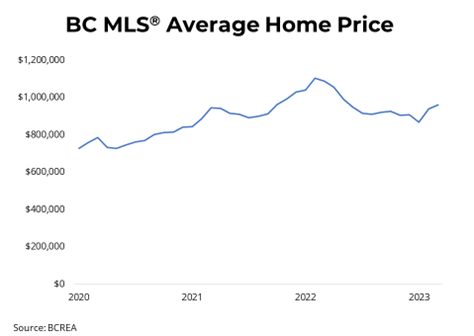
| Vancouver, BC – April 13, 2023. The British Columbia Real Estate Association (BCREA) reports that a total of 7,118 residential unit sales were recorded in Multiple Listing Service® (MLS®) systems in March 2023, a decrease of 38.3 per cent from March 2022. The average MLS® residential price in BC was 961,451 down 11.6 per cent compared to the average price of close to $1.1 million in March 2022, recorded near the market's peak. The total sales dollar volume was $6.8 billion, representing a 45.5 per cent decrease from the same time last year. |
|
“The BC housing market is currently characterized by slow sales but also still very low levels of listings,” said BCREA Chief Economist Brendon Ogmundson. “Consequently, even though home sales remain about 20 per cent below normal levels for this time of year, the average home price in BC has now risen two months in a row, reaching its highest level since May 2022 as markets tighten due to a lack of supply.”
Active listings in the province are up 25 per cent compared to this time last year but have fallen for the second straight month in the wake of a modest recovery in home sales and continued weak new listings activity. |
|
Posted on
April 12, 2023
by
Marie Taverna
Listed at $679,900
Welcome to the Castle Mount.
Fabulous view from this top floor, corner unit. I
t feels bigger than the 1350+ sq ft, with its large windows, 3 sliders & vaulted living room ceiling.
Enjoy entertaining on the two decks & watching the tugs go by on the Fraser River.
Living room & family room share a 2-way gas fireplace.
Dining room is perfect for family dinners. A large kitchen with plenty of cabinets + eating area.
Large primary suite will accommodate all your bedroom furniture. Primary bath with soaker tub.
Second bedroom has sliders to one deck. Main bath have large walk-in shower.
Laundry room for extra storage. Freshly painted. Easy care flooring. One parking + one locker.
This building requires all residents to be 55+.
OPEN HOUSE 1-3pm Sat April 15th & Sun April 16th. See you there!
|
 Subscribe with RSS Reader


















 The data relating to real estate on this website comes in part from the MLS® Reciprocity program of either the Greater Vancouver REALTORS® (GVR), the Fraser Valley Real Estate Board (FVREB) or the Chilliwack and District Real Estate Board (CADREB). Real estate listings held by participating real estate firms are marked with the MLS® logo and detailed information about the listing includes the name of the listing agent. This representation is based in whole or part on data generated by either the GVR, the FVREB or the CADREB which assumes no responsibility for its accuracy. The materials contained on this page may not be reproduced without the express written consent of either the GVR, the FVREB or the CADREB.