 Subscribe with RSS Reader
|
Bank of Canada Interest Rate Announcement - April 12, 2023

Bank of Canada Interest Rate Announcement - April 12, 2023
Posted on
April 12, 2023
by
Marie Taverna
Saving for your first home? Here’s what you need to know about Canada’s First Home Savings Account (FHSA)
Posted on
April 6, 2023
by
Marie Taverna

When it comes to putting money away to buy their first home, the federal government’s ‘tax-free in, tax-free out’ First Home Savings Account aims to give Canadians a helping hand. As of April 1st, Canadians aged 18 or older who are purchasing their first home are eligible to enroll in a tax-free First Home Savings Account (FHSA). Introduced in the 2022 federal budget, the FHSA combines elements of a Tax-Free Savings Account (TFSA) and a Registered Retirement Savings Plan (RRSP), allowing users to make tax-deductible contributions and tax-free withdrawals from the account for the purposes of saving for a home. Am I eligible for the FHSA? In order to open an FHSA, users must be at least 18 years old and a Canadian resident. Account holders must also be a first-time homebuyer — someone who has not owned a home and lived in it during the calendar year before the account is opened, or at any time during the prior four calendar years. An FHSA can be used for a maximum of 15 years, and stay open until December 31st in the year that the account holder turns 71 years old. Users cannot contribute to their spouse or common-law partner’s FHSA. How much can I contribute to my FHSA? FHSA holders can contribute an annual maximum of $8,000 into their account, with a lifetime contribution limit of $40,000. Unused contribution room can be carried over to the next year up to a maximum of $8,000. Carry-forward amounts start accumulating after the user opens the FHSA for the first time. Only the account holder can claim an income tax deduction for contributions made in a particular taxation year. It is possible to have more than one FHSA open at a time, but the total amount that an individual can contribute to all of their FHSAs cannot exceed their annual and lifetime contribution limits. Similar to a TFSA, a 1% tax is applied on over-contributions to an FHSA for each month that the excess amount exists in the account. What are the benefits of the FHSA? An FHSA marries together the concepts of a TFSA and an RRSP in one account. Contributions to an FHSA, like an RRSP, are tax-deductible. Additionally, any withdrawals made for the sake of purchasing a home are non-taxable, similar to a TFSA, including any investment growth. Users can take advantage of a series of qualified investments in their FHSA, including mutual funds and publicly-traded securities, plus government and corporate bonds. Users can also set up a self-directed FHSA to manage their own portfolio. What happens when I want to take money out of my FHSA? If a user wants to withdraw funds from their account, there are a few things to keep in mind. The account holder must be a first-time homebuyer at the time a withdrawal is made. The qualifying home must be acquired (or construction must be completed) no more than 30 days prior to the withdrawal, and before October 1st of the following year, with the intention of occupying the property as their principal residence within one year after acquiring it. Be sure to read carefully the definitions of a first-time homebuyer and a qualifying home. If you wish to transfer money out of your FHSA to another account, you can do so to another FHSA, an RRSP or a Registered Retirement Income Fund (RRIF). Be sure to close your FHSA on or before December 31st of the year following your first qualifying withdrawal, when your participation period concludes. To learn more about the First-Home Savings Account, visit Canada.ca. Explaining BC's New Homes For People Action Plan
Posted on
April 3, 2023
by
Marie Taverna

Hello BC REALTORS®, Housing Supply There are three significant announcements impacting housing supply, outlined below. Development Process, Permitting and Approvals In 2023, a newly dedicated single window application process will be launched for all housing-related permits overseen by the province. This is intended to speed up the process and eliminate the need for multiple applications across ministries. The new permitting model will focus on prioritizing housing projects that we need built urgently, such as Indigenous-led projects, BC Housing applications, and multiple-unit developments. These improvements will complement recommendations in the Development Approvals Process Review. Housing Demand The BC Government will introduce a tax on the proceeds of property sales based on how soon they happen after the initial purchase. We do not have any more details about the tax at this time, but the Flipping Tax is likely to be redundant with the pre-existing federal anti-flipping tax rule implemented as of January 1, 2023 that treats the proceeds of homes sold in under one year as business income. BCREA will continue to advocate to ensure that the Flipping Tax has exemptions for additions to the household such as birth or adoption, the breakdown of marriage or common-law partnerships, illnesses or disabilities, work relocation, insolvency, and other necessary reasons for families to move.
Anti-Money Laundering No specifics were announced on anti-money laundering measures, apart from general commitments to combatting criminal activity in the real estate market with a number of measures, including through unexplained wealth orders and new partnerships with the federal government. Labour The province will create a Future Ready Plan, to be released in spring 2023, to connect more people to the relevant skills and training they need to quickly find and advance their careers in the construction sector. Rental Housing The province announced several new policies to impact rental housing including:
Affordable Housing New affordable housing announcements include:
Spring brings renewed price growth across Metro Vancouver’s housing market while new listings remain dormant
Posted on
April 2, 2023
by
Marie Taverna

Spring brings renewed price growth across Metro Vancouver’s housing market while new listings remain dormant Home prices across Metro Vancouver’s housing market showed modest increases in March, while new listings remained below long-term historical averages. March data also indicates home sales are making a stronger than expected spring showing so far, despite elevated borrowing costs. The Real Estate Board of Greater Vancouver (REBGV) reports that residential home sales in the region totalled 2,535 in March 2023, a 42.5 per cent decrease from the 4,405 sales recorded in March 2022, and 28.4 per cent below the 10-year seasonal average (3,540). The MLS® Home Price Index composite benchmark price for all residential properties in Metro Vancouver is currently $1,143,900. This represents a 9.5 per cent decrease over March 2022 and a 1.8 per cent increase compared to February 2023. “On the pricing side, the spring market is already on track to outpace our 2023 forecast, which anticipated modest price increases of about one to two per cent across all product types,” Andrew Lis, REBGV’s director of economics and data analytics said. “The surprising part of this recent activity is that these price increases are occurring against a backdrop of elevated borrowing costs, below-average sales, and new listing activity that continues to suggest that sellers are awaiting more favorable market conditions.” There were 4,317 detached, attached and apartment properties newly listed for sale on the Multiple Listing Service® (MLS®) in Metro Vancouver in March 2023. This represents a 35.5 per cent decrease compared to the 6,690 homes listed in March 2022, and was 22.3 per cent below the 10-year seasonal average (5,553). The total number of homes currently listed for sale on the MLS® system in Metro Vancouver is 8,617, an 8.1 per cent increase compared to March 2022 (7,970), and 17.3 per cent below the 10-year seasonal average (10,421). Across all detached, attached and apartment property types, the sales-to-active listings ratio for March 2023 is 30.7 per cent. By property type, the ratio is 23.3 per cent for detached homes, 36.7 per cent for townhomes, and 34.9 per cent for apartments. Analysis of historical data suggests downward pressure on home prices occurs when the ratio dips below 12 per cent for a sustained period, while home prices often experience upward pressure when it surpasses 20 per cent over several months. “If home sellers remain on the sidelines, monthly MLS® sales figures will continue to appear lower than historical averages as we move toward summer,” Lis said. “But it’s important to recognize the chicken-and-egg nature of these statistics. The number of sales in any given month is partially determined by the number of homes that come to market that month, along with the inventory of unsold homes listed in previous months. With fewer homes coming on the market, homes sales will remain lower than we’re accustomed to seeing at this point in the year, almost entirely by definition.” Sales of detached homes in March 2023 reached 734, a 43.6 per cent decrease from the 1,302 detached sales recorded in March 2022. The benchmark price for detached properties is $1,861,800. This represents an 11.2 per cent decrease from March 2022 and a 2.7 per cent increase compared to February 2023. Sales of apartment homes reached 1,311 in March 2023, a 43.2 per cent decrease compared to the 2,310 sales in March 2022. The benchmark price of an apartment property is $737,400. This represents a 4.6 per cent decrease from March 2022 and a 0.7 per cent increase compared to February 2023. Attached home sales in March 2023 totalled 466, a 37.3 per cent decrease compared to the 743 sales in March 2022. The benchmark price of an attached unit is $1,056,400. This represents a 7.8 per cent decrease from March 2022 and a 1.7 per cent increase compared to February 2023. 14 SHOW-STOPPING DESSERTS FOR YOUR EASTER FÊTE
Posted on
March 28, 2023
by
Marie Taverna

From chocolate eggs to fruit-filled pie to carrot cake, we've curated a list of delicious festive desserts that'll make the perfect ending (or beginning?) to your Easter celebrations. SHARE
CHOCOLATE CREAM EGGS1 / 14

Image by: Joe Kim By: Eryn Chesney Pay tribute to the classic childhood tradition of the Easter egg hunt by feathering your nest with these delicate handmade confections. They’re pretty, perfectly sweet and straight from the Easter Bunny’s basket. GET THE RECIPE:Recipe: Chocolate cream eggsPEAR & ALMOND TART2 / 14

Image by: Michael Nangreaves / Food styling: Michelle Rabin By: Michelle Rabin With a buttery, crumbly crust and a sweet pear and almond filling, this delicate dessert makes a treat that's as scrumptious as it is pretty. GET THE RECIPE:Recipe: Pear & almond tartALMOND & FIG CAKE3 / 14

Image by: Maya Visnyei / Prop styling: Ann Marie Favot / Food styling: Claire Stubbs By: Claire Stubbs Crunchy on the outside, chewy on the inside, this flavourful dessert made with sweet figs and toasted almonds provides a delicious melt-in-your-mouth experience with every bite. This Easter: Have your cake and eat it, too. SHARE
LAYERED LEMON CAKE4 / 14

Image by: Maya Visnyei / Food styling: Claire Stubbs / Prop styling: Ann Marie Favot By: Jennifer Bartoli Pucker up, baby! It’s time to wake the senses and welcome spring with a delectably dense cake richly flavoured with the zingy, light and refreshing taste of citrus. GET THE RECIPE:Recipe: Layered lemon cakeFROZEN BERRY PUDDING BOMBE5 / 14

Image by: Maya Visnyei | prop styling: Ann Marie Favot By: Tanya Eng Layered, luscious and bowl-licking good, this delectable chilled confection is just right for those days when you want a little wow in your culinary repertoire. GET THE RECIPE:Recipe: Frozen berry pudding bombeRASPBERRY-BROWN BUTTER-CRÈME FRAÎCHE TART6 / 14

Image by: Lisa Warninger By: Kir Jensen with Danielle Centoni Notice how raspberry is the first word in the title? That’s because this tart recipe is all about the fruit. Yes, there’s a rich tart dough made with egg yolk and cream. And yes, it’s slathered with an amazing filling of vanilla browned butter and crème fraîche. But the filling is more of a flavourful base to support and contrast with all the bright fruit. GET THE RECIPE:Recipe: Raspberry-brown butter-crème fraîche tartSHARE
RHUBARB FRANGIPANE TART7 / 14

Image by: Joe Kim By: Eryn Chesney Generate excitement from the whole table by presenting this impressive rhubarb frangipane tart at the end of the meal. Its creamy almond filling is fragrant and complex, and we love the idea of using in-season rhubarb for something other than a pie. The good news for you is that, with only 10 ingredients, it's actually an easy-to-achieve dessert that looks like the work of a masterful pastry chef. GET THE RECIPE:Recipe: Rhubarb frangipane tartBUTTER'S CARROT CAKE8 / 14

Source: Excerpted from Butter Baked Goods by Rosie Daykin Filled with seasonal flavour this mouth-watering carrot cake recipe from Rosie Daykin, owner of Vancouver's Butter Baked Goods bakery, will have your guests asking for seconds. GET THE RECIPE:Recipe: Butter's carrot cakeLEMON MERINGUE PIE9 / 14

Image by: Alexandra Defurio By: Linda K. Jackson & Jennifer Evans Gardner The flaky crust, mouth-watering lemon filling and sweet meringue topping all make up this delicious pie. GET THE RECIPE:Recipe: Mom's sky-high lemon meringue pieSHARE
EASY CHOCOLATE CAKE10 / 14

Image by: Ryan Brook By: Eryn Chesney This cake honours the age-old confectionery companionship— chocolate and vanilla — with thick layers of decadent chocolate cake and fluffy vanilla buttercream icing. GET THE RECIPE:Recipe: Easy chocolate cakeRASPBERRY AND MEYER LEMON CREAM TART11 / 14

Image by: Joe Kim By: Suzanne Moutis If your idea of the perfect dessert is an old-fashioned freshly-baked fruit pie cooling on the windowsill, its fragrant aroma drifting on the warm breeze, this free-form modern version, with its berries and smooth lemony cream, could be your new favourite. GET THE RECIPE:Recipe: Raspberry and Meyer lemon cream tartNIGELLA LAWSON'S CHERRY CHEESECAKE12 / 14

Source: Excerpted from Nigella Express by Nigella Lawson. Nigella Lawson's unbaked cherry cheesecake is easy to make and delicious to taste. GET THE RECIPE:Recipe: Nigella Lawson's cherry cheesecakeSHARE
OLD-TIME BLACKBERRY COBBLER13 / 14

By: Karen Wilcher Source: excerpted from Southern Pies by Nancie McDerrmott Gather around the dinner table with this recipe for old-time blackberry cobbler. GET THE RECIPE:Recipe: Old-time blackberry cobblerFRESH COCONUT LAYER CAKE14 / 14

Source: Williams-Sonoma Cookbook This light, heavenly coconut cake makes the perfect sweet treat to end any meal. GET THE RECIPE:Recipe: Fresh coconut layer cake25 SPACE-SAVING TIPS By STYLE at HOME MAGAZINE
Posted on
March 28, 2023
by
Marie Taverna

25 SPACE-SAVING TIPS
Image: Michael Graydon SHARE
Big or small, make the most of the space you have with 25 easy-to-follow tips. Nothing makes you feel more cramped in your living space than clutter and confusion. Follow our tips to help you minimize the mess and tidy up your space. READ ALSO : 
Image: Janis Nicolay 2. Banish room-darkening shadows with additional light fixtures. 
Image: Stacey Brandford 3. Put glass shelves across deep-set windows. 
Image: Style at Home 4. Use a chest or an ottoman with storage inside as a coffee table. 
Image: Tracey Ayton 5. Put low bookcases along a sofa back: they'll double as a sofa table. 
Image: Robin Stubbert 6. Keep the flooring throughout a small space the same for visual continuity. 
Image: Robin Stubbert 7. Line a room with a shelf high up on the wall. 
Image: Tracey Ayton 8. Keep window treatments simple. 
Image: Janis Nicolay 9. Run a low bookcase underneath windows. 
Image: Stacey Brandford 10. Stretch your space to the outdoors by making a patio or deck comfortable and welcoming. 
Image: Michael Graydon 11. Place a large bucket for magazines next to your favourite chair. 
Image: Barry Calhoun 12. Line a hallway with bookshelves. 
Image: Janis Nicolay 13. Use a wicker hamper as both an end table and storage space for blankets. 
Image: Robin Stubbert 14. Buy a coffee table with a drawer for remotes. 
Image: Barry Calhoun 15. Carve out shallow display space between wall studs. 
Image: Janis Nicolay 16. Use fewer, larger pieces of furniture and accessories to reduce visual clutter. 
Image: Angus McRitchie 17. Choose sofas and chairs with plain or textured upholstery rather than vibrant prints. 
Image: Janis Nicolay 18. Install shelves around a window. 
Image: Janis Nicolay 19. Add window seats with lids. 
Image: Michael Graydon 20. Run shelves up to the ceiling. 
Image: Janis Nicolay

Image: Stephani Buchman 22. Take advantage of wasted space with corner bookcases. 
Image: Stacey Brandford 23. Think monochromatic. 
Image: Angus McRitchie 24. Eliminate obstructions: the further you can see into and through a space, the larger it'll seem. 
Image: Ashley Capp 25. Arrange furnishings to avoid blocking views of windows and doors. 
Image: Stacey Brandford TAGSSpring Cleaning 101: Freshen up, Reduce Allergies
Posted on
March 28, 2023
by
Marie Taverna

During the winter thaw, indoor upkeep is as important as prepping your garden for spring. Freshen rooms, remove allergens, and brighten the look of these five areas:
Tips to make a small room look bigger
Posted on
March 28, 2023
by
Marie Taverna

If you are looking to open up a small space to give it a feel that is bigger than it’s footprint, these tested tips are for you. They work in any room and within any budget.
Following these tips are the best way to make any space seem larger and there is no need to sacrifice on style. Have fun decorating! Get organized and improve the flow of your space with these tips
Posted on
March 28, 2023
by
Marie Taverna

Your home is your sanctuary; a safe and calm-inducing place you can retreat to at the end of the day. Did you know that our physical environment can affect our mental state? A cluttered countertop can make us feel uneasy and a collection of mismatched shoes at the entrance can change our mood when we walk in the door. That’s why, in order to have a clear mind, we must start with a clear space. Here are eight ways to improve the organization of your place and create proper flow throughout your home, free of physical (and mental) barriers.
Create the perfect laundry room
Posted on
March 28, 2023
by
Marie Taverna

How to maximize one of the most underrated rooms in your homeA laundry room – if you are fortunate enough to have a designated room – is one of the most underrated and important spaces in any home. Your guests may not see it and it might not be a deal-breaker for potential buyers in the future, but you are likely to spend several hours (at least…) each week in the laundry room. That means, while it doesn’t have to be fancy, it does need to be functional, clean and easy to navigate. Here are some tips to help make your laundry room easier and more enjoyable to use:
1065 UPLANDS DRIVE ANMORE - PRICE DROP
Posted on
March 28, 2023
by
Marie Taverna

$2,495,000 Classic European inspired 5 bedroom, 4 bath executive home located in the prestigious “The Uplands” neighbourhood in Anmore. Experience stunning mountain views in a private rural lot, just a short drive for the city. Perfect for entertaining, with a dream kitchen complete with solid wood cabinets, SS appliances, granite countertops & expansive kitchen island. Family room French doors open to massive outdoor deck with 2 gas hookups. Rest easy in the large primary bedroom complete with gas fireplace, walk in closet, shower & soaker tub. Property boosts in ground sprinklers, aircon, custom blinds & beautiful wooden floors. Walkout basement has suite potential with plumbing & electrical in wall+private balcony, 2 bedrooms, & rec room. Don’t miss out on this perfect balance of natural & elegance. Canada’s recreational real estate rush comes to a close: Prices expected to soften amid waning activity
Posted on
March 28, 2023
by
Marie Taverna

March 28, 2023 – According to Royal LePage, the aggregate price of a single-family home in Canada’s recreational regions is forecast to decrease 4.5 per cent in 2023 to $592,005, compared to 2022, as activity in the market wanes. This is due to reduced demand as a result of economic uncertainty and a lack of available housing stock, which has helped to keep prices stable. Despite a modest decrease expected this year, the national aggregate price would remain more than 32 per cent above 2020 levels, after two years of double-digit price gains in the country’s recreational real estate market. With the exception of Alberta, which is expected to see a 0.5 per cent increase, all of Canada’s provincial recreational markets are forecast to see a decrease in single-family home prices in 2023. The province of Quebec is forecasting the greatest price depreciation, at -8.0 per cent. In 2022, the aggregate price of a single-family home in Canada’s recreational property regions increased 11.7 per cent year-over-year to $619,900. This follows year-over-year price gains of 26.6 per cent in 2021. When broken out by housing type, the aggregate price of a single-family waterfront property increased 9.5 per cent year-over-year to $736,900 in 2022, and the aggregate price of a condominium rose 16.6 per cent to $432,000 during the same period. “After two years of relentless year-round competition, Canada’s recreational property markets have slowed and returned to traditional seasonal sales patterns,” said Phil Soper, president and CEO, Royal LePage. “While interest rate hikes have less of an impact on the recreational market than homes in urban settings, because families typically put more money down and borrow less, general consumer inflation combined with a severe lack of inventory has dampened sales activity. Buyers who are active in today’s market appear willing to wait for the right property – a sharp contrast to what we experienced during the pandemic.” While low inventory poses a challenge for buyers looking for that special cabin or lakeside cottage, the coinciding contraction in demand has resulted in a return to more normal market conditions. Return to balance: Supply and demand decline in recreational regions According to a survey of more than 200 Royal LePage recreational real estate professionals across the country,[1] 57 per cent of respondents reported less inventory this year, compared to last year. At the same time, 51 per cent of respondents said they have witnessed less demand for recreational properties in their region, compared to this time last year. When compared to typical pre-pandemic levels, 65 per cent of recreational property experts nationally reported less inventory, while a majority reported similar (38%) or more (38%) demand. “Recreational homebuyers tend to purchase for leisure and life-enriching purposes. Call it a want versus a need,” added Soper. “Unlike many city buyers who may need to acquire a principal residence quickly, secondary home purchasers often have the benefit of time to find the right property for their specific needs.” Nationally, 28 per cent of recreational property experts surveyed said that the trend of homeowners moving back to urban or suburban communities after relocating to their region full-time during the pandemic is somewhat common; 56 per cent of experts reported this trend was not common in their market. Atlantic Canada, a pandemic relocation hotspot, recorded the highest percentage of experts who said the return to urban or suburban areas is somewhat common in their region, at 46 per cent. “During the pandemic, with offices closed and people working from home, Canadians discovered that a recreational property could double as a principal residence, complete with capital gains exempt status,” added Soper. “With high-speed internet now readily available in many rural markets, families flocked to recreational regions to put extra space between themselves and their neighbours and to take advantage of nature; particularly when cultural and sporting venues, shops and restaurants in cities were closed. Many urban businesses now require employees to be in the office at least a few days a week, making long commutes challenging. For many, living in cottage country full-time has lost its romantic shine, meaning we are back to viewing the cottage, cabin and chalet as a weekend and summer escape from urban living.” Royal LePage 2023 Spring Recreational Property Price Forecast and 2022 Price Data Chart (national and regional):rlp.ca/table_2023springrecreationalpropertyreport Atlantic Canada In 2022, the aggregate price of a single-family home in the East Coast’s recreational property market increased 17.2 per cent year-over-year to $279,900, compared to 2021. During the same period, the aggregate price of a single-family waterfront property increased 9.1 per cent to $388,500, while the aggregate price of a condominium increased 18.6 per cent to $345,000. According to a Royal LePage survey of recreational property experts, 62 per cent of respondents in Atlantic Canada reported less inventory this year compared to last year, and 69 per cent reported less inventory compared to typical pre-pandemic levels. Demand for recreational properties in the region has also decreased significantly. Forty-six per cent reported less demand this year than last year. “Parties on both sides of the transaction are waiting for a better deal – recreational buyers are sitting on the sidelines waiting for more inventory to become available, while sellers are holding out for higher offers and competitive bids. But, the multiple-offer scenarios and homes selling over-asking are not as common today as they were during the pandemic boom,” said Corey Huskilson, sales representative, Royal LePage Atlantic in South Shore, Nova Scotia. “As we enter the spring market, I expect activity to pick up but prices to stay stable, as supply and demand remain relatively balanced.” During the pandemic, Canadians from all across the country who were forced to work remotely flocked to Atlantic Canada for the opportunity to enjoy the Maritime lifestyle and own a home at a much more affordable price point than in major cities. According to the survey, 46 per cent of recreational property experts in Atlantic Canada said that the trend of homeowners moving back to urban or suburban communities after relocating to their region full-time during the pandemic was somewhat common; an additional 8 per cent said it was very common. Meanwhile, an equal number of respondents (46%) said that this trend was not common in their area. “The majority of recreational property buyers in Avalon Peninsula are either looking for a retirement property, or are locals moving back from other parts of the country who want a secondary property to enjoy in their downtime,” said Tim Crosbie, broker and owner, Royal LePage Property Consultants in St. John’s, Newfoundland. “Home prices have risen here over the past year, as have interest rates, which has given some buyers reason to halt their purchase plans. While most secondary homebuyers looking in the region are motivated to find a property that fits their specific needs, they are prepared to wait for the right home to fall within their financial reach.” Crosbie noted that the reduced buyer demand is a result of higher interest rates, and that a reduction in borrowing costs would likely encourage more purchasers back into the buying pool. The aggregate price of a single-family home in Atlantic Canada’s recreational regions is forecast to decrease a modest 3.0 per cent in 2023 to $271,503. Royal LePage 2023 Spring Recreational Property Price Forecast and 2022 Price Data Chart (national and regional):rlp.ca/table_2023springrecreationalpropertyreport Quebec In 2022, the aggregate price of a single-family home in Quebec’s recreational property market increased 16.1 per cent year-over-year to $373,400, compared to 2021. During the same period, the aggregate price of a single-family waterfront property increased 17.3 per cent to $480,200, and the aggregate price of a condominium increased 22.3 per cent to $341,900. According to a Royal LePage survey of recreational property experts, 53 per cent of respondents in the province of Quebec reported less inventory this year compared to last year, and 79 per cent reported less inventory compared to typical pre-pandemic levels. Demand for recreational properties in the region has also decreased significantly. Seventy-six per cent reported less demand this year compared to last year, and 35 per cent reported less demand than a typical pre-pandemic year. “We are in a two-speed market with sharply contrasting scenarios,” said Éric Léger, chartered real estate broker, Royal LePage Humania. “On one hand, the inventory of properties for sale is steadily increasing and so is the number of motivated sellers willing to lower their asking price. But on the other hand, we’re seeing multiple-offer scenarios with properties that are ideally located, well-maintained and listed at a fair price,” he continued. “It can be challenging for consumers to stay on top of the market trends because we’re still in a transition. Over the next few months, owners of secondary homes in the region may need to rethink their priorities as their mortgages come up for renewal at substantially higher interest rates.” Léger noted that the spring market in the area may be less buoyant this year because of current economic uncertainty. However, demand in the lower price ranges will remain strong. According to the survey, 26 per cent of recreational property experts in Quebec said that they have witnessed a slight increase in buyers who intend to use their recreational property for rental purposes in their region compared to last year, while 18 per cent of respondents reported a significant increase in this trend. “The real estate market in the Eastern Townships today is vastly different from what we saw during the past three years,” said Véronique Boucher, residential real estate broker, Royal LePage Au Sommet. “Buyers are more patient; they’re negotiating and they’re taking time to carefully assess their needs and their financial capacity before taking the plunge. Conditional offers to purchase, which were practically unheard of during the pandemic real estate boom, made a big comeback in the latter half of 2022, a sign of a much more balanced and fair market. The aggregate price of a single-family home in Quebec’s recreational regions is forecast to decrease 8.0 per cent in 2023 to $343,528. Royal LePage 2023 Spring Recreational Property Price Forecast and 2022 Price Data Chart (national and regional):rlp.ca/table_2023springrecreationalpropertyreport Ontario In 2022, the aggregate price of a single-family home in Ontario’s recreational property market increased 7.3 per cent year-over-year to $634,800, compared to 2021. During the same period, the aggregate price of a single-family waterfront property increased 8.9 per cent to $1,006,600, while the aggregate price of a condominium increased 15.1 per cent to $510,900. According to a Royal LePage survey of recreational property experts, 61 per cent of respondents in Ontario reported less inventory this year compared to last year, and 59 per cent reported less inventory compared to typical pre-pandemic levels. Demand for recreational properties in the region has also decreased significantly. Fifty-two per cent reported less demand this year compared to last year, however 39 per cent said demand was higher than a typical pre-pandemic year. “After two years of historically high pandemic-driven sales, activity in the recreational market came to a comparative standstill in the last half of 2022. Rising interest rates, buyer fatigue, and lack of inventory all played a role,” said John O’Rourke, broker, Royal LePage Lakes of Muskoka. “Early signs this spring point to a more balanced market where inventory levels and sales are trending in line with historical norms. Traditional cottage buyers – end users that plan on enjoying their property – are still engaged and seem eager to jump back into a market in which they are not competing with the investment-focused buyer; a prominent player during the pandemic boom.” According to the survey, 35 per cent of recreational property experts in Ontario said that the trend of homeowners moving back to urban or suburban communities after relocating to their region full-time during the pandemic was somewhat common. Forty-nine per cent of respondents said this trend was not common in their area. “Buying a recreational property is like a marathon, not a sprint. Secondary homebuyers in Rideau Lakes have the luxury of time and are looking for a very specific lifestyle property. A shortage of recreational homes makes this process even more difficult,” said Pauline Aunger, broker of record, Royal LePage Advantage Real Estate. “Due to the high demand for renovation services, recreational buyers today are looking for a move-in ready property that requires less work. This includes high-speed internet and good cell service for those who want peace of mind or the option to work remotely. As we head into the spring months, we are expecting market activity to pick up, although not at the levels experienced over the last two years.” While home prices in a select few recreational markets in Ontario, including the ever-popular Southern Georgian Bay area, may increase marginally over the next year, a decline in activity overall is expected to dampen price growth. The aggregate price of a single-family home in Ontario’s recreational regions is forecast to decrease 5.0 per cent in 2023 to $603,060. Royal LePage 2023 Spring Recreational Property Price Forecast and 2022 Price Data Chart (national and regional):rlp.ca/table_2023springrecreationalpropertyreport Prairies In 2022, the aggregate price of a single-family home in the Prairie provinces’ recreational property market increased 6.0 per cent year-over-year to $271,300, compared to 2021. During the same period, the aggregate price of a single-family waterfront property increased 5.6 per cent to $507,000. According to a Royal LePage survey of recreational property experts, 56 per cent of respondents in the Prairies reported less inventory this year compared to last year, and more than three quarters (78%) of respondents said that demand levels are comparable to last year. “Business is faring as usual in our recreational markets. Demand and inventory are proportional to one another, creating balanced market conditions. Reduced supply has kept recreational property prices buoyant,” said Lou Doderai, broker and owner, Royal LePage Icon Realty, in Prince Albert, Saskatchewan. “The North Central recreation areas are only a couple hours drive from two of the province’s major urban areas, meaning many of our buyers are locals looking for secondary residences that provide an escape for the weekend. Although higher interest rates have halted some purchasers’ decisions to buy a property – at least temporarily – I expect we’ll see a modest pick up in market activity once the warmer weather arrives.” According to the survey, 44 per cent of recreational property experts in the Prairies said that they have witnessed a significant increase in buyers who intend to use their recreational properties for rental purposes in their region, compared to last year. An additional 33 per cent of respondents reported a slight increase in this trend. “The recreational market in Lac du Bonnet is the healthiest it’s been in 15 years. The pandemic caused more Manitoba buyers to purchase recreational properties in-province as opposed to south of the border; a level of demand that has caused the average days on market to shrink considerably,” said Rolf Hitzer, broker and owner, Royal LePage Top Producers Real Estate, in Winnipeg, Manitoba. “More than ever, buyers crave a getaway to the countryside, a desire that was intensified by the pandemic and increased demand for all-season properties. As market conditions continue to normalize, I expect to see an active, but not overheated, spring and summer recreational buying season.” The aggregate price of a single-family home in the Prairies’ recreational regions is forecast to decrease a modest 3.0 per cent in 2023 to $263,161, as sidelined buyers remain cautious amid evolving economic conditions. Royal LePage 2023 Spring Recreational Property Price Forecast and 2022 Price Data Chart (national and regional):rlp.ca/table_2023springrecreationalpropertyreport Alberta In 2022, the aggregate price of a single-family home in Alberta’s recreational property market increased 13.3 per cent year-over-year to $1,165,500, compared to 2021. During the same period, the aggregate price of a single-family waterfront property decreased 5.0 per cent to $641,900, while the aggregate price of a condominium increased 17.7 per cent to $646,000. As a large and popular recreational destination, Canmore’s real estate market has a significant impact on prices in Alberta, with its proximity to Banff National Park and luxury properties. According to a Royal LePage survey of recreational property experts, 59 per cent of respondents in Alberta reported less inventory this year compared to last year, and 71 per cent reported less inventory compared to typical pre-pandemic levels. Meanwhile, demand for recreational properties in the region has remained stable. Thirty-five per cent of respondents reported similar demand this year compared to last year, and an additional 35 per cent reported more demand. “Buyer demand for recreational properties in Canmore continues to be driven by retirees and Albertans living in the surrounding cities, as well as residents from Ontario and Quebec. As Canmore attracts many cash buyers, higher interest rates have had little impact on this market, a factor that has kept prices stable,” said Brad Hawker, associate broker, Royal LePage Solutions. “Low supply continues to be a challenge, an issue that has been underscored by the lack of new construction projects. This has caused many buyer hopefuls to sit on the sidelines, waiting for their ideal property to become available.” According to the survey, 65 per cent of recreational property experts in Alberta said that the trend of homeowners moving back to urban or suburban communities after relocating to their region full-time during the pandemic was not common, another factor contributing to the supply shortage. “We are experiencing a lack of turnover in the Wabamun Lake and Lac Ste. Anne markets. Coveted recreational homes, especially those on the water, are more likely to be passed down through the generations, a trend that is exacerbating the region’s low level of supply,” said Tom Shearer, broker, Royal LePage Noralta Real Estate. “Those shopping for a recreational home are often locals from nearby cities who already have a personal connection to the area and are looking for a retreat to enjoy with family on the weekends and in the summer months. Unlike a primary residence, most buyers shopping for a vacation home can afford to wait for the perfect property to present itself.” The aggregate price of a single-family home in Alberta’s recreational regions is forecast to increase modestly by 0.5 per cent in 2023 to $1,171,328. This is the only region in Canada forecasting price growth over the next year. Royal LePage 2023 Spring Recreational Property Price Forecast and 2022 Price Data Chart (national and regional):rlp.ca/table_2023springrecreationalpropertyreport British Columbia In 2022, the aggregate price of a single-family home in British Columbia’s recreational property market increased 12.9 per cent year-over-year to $1,071,300, compared to 2021. During the same period, the aggregate price of a single-family waterfront property increased 5.6 per cent to $1,065,000, while the aggregate price of a condominium increased 14.3 per cent to $441,400. According to a Royal LePage survey of recreational property experts, 49 per cent of respondents in British Columbia reported less inventory this year compared to last year, and 71 per cent reported less inventory compared to typical pre-pandemic levels. Demand for recreational properties in the region has also decreased significantly. Forty-nine per cent reported less demand this year compared to last year. “Like many recreational markets across the country, Pemberton and Whistler continue to experience low inventory. Come springtime, I anticipate that supply levels will rise as more sellers move into the market, but I don’t expect there to be a huge wave of relief,” said Frank Ingham, associate broker, Royal LePage Sussex. “Many buyers continue to wait on the sidelines for prices to fall or for borrowing costs to become more affordable, especially those purchasers who are buying for their retirement or for their adult children to enjoy. This trend is creating more pent-up demand on the sidelines, and is causing properties to stay on the market twice as long as last year. However, as the spring market gains momentum, I expect more homes that have been sitting on the shelves will start to move into the hands of buyers.” According to the survey, 54 per cent of recreational property experts in British Columbia said that the trend of homeowners moving back to urban or suburban communities after relocating to their region full-time during the pandemic was not common, a factor contributing to the supply shortage. The aggregate price of a single-family home in British Columbia’s recreational regions is forecast to decrease a modest 2.0 per cent in 2023 to $1,049,874, as moderate activity is expected while buyers wait for more product to come onto the market. Royal LePage 2023 Spring Recreational Property Price Forecast and 2022 Price Data Chart (national and regional):rlp.ca/table_2023springrecreationalpropertyreport About the Royal LePage Recreational Property Report The Royal LePage Recreational Property Report compiles insights, data and forecasts from 50 markets. Median price data was compiled and analyzed by Royal LePage for the period between January 1, 2022 and December 31, 2022, and January 1, 2021 and December 31, 2021. Data was sourced through local brokerages and boards in each of the surveyed regions. Royal LePage’s aggregate home price is based on a weighted model using median prices. Data availability is based on a transactional threshold and whether regional data is available using the report’s standard housing types. Aggregate prices may change from previous reports due to a change in the number of participating regions. About the Royal LePage Recreational Property Advisor Survey A national online survey of 202 brokers and sales representatives serving buyers and sellers in Canada’s recreational property regions. The survey was conducted between March 1, 2023 and March 18, 2023. About Royal LePage Serving Canadians since 1913, Royal LePage is the country’s leading provider of services to real estate brokerages, with a network of approximately 20,000 real estate professionals in over 670 locations nationwide. Royal LePage is the only Canadian real estate company to have its own charitable foundation, the Royal LePage Shelter Foundation, which has been dedicated to supporting women’s shelters and domestic violence prevention programs for 25 years. Royal LePage is a Bridgemarq Real Estate Services Inc. company, a TSX-listed corporation trading under the symbol TSX:BRE. For more information, please visit www.royallepage.ca. Top paint colours of 2023
Posted on
March 24, 2023
by
Marie Taverna

In the colder winter months, we tend to spend a lot of time indoors. Looking at the same walls over and over again can seem stagnant and stale, so why not add a splash of new colour to your interiors to freshen things up? North America’s top paint companies have once again released their colour choices of the year; hues that will define interior design, décor and marketing trends for 2023. Here are the 2023 colours of the year from some of the most influential paint brands: Pantone: Viva Magenta (18-1750) Taking cues from nature and the red family, Pantone’s Viva Magenta is said to stir feelings of power, strength and unrestrained self-expression. This vibrant pink-red is a statement colour that is inspired by the natural dye cochineal, and is a stark contrast to the company’s cool-toned 2022 colour of the year, Very Peri.  Viva Magenta, Pantone Viva Magenta, PantoneGlidden: Vining Ivy (PPG1148-6) This muted aqua tone offers an eye-popping statement colour to add to an accent wall or ceiling. Glidden’s Vining Ivy couples nicely with deep wood tones and off-white cabinets or trim, making it a good pick for kitchens and living rooms.  Blank Canvas, Behr Blank Canvas, BehrBehr: Blank Canvas (DC-003) Blank Canvas by Behr could be the perfect neutral to match with similar cozy colours. A light, warm beige, Behr’s 2023 colour of the year is compatible with navies, forest greens and greys in any room, whether it’s a relaxing primary bedroom or a welcoming front entryway. Sherwin-Williams: Redend Point (SW 9081) Self-described as a “soulful-yet-subtle hue,” Redend Point by Sherwin-Williams brings a touch of earth-like ambience into your interiors. Expressing an aura of intrigue, calmness and minimalism, this soft brown shade pairs well with other warm variations of cream, red and green. Benjamin Moore: Raspberry Blush (2008-30) Similar to a coral but with a subtle pink undertone, Benjamin Moore’s Raspberry Blush is described as a charismatic colour. This orange-red could be the perfect paint choice for anyone looking to make their walls, wainscotting, or perhaps just a powder room, feel upbeat and optimistic.  Raspberry Blush, Benjamin Moore Raspberry Blush, Benjamin MooreThe dos and don’ts of staging your home for sale
Posted on
March 24, 2023
by
Marie Taverna

When it comes to selling your home, making a positive first impression on a potential buyer is a crucial part of the process. Many sellers opt to stage their home – either through professional services or their own efforts – to make their space look more appealing to buyers, both in-person and online. Staging is a popular real estate marketing strategy that is effective at attracting purchaser interest, garnering offers at higher prices and selling homes quicker. If you’re preparing to list your property on the market soon, here are the dos and don’ts of staging your home for sale. DO – Depersonalize your space Buyers want to visualize themselves living in their potential new home, a fantasy that can be hard to conceptualize in a space that is decked out with the seller’s belongings. To help buyers build an attachment to a property, it’s important to depersonalize. This means removing any family photos, collectables, diplomas and other personal items. Consider depersonalizing your walls and furniture too. Busy accent walls, bold wallpaper and quirky fixtures speak to the specific tastes of the owner. Softening your home with neutral colours and fabrics can help make a potential buyer feel more at home. However, it’s important not to strip your space completely of personality. When staging, stick with basic accent pieces, such as a vase of flowers or simple throw pillows, to liven up the room. DON’T – Overlook unfavourable smells When buyers enter your home, they aren’t just judging your property with their eyes. All senses are engaged, including smell. Unappealing odours due to mould, pets and garbage can quickly turn off a potential purchaser, so be sure to tackle them before you welcome any showings. Take out the trash and scoop the litter box regularly. If the smell of mildew is present, give your showers and tubs a thorough clean, and schedule a visit from a contractor to rule out any mould-spawning water leaks. Don’t fill the room with artificial air fresheners either – add subtle natural scents such as fresh linen, baked goods or potted herbs to entice the senses. DO – Improve the lighting Dark interiors can make spaces feel cramped and uninviting, so introduce an abundance of light into your home. When staging for photographs or showings, open all of the blinds and drapes, and remove obstructions away from windows to let in as much natural light as possible. You can also boost the amount of lighting in the home with a layered approach. In addition to ceiling lights, use a mix of floor lamps, wall sconces, undermount lighting and table lamps to brighten your space for potential purchasers. DON’T – Forget about curb appeal Buyers can easily make a snap judgement about your property from the minute they arrive on the street, so get things off to a good start from the get-go by staging your home’s exterior too. Begin with a simple clean up, like mowing the grass, power washing the siding and walkways, and freeing the lawn and eavestroughs of any fallen leaves or branches. Be sure to repair any broken porch lights or wonky house numbers. Complete your property’s refreshed façade with a clean doormat and some inviting potted plants or hanging baskets on the front porch. And, don’t underestimate the power of a fresh coat of paint on the front door! DO – Rearrange your furniture It is possible to have too much furniture – overstuffed rooms can give the illusion that there is a lack of spaciousness. When staging your home for sale, don’t be afraid to put some items in storage or swap furniture out to achieve an appealing layout that buyer’s can easily walk through. If space permits, pull furniture away from the walls to allow for more movement and reduce any dead space in the centre of the room. Buyers spring back: Sidelined Canadians plan return to market
Posted on
March 24, 2023
by
Marie Taverna

More than a quarter of Canadians who put their home purchase plans on hold over the last year say they will resume their search this springClimbing interest rates have given many Canadian homebuyers reason to pause their purchase plans over the last year. Nearly one quarter of Canadians (24%) were in the market for a new home this past year, and 63% of them say they postponed their plans due to rising rates, according to a recent Royal LePage survey, conducted by Maru/Blue.1 Now, with the Bank of Canada placing a hold on the overnight lending rate for the first time since March of 2022, many homebuyers intend to resume their purchasing plans once again. Of those who say they postponed their plans, 62% now intend to return to the market. The survey found that more than a quarter (26%) of Canadians who put their home purchase plans on hold over the last year due to rising interest rates will resume their search this spring, following the Bank of Canada’s announcement last week to hold the overnight lending rate at 4.5%. Meanwhile, more than one third (36%) say they plan to move forward with their buying intentions, but will wait for the central bank to maintain the current rate for several consecutive months. Some 25% of those who postponed their home buying goals stated that they do not intend to resume their plans in the near future. “Eight times a year, the Bank of Canada announces changes to its key interest rate, and for eight consecutive meetings, they aggressively raised rates in an effort to tame runaway inflation. On March 8th, 2023 they did nothing and doing nothing was a very big deal,” said Phil Soper, president and CEO, Royal LePage. “Based on our just-completed national survey, this was the signal that many Canadians were waiting for – an indication that it was safe to wade back into the housing market to search for the family home they so desperately want or need.” Of the Canadians who stated that their home buying plans were postponed on account of the increased cost of borrowing, 65% report that higher interest rates have greatly reduced the value of home they can afford. Meanwhile, 28% of respondents say rates have somewhat reduced this value. Of those who chose to postpone their home purchase plans, two-thirds (67%) are between the ages of 18 and 34.
For those Canadians who intend to jump back into the housing market, many are gravitating towards a fixed rate mortgage, which can shelter homeowners from fluctuating interest rates. More than half (53%) say they would choose a four- or five-year fixed rate mortgage, and 17% say they would choose a short-term fixed-rate mortgage (1-3 years). Some 16% of respondents say they would opt for a variable rate mortgage. “The Bank of Canada has indicated that it believes the rate hikes completed over the past twelve months are working their way through the economy, and that inflation should fall to three per cent by mid-year,” continued Soper. “While stating that they believe this period of rising rates is behind us, the bank qualified the statement, stating that if needed, it will increase rates again in the future. That said, it is unlikely we will see another period of back-to-back rate hikes in the near future. “In recent weeks, well-priced properties in some popular neighbourhoods with low inventory have already seen multiple offers,” added Soper. “We anticipate that signs of stable economic conditions will lead to a more normalized spring market.” Despite more pronounced economic challenges south of the border, Canada’s economy has remained stable throughout this period of correction. In the wake of the collapse of two U.S. banks, industry regulators are taking a cautiously optimistic approach, noting that while no bank is immune, Canadian financial institutions – even smaller ones – are more resilient to increased interest rates due to the strict federal regulations imposed upon them, as evidenced during the 2008 financial crisis when the Canadian housing market and its banking sector performed better than the U.S.  6 COLOUR IDEAS TO FRESHEN YOUR WALLS
Posted on
March 6, 2023
by
Marie Taverna
6 COLOUR IDEAS TO FRESHEN YOUR WALLSBy: Style At Home

SHARE
Freshen your walls with a colour you’ll love beyond one season. These new hues have staying power. PELEE MONARCHNPC45-3, BeautiTone | This beautiful fall shade from BeautiTone’s National Parks Collection is inspired by the warmth of a setting sun seen from the shores of Ontario’s Point Pelee National Park. READ ALSO : 
VENETIAN PORTICOAF-185, Benjamin Moore | A sun-washed clay with an old-world European feeling,Venetian Portico has subtle warmth – fabulous with linen, light wood and stone, or crisp it up with black or white. 
CONCORD GRAPECC038-3, BeautiTone | From their Classic Colours of Canada Collection comes this rich, warm purple colour that would be stunning on a front door or in a moody dining room. 
BARISTAAF-175, Benjamin Moore | Barista is an earthy, grounding coffee tone that can stand on its own or act as a backdrop for a wide variety of other shades, from pale pastels to richly saturated hues; also makes a dramatic
EVEN BETTER BEIGEDC-010, Behr | One of the prettiest and softest of the new beiges. A tried-and-true beige that’s versatile and easy to live with. 
VINE LEAFN400-7, Behr | Greens are one of the strongest directional shades for fall, and this one is a rich, classic tone that’s particularly beautiful for accent walls, cabinetry and furniture. 
Mortgage Trends to Watch for in 2023
Posted on
March 6, 2023
by
Marie Taverna
It’s looking like we’re going to be seeing similar real estate trends in 2023 compared to last year. Following a year defined by market highs and lows, experts are forecasting a gradual return to a more balanced market towards the end of 2023. However, with inflation remaining more or less unchanged at the tail-end of 2022, last year’s trend of diminished purchasing power seems likely to persist. As for what that means for mortgage lending, Shaun Cathcart, Senior Economist at the Canadian Real Estate Association (CREA), predicts primary-based mortgage payments will continue to rise dramatically until the Bank of Canada (BoC) reaches its terminal rate.
Variable rate mortgages will hit their ‘trigger rate’“The ‘terminal rate’ as it’s called, meaning where they’re expected to stop, has gone from 3.5% (they’re at 3.25% now) on the overnight rate back in the spring to closer to 4.5% now,” writes Cathcart. As such, those carrying variable rate mortgages are now facing their “trigger rates,” meaning those borrowers will face higher monthly payments if interest rates remain high. In December 2022, Canada’s inflation rate fell 0.6% from the previous month to 6.3% which will certainly inform the BoC’s next interest rate decision scheduled for January 25, 2023. If more hikes happen this year, variable rate mortgage carriers will not only find themselves with high monthly payments to cope with, but those payments are likely to cover more interest and less of the loan’s principal amount, translating to a longer payback period overall. Meanwhile, data from the British Columbia Real Estate Association (BCREA) forecasts the average Canadian variable mortgage rate will rise to 6.35% in the first half of 2023, decreasing “only slightly” to 6.1% in Q3 2023 and 5.85% in Q4 2023.
Fixed rate mortgages ‘not safe for the next five years’At present, variable rate mortgages have higher monthly payments than fixed rate mortgage payments. However, Cathcart cautions “those with fixed rate mortgages are not safe for the next five years.” He continues, “[fixed rate mortgages] come up for renewal every day. People paying attention are rightfully worried. People who have not been paying attention could be in for some serious sticker shock.” According to data from Ratehub, the five-year fixed rate in 2018 was 2.94%. At the end of 2022, it had increased to 4.54%. For a $400,000 mortgage on a 25-year term, this would mean monthly payments increased from $1,881 to $2,223. Predicting where rates are heading in 2023 will continue to be a challenge given the uncertainty of the economy and real estate market, which will leave fixed-rate carriers to speculate where the market might be headed and whether it’s more prudent to lock in a short- or long-term fixed rate.
New borrowers may bite the bullet… or find themselves priced outSubstantial rate hikes are most likely behind Canadians, and consumers have had some time to adjust their spending and home buying budgets accordingly. If prospective buyers return to the market, things could heat up once again as low inventory continues to be an issue across Canada. Of course, depending on the Bank of Canada’s next moves, things could go another way. The high cost of borrowing could also keep prospective buyers on the sidelines, which could serve to lower demand, curb competition, and soften Canadian housing markets. It’s truly too soon to tell. In any case, Canada’s population is rapidly growing and housing demand isn’t going anywhere. Instead, demand will likely be absorbed in the rental market, according to Cathcart. “In that sense, this is a continuation of the same story—those who got into the market early are unlikely to be affected by rapidly rising rates and are also unlikely to see the value of their properties decline all that much from the peak. Meanwhile, those who bought recently at elevated prices, and those in the rental market, may be in for a tougher ride over the next few years.” If you’re thinking of buying or selling this year, be sure to work with a local REALTOR® to get their professional expertise on what’s going on in the market where you live (or might like to), and what your best options are. You may also be interested in reading… 4 PRO TRICKS FOR KEEPING YOUR KITCHEN ORGANIZED
Posted on
March 6, 2023
by
Marie Taverna

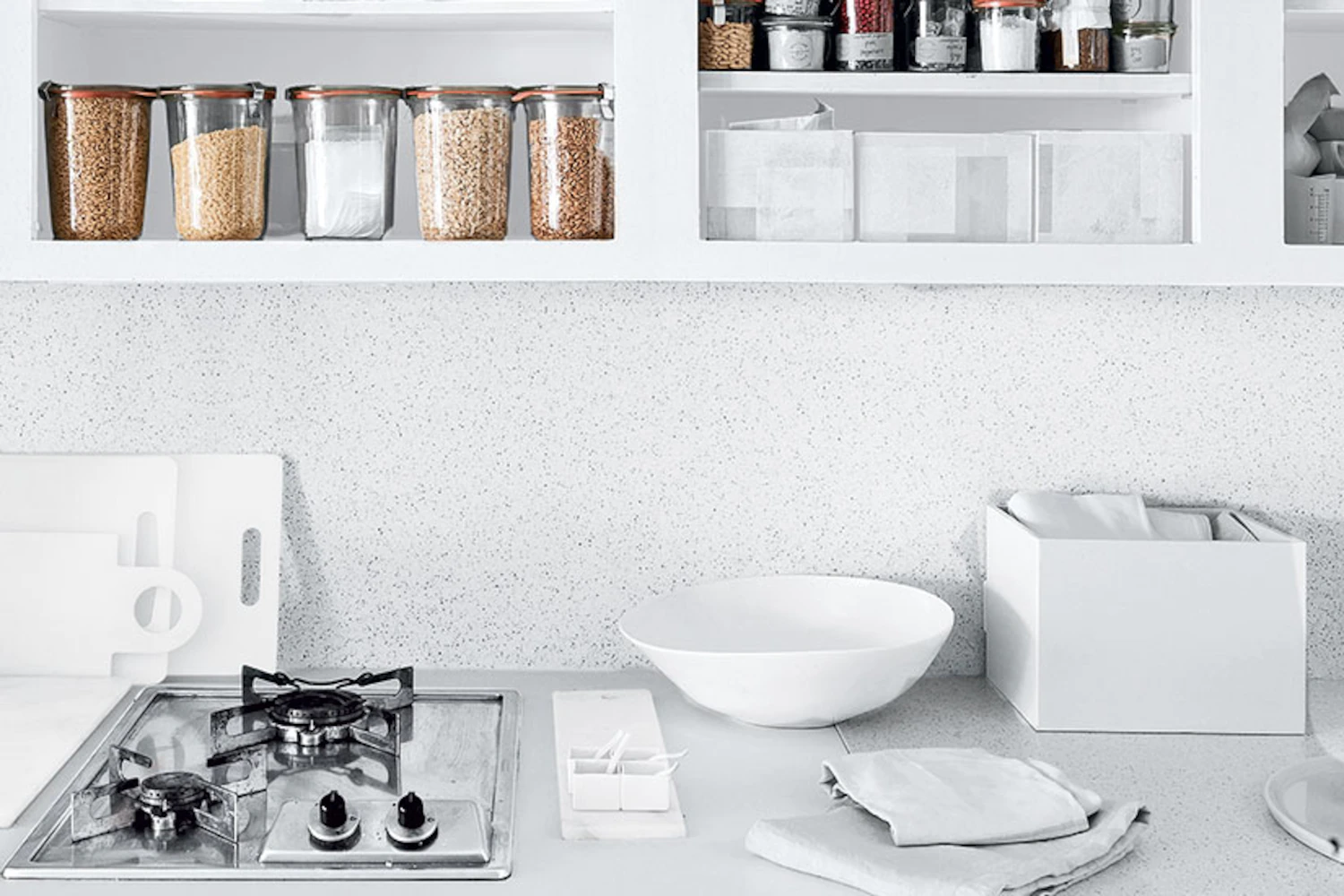
Feel more confident in the kitchen, get your meals made more quickly and be a more organized hostess with these easy tips. With a place for everything and everything in its place, an organized kitchen just feels more beautiful. Here, we present genius storage solutions from Remodelista: The Organized Home for the most-used room in your house. 1. THINK LIKE A SHOPPER.In retail parlance, it’s called merchandising: the art of arranging goods so they’re easy to access and visually appealing. Here are six principles from Sam Hamilton, kitchen designer and owner of March, a couture kitchen boutique in San Francisco. Apply them to your kitchen, and you’ll have a much more “shoppable” space.
3. PRETTY THE PANTRY.A jumble of assorted packaging – cereal boxes; sacks of flour and sugar; plastic bags of dried beans and pasta – makes it impossible to use your cabinets efficiently. Take a moment to decant your pantry essentials before loading them onto shelves (buy in bulk when possible), and you’ll gain space, order and a much prettier overall picture. 4. THINK LIKE A CHEF.In a professional kitchen, space is almost always at a premium, so tools need to be easy to grab and work counters have to be kept clear. So who better to look to for culinary storage tricks than Dana Cowin, former longtime editor-in-chief of Food & Wine magazine. Here are five organizing tips she learned on the job.
 What’s in BC Budget 2023 for property buyers and owners?
Posted on
March 6, 2023
by
Marie Taverna

BC Budget 2023 makes significant capital commitments for the development of affordable market, rental and social housing. In total, the government is allocating $4.2 billion in new operating and capital funding over three years to build more homes, provide more supports and protections for renters, and to help reduce homelessness. Affordable homesSecondary suites
Transit-oriented development
Student housing
Renters
Borrowing facility
Property Transfer Tax (PTT)
Speculation and Vacancy Tax
Municipalities – housing targets
New PTT exemption
HomelessnessRapid housing initiative
Climate changeEmergency management, risk assesment, and mitigation
Read more
Below average home sales allow inventory to inch upwards
Posted on
March 6, 2023
by
Marie Taverna

February listing data show a continued reluctance among prospective home sellers to engage in Metro Vancouver’s* housing market, leading to below-average sales activity. With sales remaining well-below historical norms, the number of available homes for sale in the region have continued inching upwards.
SalesThe Real Estate Board of Greater Vancouver (REBGV) reports that residential home sales in the region totalled 1,808 in February 2023, a 47.2 per cent decrease from the 3,424 sales recorded in February 2022, and a 76.9 per cent increase from the 1,022 homes sold in January 2023. Last month’s sales were 33 per cent below the 10-year February sales average. Listings“It’s hard to sell what you don’t have, and with new listing activity remaining among the lowest in recent history, sales are struggling to hit typical levels for this point in the year,” said Andrew Lis, REBGV’s director, economics and data analytics. “On the plus side for prospective buyers, the below-average sales activity is allowing inventory to accumulate, which is keeping market conditions from straying too deeply into sellers’ market territory, particularly in the more affordably priced segments.” There were 3,467 detached, attached and apartment properties newly listed for sale on the Multiple Listing Service® (MLS®) in Metro Vancouver in February 2023. This represents a 36.6 per cent decrease compared to the 5,471 homes listed in February 2022 and a 5.2 per cent increase compared to January 2023 when 3,297 homes were listed. The total number of homes currently listed for sale on the MLS® system in Metro Vancouver is 7,868, a 16.7 per cent increase compared to February 2022 (6,742) and a 5.2 per cent increase compared to January 2023 (7,478). “While we continue to expect home price trends to show year-over-year declines for a few more months, current data and market activity suggest pricing is firming up. In fact, some leading indicators suggest we may see modest price increases this spring, particularly if sales activity increases and mortgage rates hold steady,” Lis said. “In the somewhat unusual market environment we find ourselves in right now with higher mortgage rates, fewer sales, and inventory that is inching higher but remains far from abundant, working with a Realtor who understands your local market conditions and has experience navigating challenging markets is paramount.” Sales-to-active listings ratioFor all property types, the sales-to-active listings ratio for February 2023 is 23 per cent. By property type, the ratio is 16.8 per cent for detached homes, 30.1 per cent for townhomes, and 25.8 per cent for apartments. Generally, analysts say downward pressure on home prices occurs when the ratio dips below 12 per cent for a sustained period, while home prices often experience upward pressure when it surpasses 20 per cent over several months. Home pricesThe MLS® Home Price Index composite benchmark price for all residential properties in Metro Vancouver is currently $1,123,400. This represents a 9.3 per cent decrease over February 2022 and a 1.1 per cent increase compared to January 2023.
Broken down by property typeSales of detached homes in February 2023 reached 514, a 49.1 per cent decrease from the 1,010 detached sales recorded in February 2022. The benchmark price for detached properties is $1,813,100. This represents a 12 per cent decrease from February 2022 and a 0.7 per cent increase compared to January 2023. Sales of apartment homes reached 928 in February 2023, a 49.9 per cent decrease compared to the 1,854 sales in February 2022. The benchmark price of an apartment property is $732,200. This represents a three per cent decrease from February 2022 and a 1.6 per cent increase compared to January 2023. Attached home sales in February 2023 totalled 366, a 34.6 per cent decrease compared to the 560 sales in February 2022. The benchmark price of an attached unit is $1,038,500. This represents a 6.3 per cent decrease from February 2022 and a 1.8 per cent increase compared to January 2023. |

Let's discuss your next home sale or purchase, with no obligation.
Give me a call at 604-802-7759



 The data relating to real estate on this website comes in part from the MLS® Reciprocity program of either the Greater Vancouver REALTORS® (GVR), the Fraser Valley Real Estate Board (FVREB) or the Chilliwack and District Real Estate Board (CADREB). Real estate listings held by participating real estate firms are marked with the MLS® logo and detailed information about the listing includes the name of the listing agent. This representation is based in whole or part on data generated by either the GVR, the FVREB or the CADREB which assumes no responsibility for its accuracy. The materials contained on this page may not be reproduced without the express written consent of either the GVR, the FVREB or the CADREB.


